In the demanding world of industrial technology, the choice of a display panel is far more than a simple specification check; it is a critical decision impacting system reliability, readability, and longevity.
In the demanding world of industrial technology, the choice of a display panel is far more than a simple specification check; it is a critical decision impacting system reliability, readability, and longevity. At the heart of countless rugged applications lies a specific component: the LQ070Y3DG3A. This 7.0-inch, 800×480 resolution TFT LCD module, originally designed by Sharp, has established itself as a benchmark for industrial-grade visual interfaces. This article delves beyond the basic datasheet to explore the intrinsic value and strategic application of this iconic display panel.
We will dissect its core industrial-grade construction, analyze the enduring relevance of its WVGA resolution, map its ideal application landscapes, and provide crucial guidance for successful integration and sourcing. For engineers, procurement specialists, and product developers, understanding the why behind this panel's enduring popularity is key to leveraging its strengths in creating robust and dependable human-machine interaction (HMI) systems.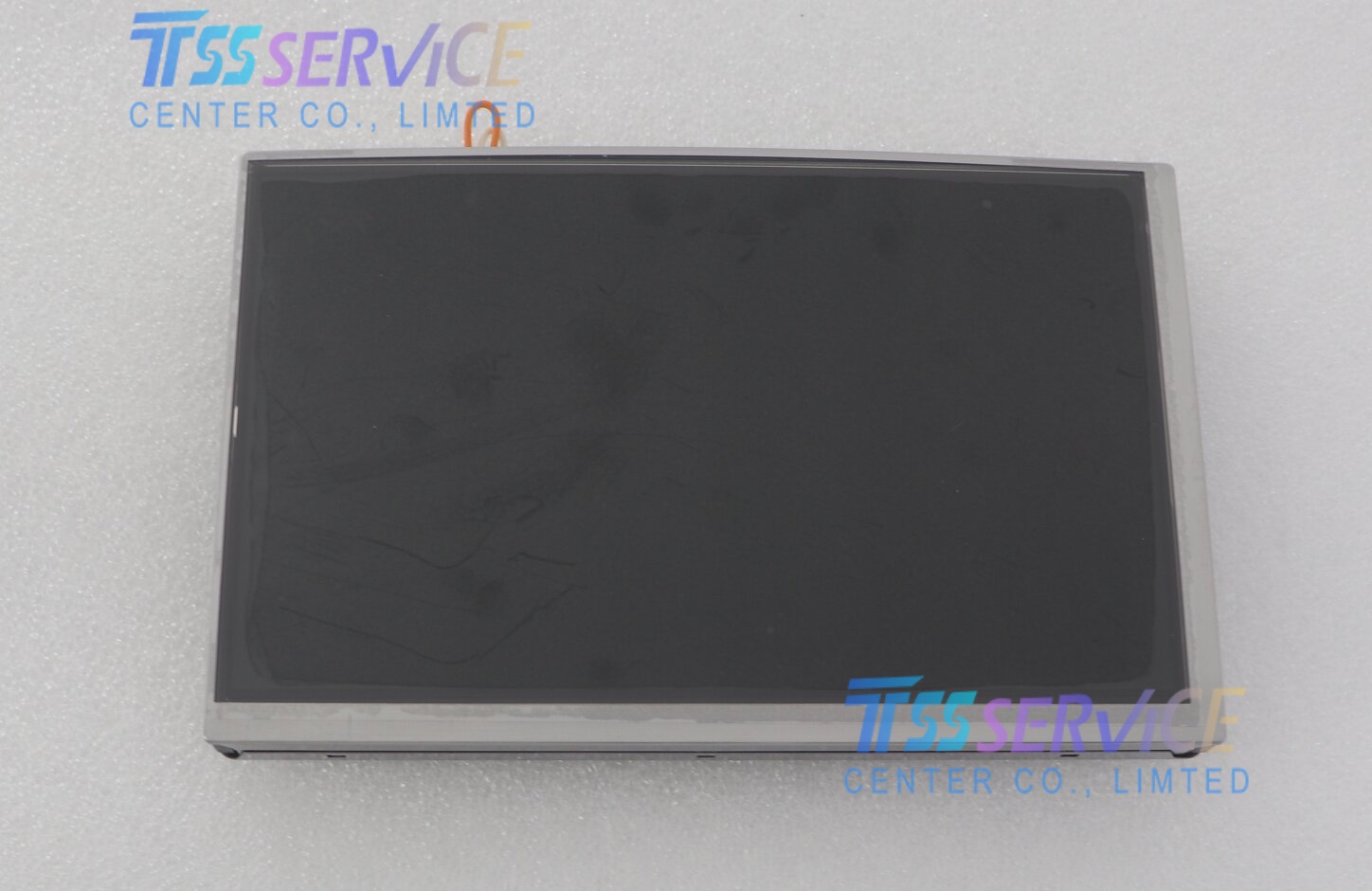
Engineering for Endurance: The Industrial-Grade Foundation
The LQ070Y3DG3A distinguishes itself immediately through its construction, engineered to thrive where consumer displays would falter. Its core strength lies in a design philosophy prioritizing resilience over novelty. The module typically features a robust metal frame, providing structural integrity and effective heat dissipation, which is vital for maintaining consistent performance and preventing delamination in thermal-cycling environments.
Furthermore, it employs a high-brightness CCFL (Cold Cathode Fluorescent Lamp) backlight system. While LED backlights are common today, this CCFL system offers proven stability, excellent uniformity, and a wide operating temperature range, often spanning from -30°C to +80°C. The panel itself utilizes a high-quality a-Si TFT (amorphous Silicon Thin-Film Transistor) process, ensuring stable driving characteristics and resistance to image sticking. This combination of physical robustness, thermal tolerance, and reliable illumination forms the bedrock of its suitability for factory floors, outdoor kiosks, transportation systems, and medical devices, where consistent performance is non-negotiable.
The Strategic Value of WVGA in a High-Definition World
In an era of 4K and beyond, the 800×480 (WVGA) resolution of the LQ070Y3DG3A might seem modest. However, in industrial contexts, this specification is a strategic advantage, not a limitation. The lower pixel count translates directly to superior readability. Individual UI elements—text, buttons, graphs—can be rendered larger and with clearer contrast, which is crucial for operators who may be viewing the screen from a distance, in variable lighting, or while wearing protective gear.
From a system integration perspective, WVGA reduces computational load. It requires less processing power from the host controller, smaller frame buffers, and lower bandwidth for data transmission. This allows for the use of more cost-effective and power-efficient System-on-Chip (SoC) solutions, simplifying overall design and improving reliability. The aspect ratio of 15:9 (effectively 5:3) provides a versatile canvas that accommodates traditional control interfaces as well as widesensor data streams, making it a pragmatic choice for a vast array of HMI layouts.
Ideal Application Landscapes and Use Cases
The technical attributes of the LQ070Y3DG3A naturally align with specific sectors where failure is not an option. Its primary domain is Industrial Automation and Control. Here, it serves as the face of PLCs (Programmable Logic Controllers), CNC machine interfaces, and test/measurement equipment, displaying real-time parameters, diagnostic data, and control buttons in harsh electrical noise and particulate-filled environments.
Beyond the factory, it finds a home in Transportation and Fleet Management, integrated into vehicle telematics systems, bus information displays, and construction machinery dashboards, resisting constant vibration and extreme temperatures. Another critical field is Medical and Laboratory Equipment, where its stable performance and readability support patient monitors, diagnostic devices, and analytical instruments. Finally, it powers Point-of-Sale (POS) terminals, kiosks, and ruggedized handheld devices that demand 24/7 operation and resistance to public use. In each case, the panel acts as a dependable portal for critical information exchange.
Integration Essentials and Sourcing Considerations
Successfully deploying the LQ070Y3DG3A requires attention to integration details. The module typically uses an LVDS (Low-Voltage Differential Signaling) interface, a robust standard for noise-resistant data transmission. Designers must ensure their controller supports the correct LVDS transmitter configuration and timing. The CCFL backlight requires an inverter for power, adding a component that must be accounted for in the bill of materials and board layout.
Sourcing is a paramount consideration. As a Sharp-original design, it is available as a first-party module. However, its popularity has led to widespread availability of compatible panels from reputable manufacturers. When sourcing, verify:
-
Mechanical Compatibility: Exact outline dimensions, mounting hole positions, and connector location.
-
Electrical Compatibility: Pin-to-pin matching, backlight voltage/current requirements, and interface timing.
-
Quality Assurance: Supplier reputation, testing documentation, and warranty support, especially for long-term supply agreements crucial for industrial product lifecycles.
The LQ070Y3DG3A 7-inch industrial display panel exemplifies how proven, purpose-driven technology delivers unmatched value in critical applications. Its enduring relevance is not about competing on pixel density, but about mastering reliability, readability, and resilience under pressure. By understanding its industrial-grade construction, the strategic merits of its WVGA resolution, and its ideal application landscapes, engineers can make informed decisions that extend product life and ensure operational integrity. In a world chasing the next spec sheet milestone, this panel stands as a testament to the power of optimized, dependable performance.


