In the demanding world of industrial automation, medical instrumentation, and embedded systems, the display panel is more than just a visual output device—it is the primary human-machine interface (HMI). Unlike consumer-grade screens optimized for high resolution and wide color gamuts, industrial displays must prioritize durability, readability under harsh lighting
In the demanding world of industrial automation, medical instrumentation, and embedded systems, the display panel is more than just a visual output device—it is the primary human-machine interface (HMI). Unlike consumer-grade screens optimized for high resolution and wide color gamuts, industrial displays must prioritize durability, readability under harsh lighting, and consistent operational stability. The M606-L0S 5.7 inch 320×240 LCD Panel Display Screen sits at this precise intersection of functionality and resilience. This article delves into the technical architecture, performance characteristics, and strategic advantages of this specific display, exploring why the 5.7-inch form factor with a QVGA (320×240) resolution remains a staple in industrial environments. We will examine the panel’s construction against environmental stressors, its signal integrity for reliable data transmission, and the critical trade-offs that make it an optimal choice for applications where failure is not an option.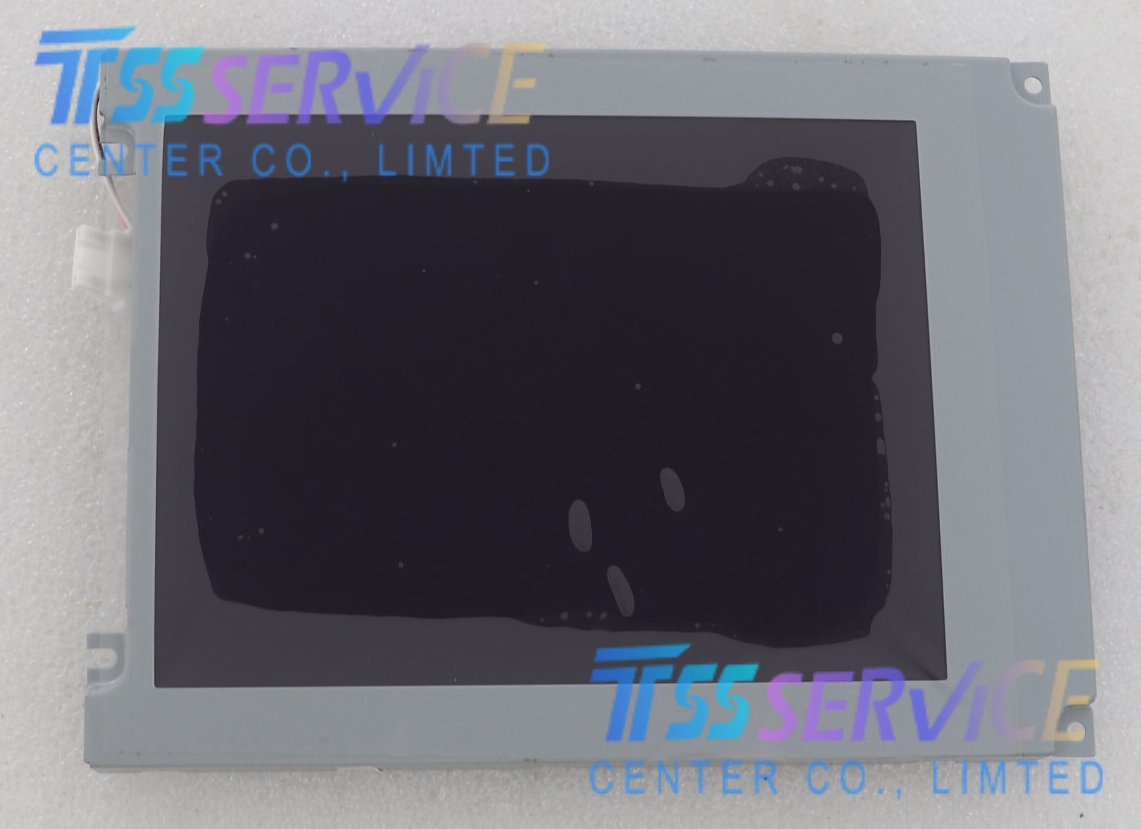
Decoding the Hardware: From Pixel Architecture to Signal Integrity
The foundation of the M606-L0S lies in its carefully engineered pixel structure and interface design. With a resolution of 320×240 pixels and a diagonal of 5.7 inches, this panel achieves a pixel density that is intentionally balanced for functional clarity rather than visual overload. The aspect ratio of 4:3 is particularly well-suited for displaying control panels, process data logs, and diagnostic charts, where text and simple symbols must be immediately legible from a distance.
From a signal perspective, this panel typically employs a parallel RGB interface, often paired with a TTL (Transistor-Transistor Logic) signaling standard. This choice is deliberate in industrial contexts. Parallel interfaces, while requiring more data lines, offer lower latency and deterministic timing compared to serial alternatives. This is critical for real-time applications like CNC machine controls or patient monitors, where a single frame of visual lag can translate into operational error.
-
Viewing Angle Technology: Most variants of this panel utilize Twisted Nematic (TN) technology at a cost-effective baseline, though some industrial variants incorporate IPS (In-Plane Switching) for wide viewing angles. For the standard TN version, the optimal viewing angle is centered around the 6 o'clock or 12 o'clock position, which aligns with typical operator sightlines in panel-mounted equipment.
-
Backlight Architecture: The LED backlight is designed for longevity, often rated for 50,000 hours or more. High-brightness options (typically 400 to 600 cd/m²) are critical for readability in factories with high ambient light, while lower brightness versions are used in darkroom or medical imaging settings to reduce eye strain.
Understanding this hardware foundation is essential because it directly dictates the display’s compatibility with embedded controllers, its power draw, and its physical footprint—factors that are often non-negotiable in certified industrial equipment.
Environmental Resilience: Surviving Vibration, Temperature Extremes, and Contamination
The true test of an industrial display is not its performance in a controlled lab, but its behavior on a factory floor, inside a vehicle, or near a furnace. The M606-L0S is typically engineered to withstand a broader range of environmental stressors than commercial monitors. The operating temperature range is a key differentiator; standard versions often span from -20°C to +70°C, with extended range options supporting up to -30°C to +85°C. This ensures the LCD fluid does not freeze or become excessively sluggish in cold storage environments, nor degrade under the heat of an industrial oven or high-performance machinery.
Mechanical robustness is another pillar of its design. The display is often integrated with a metal bezel or frame to provide structural rigidity, protecting the delicate glass substrate from shock and vibration—a common requirement for equipment certified to standards such as IEC 60068-2-6 for vibration resistance. Furthermore, ingress protection (IP) ratings are frequently applied at the system level. When sealed into a panel mount, the display’s front surface can be mated with an anti-glare or anti-reflective cover glass, rated IP65 or higher, to prevent dust ingress and shield against liquid splashes from cleaning solvents or coolant.
-
Optical Bonding: A critical technique for high-vibration environments is optical bonding, where a layer of transparent adhesive is applied between the LCD glass and the cover lens. This eliminates the air gap, reducing internal reflections and preventing moisture condensation inside the assembly. It also improves impact resistance.
-
Contrast Maintenance: Sunlight readability is not just about brightness. The panel’s contrast ratio, often in the range of 400:1 to 700:1, is preserved through advanced black matrix materials that absorb stray light, ensuring that even under direct sunlight, the darker pixels remain dark. This makes it possible to read critical alarms clearly.
By addressing these environmental stressors directly, the M606-L0S panel ensures that data visibility remains uncompromised, thereby safeguarding operator safety and preventing costly production downtime.
Integration and Compatibility: Simplifying System Design for OEMs
For an original equipment manufacturer (OEM), the ease of integrating a display into an existing hardware and software ecosystem is often as important as the display’s own specifications. The M606-L0S is designed with this integration principle in mind. Its standard 40-pin or 50-pin connector layout (depending on the specific revision) follows industry norms, allowing it to be a drop-in replacement for many legacy 5.7-inch QVGA panels. This backward compatibility reduces redesign costs and shortens time-to-market for products undergoing a display upgrade.
-
Driver IC Compatibility: The panel typically utilizes a commonly available driver IC, such as those from the HX or ILI series, which have well-documented initialization sequences and register configurations. Embedded engineers will find extensive community support, pre-written firmware examples, and component library footprints available for major MCU platforms like STM32, NXP LPC, or TI Sitara.
-
Touch Panel Synchronization: The display is commonly paired with a 4-wire resistive touch screen, which is a preferred choice for gloved-hand operation in factories. The controller interface is simple and requires minimal software overhead. While capacitive touch is possible, resistive remains dominant for its reliability in wet, dusty, or dirty conditions. The mechanical alignment information, including the active area and bezel dimensions, is precisely documented, allowing for seamless mechanical integration into custom enclosures.
This level of thought towards compatibility means that the M606-L0S acts as a building block, not a constraint. It allows system designers to focus on differentiating software and application logic, while relying on a proven hardware interface for visual output.
Optimization for Application: Balancing Power, Cost, and Long-Term Lifecycle
The ultimate value proposition of the M606-L0S lies in its optimized trade-offs for specific industrial applications. The 320×240 resolution is a deliberate choice—it is sufficient for displaying 16×16 or 8×8 character grids, full-page text, and detailed bar graphs, yet it consumes significantly less power and memory bandwidth than higher-resolution panels. In battery-powered mobile industrial scanners or portable diagnostic devices, this translates into longer operational life between charges.
Cost sensitivity is a perennial concern in high-volume industrial manufacturing. By using a proven, mature panel technology, manufacturers avoid the premium associated with bleeding-edge displays. This allows the M606-L0S to fit into cost-constrained projects like basic barcode scanners, elevator control panels, or simple security system keypads without sacrificing reliability. Furthermore, the product lifecycle of this panel is notably extended. While consumer electronics models cycle out in 12 to 18 months, industrial display manufacturers commit to supporting panels like the M606-L0S for 5 to 7 years or more. This longevity is critical for industries like medical equipment or aerospace, where hardware certification is expensive and must remain valid over a decade.
-
Brightness Tuning: In many designs, the backlight brightness is adjustable via PWM (Pulse Width Modulation), allowing the same hardware to be dimmed for night use in a control room, or driven to full output in a sunlit outdoor workstation.
-
Electromagnetic Compatibility (EMC): The panel’s internal shielding and filtering components are designed to meet industrial EMC standards (such as EN 55032), ensuring that the display does not radiate interference that could disrupt nearby sensors or wireless communication modules.
In essence, the M606-L0S is not simply a screen; it is a carefully optimized component that prioritizes system-level efficiency, cost-effectiveness, and long-term availability over raw pixel count.
The M606-L0S 5.7 inch 320×240 LCD Panel Display Screen represents a mature, highly optimized solution for the industrial sector, where durability, compatibility, and predictable performance outweigh the pursuit of high resolution. Its robust temperature tolerance, mechanical resilience against vibration and contamination, and standard interface design make it a reliable workhorse for embedded HMIs in automation, medical, and transportation applications. By focusing on a balanced configuration—adequate pixel density, efficient backlight architecture, and proven driver compatibility—this display enables OEMs to build equipment that operates reliably for years. For engineers seeking a display that combines long-term lifecycle support with functional precision, the M606-L0S remains a benchmark choice, proving that in industrial design, the most effective technology is often the one that quietly and consistently performs without compromise.


