In the demanding world of industrial automation, the Human Machine Interface (HMI) serves as the critical link between operator and machinery. While the software logic often receives the most attention, the physical interface—specifically the membrane keypad—is the component that endures constant human interaction in harsh manufacturing environments.
In the demanding world of industrial automation, the Human Machine Interface (HMI) serves as the critical link between operator and machinery. While the software logic often receives the most attention, the physical interface—specifically the membrane keypad—is the component that endures constant human interaction in harsh manufacturing environments. This article offers a comprehensive deep dive into the Membrane Keypad for IHM 6AV6 642-0BD01-3AX0, a specialized input device designed for Siemens HMI panels. We will explore its technical anatomy, functional significance, and the engineering rationale behind its design. Understanding this component is not merely about hardware replacement; it is about maintaining operational continuity, ensuring data integrity, and safeguarding the user experience in environments where equipment failure is not an option. This analysis will provide plant managers, maintenance engineers, and procurement specialists with the essential knowledge to make informed decisions regarding this critical spare part.
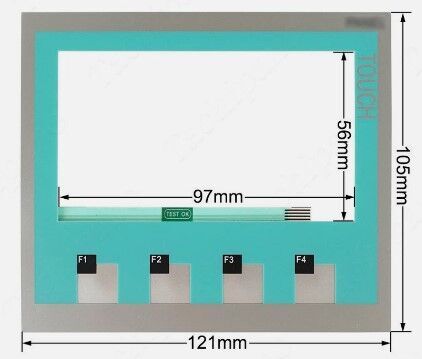
Anatomy of Durability: Material Science and Construction
The membrane keypad for the IHM 6AV6 642-0BD01-3AX0 is far more than a simple sheet of plastic with printed symbols. Its construction is a testament to applied material science, engineered to withstand the rigors of an industrial floor. The keypad typically consists of several bonded layers, each serving a distinct purpose. The top layer is a polyester or polycarbonate overlay, chosen for its exceptional resistance to abrasion, chemical spills, and UV radiation. This is the first line of defense against the physical world.
Beneath this overlay lies the graphic interface, which is often screen-printed on the reverse side to prevent wear. The tactile response is achieved through a metallic snap dome or a polyester film spacer, which provides the operator with a distinct, reassuring click upon actuation. This tactile feedback is not a luxury; it is a functional necessity in environments where operators wear gloves or work in noisy conditions, ensuring command registration without visual confirmation.
-
Chemical Resistance: Designed to withstand cleaning agents, oils, and industrial solvents.
-
Sealing Integrity: The construction allows for a gasket or adhesive seal, achieving IP65 or higher ratings against dust and water ingress.
-
Electrostatic Discharge (ESD) Protection: The materials are selected to dissipate static charges, preventing damage to sensitive internal electronics.
The precision of this layered assembly ensures that the keypad can survive millions of actuations without delamination, loss of tactility, or degradation of the electrical circuit printed on the rear layer. This durability is not accidental; it is the result of rigorous testing for thermal shock, humidity, and cyclic load.
Functional Integration: Beyond the Button Press
While the physical construction provides durability, the true value of the Membrane Keypad for IHM 6AV6 642-0BD01-3AX0 lies in its seamless functional integration with the Siemens IHM panel. This is not a generic input device; it is a calibrated component whose electrical characteristics are matched to the host system's controller. The printed silver or carbon conductive traces on the keypad's bottom layer connect to a specific ribbon cable or pin connector, which interfaces directly with the HMI's main circuit board.
From a maintenance perspective, understanding this integration is critical. A failed keypad is often misinterpreted as a complete HMI failure. The keypad acts as the system's input gateway; if its electrical path is compromised (due to a cracked trace from a sharp impact or contamination from conductive dust), the entire panel becomes non-responsive. Replacing this specific component restores full functionality without the need for expensive logic board repairs or complete HMI replacement, representing a significant cost-saving measure in a preventive maintenance strategy.
The Strategic Imperative: Scarcity, Obsolescence, and Supply Chain
In the lifecycle of industrial equipment, component obsolescence is a constant threat. The Membrane Keypad for IHM 6AV6 642-0BD01-3AX0 occupies a specific niche in the Siemens spare parts ecosystem. While the HMI panel itself may be a robust workhorse, the membrane keypad is a consumable item with a finite operational life. As production lines run for years, availability of the exact replacement part becomes a strategic supply chain issue.
Procurement managers face a reality where generic or third-party "compatible" keypads often fail to meet the original specifications. A slight deviation in overlay thickness can alter the actuation force, while an incorrect adhesive can lead to premature lifting at the edges, compromising the IP seal. The true value proposition of sourcing the authentic part—or a high-quality aftermarket equivalent that matches the original mechanical and electrical schematics—lies in risk mitigation. Downtime caused by a failed keypad is costly; a standard production line can lose thousands of dollars per hour.
Furthermore, understanding the part number structure (6AV6 642-0BD01-3AX0) is vital. This specific suffix denotes the language variant, layout, and color scheme (e.g., black with white legends for specific regional market). Incorrectly ordering a keypad with a different suffix may result in a physical fit but a functional mismatch in terms of labeling. Therefore, maintaining a stock of this specific keypad as a critical spare is not just good practice—it is a strategic decision to ensure production resilience against unscheduled downtime.
Installation Best Practices: Preserving Integrity and Lifespan
The successful installation of a new membrane keypad is as important as its quality. Even the best-manufactured component can fail prematurely due to improper handling. When replacing the Membrane Keypad for IHM 6AV6 642-0BD01-3AX0, the primary concern is maintaining the environmental seal. The keypad is typically adhered to the HMI bezel using a high-bond pressure-sensitive adhesive (PSA).
Critical steps for a successful replacement include:
-
Environmental Control: Perform the replacement in a clean, dust-free area. Contamination between the adhesive and the bezel is the number one cause of seal failure.
-
Surface Preparation: The mounting surface must be thoroughly cleaned of all residual adhesive and debris. Isopropyl alcohol is the standard solvent, but it must be completely evaporated before applying the new keypad.
-
Gentle Application: Align the keypad meticulously before contact. Once the adhesive touches the bezel, repositioning is nearly impossible without damaging the overlay or the conductive traces.
-
Cable Management: Ensure the ribbon cable is routed cleanly to its connector, free from sharp bends or pinching, which can cause intermittent electrical connections.
Following these procedures ensures that the new keypad achieves its rated IP protection, delivers consistent tactile feedback, and provides an extended service life. Rushing the installation process often leads to repeat failures, negating the cost benefits of the repair. A methodical approach to replacement is an investment in long-term operational reliability.
Conclusion
The Membrane Keypad for IHM 6AV6 642-0BD01-3AX0 is a masterclass in functional engineering, where material science meets human-centric design to solve the unique challenges of industrial interaction. Its value extends far beyond its physical form, acting as a critical, consumable link in the chain of production continuity. Treating this component as a strategic spare rather than a simple afterthought is essential for any facility relying on Siemens HMI systems. By understanding its construction, integration, and the strict procedures for its replacement, professionals can significantly reduce the risk of costly downtime, ensuring that the interface between human and machine remains reliable, responsive, and resilient for the long haul.


