For years, the world of display technology has been a battleground of competing philosophies. On one side, the self-emissive perfection of OLED, celebrated for its infinite contrast. On the other, the enduring workhorse, LCD, prized for its brightness and affordability but perpetually chasing that elusive contrast ratio. Today, that chase reaches a pivotal moment. The debut of a groundbreaking Mini-LED backlit series isn't just another incremental update; it's a fundamental re-engineering of LCD's core strengths, signaling a new era of visual fidelity. This technology promises to bridge the gap between the two worlds, offering a compelling alternative that combines the best of both.
This article will delve into how this new series leverages Mini-LED to redefine performance benchmarks. We will explore the engineering leap it represents, the tangible visual benefits it delivers to creators and consumers, its practical advantages in diverse usage scenarios, and finally, what this innovation signifies for the future landscape of display technology.
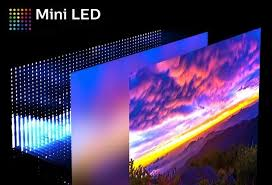
The Engineering Leap: From Zones to Precision
At the heart of this revolution lies a dramatic scaling of control. Traditional LCDs, even full-array local dimming (FALD) variants, use a limited number of LED backlight zones—perhaps a few hundred. This new Mini-LED series escalates this count into the thousands. Each Mini-LED is a fraction of the size of a conventional LED, allowing for a denser, more granular array packed behind the LCD panel.
This density translates directly to precision. Where a standard FALD zone might control the brightness for an entire section of a night sky, a Mini-LED array can meticulously dim individual stars while simultaneously blasting full brightness at a supernova in the same frame. This hyper-local dimming capability is the foundational engineering breakthrough. It drastically reduces blooming—the halo of light that spills into dark areas—and allows the LCD layer to approach true black levels previously thought impossible for the technology. The backlight is no longer a simple uniform sheet; it has become a dynamic, high-resolution canvas of light itself.
A New Visual Paradigm: Contrast, Color, and Detail
The engineering feat manifests as a transformative viewing experience. The most immediate impact is in contrast. With thousands of independent dimming zones, the difference between the brightest highlight and the deepest black within a single scene becomes staggering. This High Dynamic Range (HDR) performance is no longer a spec sheet checkbox; it is a visceral, depth-adding reality. Shadows gain texture and volume, rather than appearing as flat, gray murk.
Furthermore, this precision lighting unlocks the full potential of the LCD's color filter. With light meticulously applied only where needed, colors appear more saturated and pure, as they are not washed out by stray backlight bleed. Fine detail, especially in high-contrast edges, is preserved with exceptional clarity. For content creators, this means a display that can faithfully reproduce their intent. For consumers, it means immersion: the inky blacks of space in a sci-fi epic, the subtle gradient of a sunset, or the defined textures in a shadowy game environment are all rendered with newfound fidelity.
Beyond the Specs: Practicality and Performance
While visual splendor is paramount, this Mini-LED series brings critical practical advantages that address historical LCD and OLED weaknesses. Firstly, it achieves its stunning contrast while sustaining exceptionally high peak brightness levels—far surpassing typical OLED displays. This makes it ideal for bright rooms and HDR content that demands spectacular highlights, like sunlight glinting off water.
Secondly, it sidesteps the risk of burn-in associated with OLED panels, making it a robust choice for static user interfaces, productivity tasks, and news tickers. The combination of high brightness, enduring reliability, and now, exceptional contrast, creates a uniquely versatile display. It is equally suited for the color-critical work of a graphic designer, the marathon coding sessions of a developer, the immersive gameplay of a enthusiast, and the cinematic viewing of a film buff—all without compromise.
The Future Landscape: Redefining the Hierarchy
The introduction of this advanced Mini-LED series does more than launch a product line; it reshuffles the competitive hierarchy. LCD technology, often seen as playing catch-up, now presents a flagship experience that challenges OLED on its own terms—contrast—while asserting dominance in areas like brightness and longevity. It creates a compelling new tier in the market: the performance-LCD.
This forces a reevaluation of the traditional quality ladder. The choice for consumers and professionals is no longer a simple "OLED for quality, LCD for value." Instead, it becomes a nuanced decision based on specific priorities: the absolute per-pixel perfection of OLED versus the luminous intensity, durability, and now, vastly improved contrast of high-density Mini-LED LCDs. This innovation ensures that the future of displays will be driven by fierce competition and rapid advancement, ultimately benefiting everyone who seeks a better visual experience.
In conclusion, the debut of this Mini-LED backlit series marks a watershed moment for LCD technology. By mastering light at an unprecedented scale, it delivers a transformative leap in contrast, color precision, and detail, effectively ushering in a new era of visual fidelity. It successfully merges the blistering brightness and practicality of LCD with contrast performance that rivals the best, creating a versatile and compelling display solution. This breakthrough not only elevates the potential of LCD but also enriches the entire display landscape, promising a future where exceptional image quality is accessible across technologies, driven by innovation that benefits every viewer.


