In the dynamic landscape of display technology, a significant milestone has been quietly achieved: the global penetration rate of Mini LED backlight TVs has now surpassed 15%. This figure is not merely a statistic; it represents a pivotal shift in consumer preference and manufacturing strategy
In the dynamic landscape of display technology, a significant milestone has been quietly achieved: the global penetration rate of Mini LED backlight TVs has now surpassed 15%. This figure is not merely a statistic; it represents a pivotal shift in consumer preference and manufacturing strategy, signaling Mini LED's transition from a premium niche technology to a mainstream contender. Once the exclusive domain of high-end home theater enthusiasts, Mini LED backlighting is now being rapidly adopted across mid-to-high-range television models from all major brands.
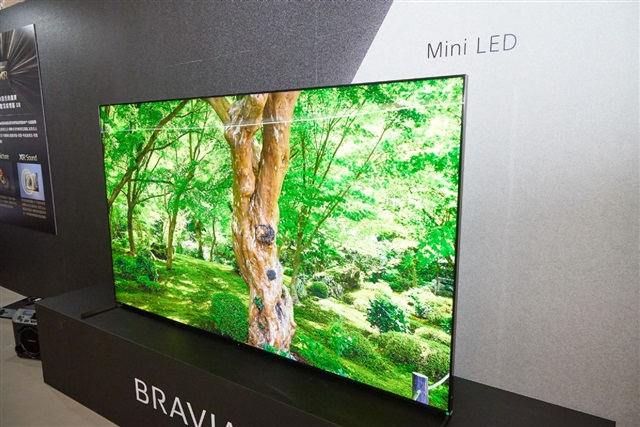
This article will delve into the forces propelling this adoption, analyze the competitive advantages Mini LED holds in the current market, and explore the implications of this growth for the future of home entertainment. The journey past the 15% threshold marks a new chapter in the visual technology wars, one where superior contrast and brightness become accessible to a much broader audience.
The Convergence of Performance and Affordability: Drivers of Adoption
The surge past a 15% global penetration rate is primarily fueled by a powerful convergence: rapidly improving performance at a progressively accessible price point. Mini LED technology serves as a brilliant bridge between traditional LCD/LED TVs and the pinnacle of OLED displays. It employs thousands of microscopic LEDs arranged in a dense array, controlled by sophisticated local dimming algorithms. This allows for precise control over screen sections, delivering deep blacks, spectacular highlights, and a contrast ratio that rivals OLED, but without the risk of permanent burn-in.
Critically, manufacturing efficiencies and scaling have brought this technology down from the stratosphere. While flagship models showcase tens of thousands of Mini LEDs, brands are now strategically deploying scaled-down versions with fewer zones in more affordable sets. This "good, better, best" strategy within the Mini LED category itself has been instrumental. Consumers are no longer forced to choose solely between basic LED and ultra-expensive OLED; they now have a compelling, high-performance middle ground that offers a dramatic visual upgrade without a prohibitive cost, directly driving its move into the mainstream
.
Winning the Value Proposition: Mini LED vs. The Market
To understand its success, one must examine Mini LED's strategic positioning in the competitive matrix. Its value proposition is uniquely defensive and offensive. Against conventional LED/LCD TVs, the advantage is overwhelming. The leap in picture quality, particularly in HDR content where specular highlights and shadow detail are crucial, is immediately apparent, justifying a moderate price premium for a vastly superior experience.
The more nuanced battle is with OLED. Here, Mini LED competes not by outright beating OLED on pure contrast,
but by winning on key practical dimensions:
-
Peak Brightness: Mini LED panels consistently achieve higher peak brightness, making them ideal for bright living rooms and content mastered with high dynamic range.
-
Durability & Peace of Mind: The absence of burn-in risk is a significant psychological and practical selling point for users who watch news channels, play games with static HUDs, or simply want a worry-free ownership experience.
-
Cost at Scale: As penetration increases, the cost differential with OLED at similar screen sizes becomes a powerful market argument for manufacturers and consumers alike.
This multi-front value battle has allowed Mini LED to capture significant market share from both ends of the spectrum.
Beyond the Threshold: Implications and Future Trajectories
Crossing the 15% penetration threshold is a signal, not a finish line. It triggers a self-reinforcing cycle of industry investment and consumer expectation. Panel manufacturers and brands are now incentivized to allocate more R&D and production capacity to Mini LED, leading to further technological refinements like even more dimming zones, faster response algorithms, and integration with next-gen video standards. This, in turn, will continue to push performance up and costs down.
The impact extends beyond the TV aisle. This scaling effect benefits other product categories like monitors and laptops, accelerating Mini LED's adoption there. Furthermore, it pressures OLED technology to innovate in brightness and cost reduction, healthy competition that ultimately benefits the consumer. Looking ahead, the roadmaps are clear: Mini LED is establishing itself as the dominant premium LCD technology, potentially capturing the majority of the mid-to-high-end market. Its growth also sets the stage for the eventual commercialization of MicroLED, serving as a critical stepping stone in backlight and manufacturing evolution. The 15% mark proves the technology's viability and sets a new baseline for what consumers expect from a quality television.


