In the intricate world of industrial and specialized display technology, certain components stand out not merely for their specifications, but for their enduring role in enabling critical applications. The Mitsubishi AA150XN07 15-inch LCD display module is one such component. At its core, it features an XGA resolution of 1024(RGB)×768 pixels, a standard that has proven its reliability over decades. This article delves beyond the basic datasheet to explore the engineering philosophy, enduring relevance, and specific application ecosystems that have made this display a persistent choice in an era of rapidly evolving consumer screen technology.
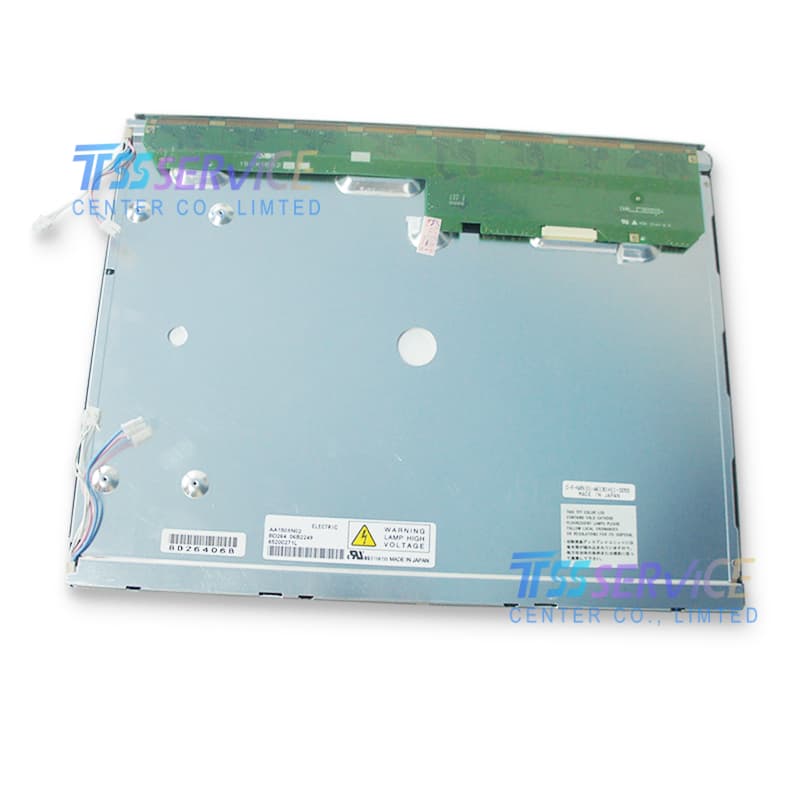
We will investigate the unique value proposition of its native resolution, the robustness of its design for challenging environments, and the specific industries where its performance characteristics are not just sufficient but optimal. This analysis is aimed at engineers, procurement specialists, and technology historians seeking to understand why a seemingly standard display module continues to hold significant value in the professional and industrial landscape.
The Enduring Legacy of XGA: 1024x768 in a 4K World
In a market dominated by Ultra HD and 4K displays, the AA150XN07's 1024(RGB)×768 (XGA) resolution might appear anachronistic. However, this perspective misses its strategic purpose. XGA represents a crucial sweet spot in the evolution of digital interfaces, offering a substantial upgrade from legacy VGA (640x480) while maintaining exceptional compatibility with a vast universe of established hardware and software systems. For industrial PCs, medical devices, and process control units, the operating systems and application software are often stabilized for decades-long lifecycles. The AA150XN07 provides a sharp, clear image for these interfaces without forcing a costly and complex system-wide upgrade to support higher resolutions that offer no functional benefit for the task.
Furthermore, the 4:3 aspect ratio is intrinsically linked to this resolution. Unlike widescreen formats, the square-ish display area is often more efficient for displaying vertical lists of data, control panels with stacked instrumentation, or legacy diagnostic software designed for this very format. Thus, the AA150XN07 is not "low-resolution"; it is correctly resolved for its intended ecosystem, ensuring pixel-perfect rendering and eliminating scaling artifacts that can plague modern panels when displaying legacy content.
Mitsubishi's Engineering Philosophy: Robustness Over Novelty
Mitsubishi Electric, as a leader in industrial technology, imbues its display modules with a philosophy centered on reliability, longevity, and environmental resilience. The AA150XN07 exemplifies this. Its construction is designed to withstand the rigors of non-consumer environments. This includes a wide operating temperature range, allowing it to function consistently in both hot industrial floors and cold logistical settings. The backlight system, typically utilizing CCFL (Cold Cathode Fluorescent Lamp) technology in this generation, is engineered for extended lifespans, measured in tens of thousands of hours, with stable luminance output over time.
The module's electrical interface and mechanical design prioritize stability and ease of integration into larger systems. Every component, from the driver board to the connector, is selected and tested for sustained performance, not for the thinness or aesthetic appeal demanded by the consumer market. This results in a display that system integrators can specify with confidence, knowing it will perform as a dependable component within a mission-critical machine for years, if not decades.
Core Specifications and Their Practical Implications
Understanding the AA150XN07 requires moving beyond numbers to their real-world meaning. The 15-inch diagonal, combined with XGA, results in a pixel pitch that offers excellent legibility at typical viewing distances for rack-mounted or embedded equipment. The high brightness level (typically around 300-400 nits) ensures readability in brightly lit factory or outdoor settings. The contrast ratio delivers clear differentiation between text, graphics, and background elements, reducing operator eye strain.
Critical for industrial use are parameters like the wide viewing angle, often utilizing In-Plane Switching (IPS) or similar technology, which ensures the display content remains visible and color-stable even when viewed from sharp angles—a necessity for control panels monitored by multiple personnel. The inclusion of a robust metal bezel and standardized mounting holes facilitates secure installation into enclosures, protecting it from vibration and physical shock. These specifications collectively translate to uptime, clarity, and integration simplicity.
Primary Application Ecosystems: Where This Display Thrives
The AA150XN07 is not designed for general-purpose computing; it is engineered for vertical markets where its characteristics are paramount. A primary application is in industrial automation and Human-Machine Interfaces (HMIs). Here, it serves as the visual gateway for operators to monitor and control machinery, where reliability is non-negotiable. Another key domain is medical equipment, particularly in diagnostic devices like ultrasound or patient monitors from the early 2000s, where display consistency and calibration are critical.
It also finds extensive use in transportation and infrastructure—think of information displays in aircraft galleys, train control systems, or utility substation controls. These environments demand tolerance to temperature fluctuations and continuous operation. Furthermore, it is a staple in the kiosk and point-of-sale industry, especially for systems deployed years ago that require like-for-like replacement parts for maintenance and repair, sustaining the lifecycle of expensive hardware.
The CCFL Backlight: A Technology in Context
A defining feature of modules like the AA150XN07 is the use of a CCFL backlight. While LED backlighting is now ubiquitous due to its thin profile and energy efficiency, CCFL technology offered distinct advantages in its time and context. CCFLs provide a very uniform, diffuse light across the entire panel, which minimizes hotspots and ensures even illumination—a factor important for medical imaging review. The color temperature and spectrum of CCFLs were also highly consistent and well-characterized.
For system maintainers, understanding the backlight is crucial. CCFLs have a finite lifespan and will eventually dim and require replacement, a common service procedure for equipment using this display. The persistence of the AA150XN07 in the supply chain is partly driven by the need to service existing installations where an LED retrofit would require significant electrical and mechanical redesign. Thus, the module represents a complete, stable subsystem.
Supply Chain and Legacy System Support Considerations
In the lifecycle of capital equipment that may last 20-30 years, display availability is a critical logistical concern. Manufacturers of medical, industrial, or aviation equipment cannot redesign their products every time a display model is discontinued by the panel maker. The continued production and availability of the Mitsubishi AA150XN07, often through specialized distributors, provides an essential service: long-term system support.
Procurement specialists must navigate a market that includes new old stock (NOS), refurbished modules, and sometimes compatible alternatives. Sourcing an authentic AA150XN07 ensures electrical, optical, and mechanical compatibility, preventing costly requalification processes. This ecosystem underscores a fundamental truth in industrial technology: innovation is not only about the latest specs, but also about sustaining the proven and the reliable.
FAQs: Mitsubishi AA150XN07 15" XGA Display
1. What is the native resolution of the AA150XN07? It has a native XGA resolution of 1024 (horizontal RGB stripes) x 768 pixels.
2. What is the screen size and aspect ratio? It is a 15-inch diagonal display with a standard 4:3 aspect ratio.
3. What type of backlight does it use? It typically uses a CCFL (Cold Cathode Fluorescent Lamp) backlight system.
4. What are its main application areas? Industrial HMIs, medical monitoring devices, transportation systems, kiosks, and legacy POS terminals.
5. Why choose this over a modern LED-backlit panel? For direct replacement in legacy systems where form factor, electrical interface, and optical performance must match the original design.
6. Is it suitable for outdoor use? Its high brightness helps, but it is not specifically sunlight-readable. It's best for bright indoor or sheltered outdoor environments.
7. What is the typical interface for this module? It commonly uses an LVDS (Low-Voltage Differential Signaling) interface, the standard for industrial displays of its era.
8. Can the backlight be replaced when it fails? Yes, CCFL backlights are serviceable components, and replacement lamps or entire backlight units are available.
9. Does Mitsubishi still manufacture this panel? Production status changes; it is often available through authorized distributors as a long-lifecycle product.
10. What is a key consideration when sourcing this display? Ensure compatibility of the connector, driver board, and mounting holes, and source from reputable suppliers to avoid counterfeit or inferior-grade panels.
Conclusion
The Mitsubishi AA150XN07 15-inch LCD display is far more than a collection of specifications from a bygone era. It is a testament to a different set of engineering values: longevity, reliability, system-level compatibility, and total cost of ownership over a product's multi-decade lifecycle. Its 1024x768 resolution and 4:3 aspect ratio are not limitations but deliberate features that perfectly match the needs of countless stabilized industrial, medical, and transportation systems still in active service today.
For engineers and procurement professionals, understanding this module's role is crucial for effective maintenance, repair, and operation (MRO) strategies. It highlights a critical segment of the technology world where the relentless march of consumer innovation gives way to the steadfast requirements of industrial durability. In this context, the AA150XN07 remains not just relevant, but often indispensable.


