In the demanding environment of industrial automation, medical instrumentation, and commercial kiosk systems, the display interface is not merely a visual output device—it is the primary conduit for human-machine interaction.
In the demanding environment of industrial automation, medical instrumentation, and commercial kiosk systems, the display interface is not merely a visual output device—it is the primary conduit for human-machine interaction. While much attention is paid to LCD panels themselves, the unsung hero of reliable, long-term performance is the LED backlight driver board. The NEC 104PW01F, specifically engineered for 10.4-inch industrial panels, represents a specialized component that bridges the gap between generic power supplies and the stringent requirements of industrial-grade displays. Unlike consumer electronics, industrial applications demand consistent brightness under fluctuating ambient light, immunity to electrical noise, and thermal stability across extended operational cycles. This article delves into the technical architecture, operational logic, and practical selection criteria for the NEC 104PW01F, providing a comprehensive guide for system integrators and maintenance engineers who require a deep understanding of how a seemingly peripheral board dictates the overall reliability of a 10.4-inch display assembly. Understanding this driver is essential for minimizing downtime and ensuring visual consistency in mission-critical applications.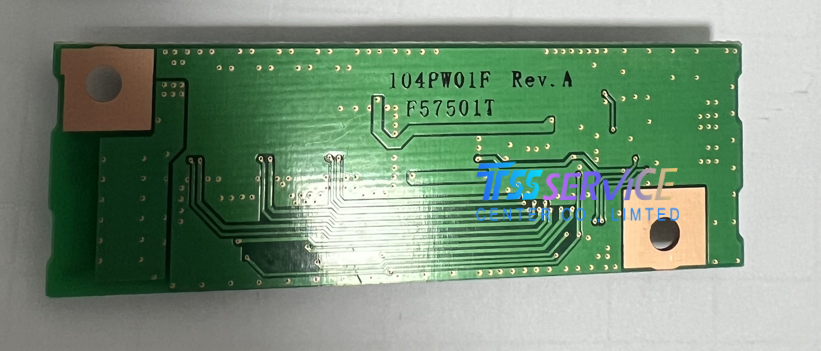
The Technical Architecture of the NEC 104PW01F LED Driver
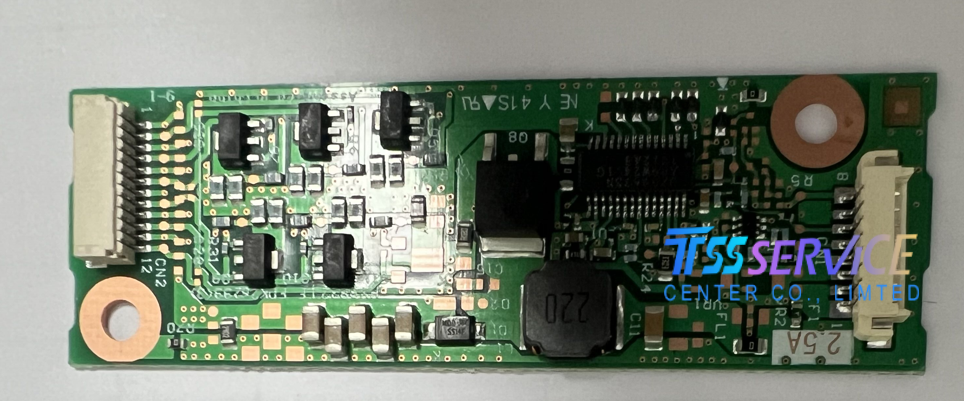
At its core, the NEC 104PW01F is a constant-current switching regulator designed to drive multiple strings of LEDs typically found in 10.4-inch TFT-LCD backlight units. Its architecture distinguishes it from generic boost converters through several industrial-grade features. The board accepts a wide input voltage range, commonly 9V to 20V DC, which is crucial for systems powered by unregulated industrial power rails or battery backups. The primary function is to step up this voltage to the level required by the LED strings (often exceeding 30V) while maintaining a stable current, typically 20mA to 25mA per string, regardless of input fluctuations or LED forward-voltage drift caused by thermal aging.
The board incorporates a dedicated PWM (Pulse Width Modulation) dimming controller for precise brightness adjustment. Unlike linear analog dimming, PWM dimming avoids color shift and maintains the LED’s chromaticity point, which is critical for color-sensitive applications like medical imaging or industrial quality inspection. The NEC 104PW01F also features multi-string current balancing. In a 10.4-inch panel, multiple LED strings are connected in parallel; due to inherent variations in diode junctions, one string may draw more current than others, leading to hotspot aging and uneven brightness. This driver employs passive or active balancing circuits to ensure each string receives identical current, extending the backlight lifetime significantly. Furthermore, it includes protection circuits against over-voltage, under-voltage, and short-circuit conditions, isolating the fault without damaging the main system board or the LCD panel itself.
Integration Challenges and Compatibility with 10.4-Inch Panels
Selecting the NEC 104PW01F as a replacement or design-in component requires careful consideration of its electrical and mechanical interface. The board is specifically tailored for panels with an LED count of 24 to 30 LEDs arranged in 3 to 4 parallel strings. The connector pinout, usually a 10-pin or 12-pin FH12-series connector, carries not only power and ground but also the enable signal and the PWM dimming input. A common integration pitfall is assuming that any 10.4-inch panel shares the same pinout. The NEC 104PW01F expects a specific logic level for enable (typically 3.3V or 5V) and a PWM frequency range between 100Hz and 1kHz for flicker-free operation.
Another critical factor is the thermal management interface. Industrial panels often operate in enclosures with limited airflow. The driver board’s primary heat-generating components—the switching FET and the inductor—must be positioned away from heat-sensitive areas of the panel. The NEC 104PW01F design incorporates a thermal pad for conduction to the system chassis, which is often overlooked by inexperienced technicians. Failure to manage this heat path can lead to thermal runaway, where the LED current drops incorrectly, causing shimmering or premature shutdown. When using this driver with a panel from a different manufacturer, one must also verify the LED forward voltage (Vf) at the nominal operating current. If the panel’s Vf is significantly higher than the driver’s maximum output voltage range, the backlight will not achieve full brightness, or the driver may fail to regulate completely.
Optimizing Lifespan and Performance in Harsh Environments
The true value of the NEC 104PW01F emerges when it is deployed in environments with high ambient temperatures, vibration, or power line noise. Industrial sites often expose displays to temperatures exceeding 50°C (122°F). Under these conditions, standard consumer drivers suffer from increased leakage current in the switching MOSFET and capacitor degradation. The NEC 104PW01F uses low-ESR (Equivalent Series Resistance) capacitors rated for 105°C and a robust ferrite core inductor that saturates at a higher current, ensuring stable operation even when the ambient temperature pushes the internal junction temperatures near the limit.
To optimize performance, engineers should implement a feed-forward compensation in the system design. By monitoring the input voltage rail and providing a clean enable signal that does not experience power-up glitches, the driver can avoid false shutdowns. Additionally, the use of EMI (Electromagnetic Interference) filtering on the input line is highly recommended. The switching frequency of the driver, typically in the 400kHz to 800kHz range, can generate conducted noise that interferes with nearby capacitive touch controllers or analog sensors. The NEC 104PW01F has a built-in input filter stage, but adding a common-mode choke on the wiring harness significantly improves noise immunity. For maximum lifespan, it is advisable to operate the backlight at no more than 80% of its maximum PWM duty cycle in continuous operation. This derating reduces thermal stress on both the driver and the LEDs, often extending the Mean Time Between Failures (MTBF) from 30,000 hours to over 70,000 hours, making the system viable for 24/7 industrial use.
Conclusion: A Strategic Component for Industrial Display Longevity
The NEC LED Backlight Driver Board 104PW01F is far more than a simple power stage; it is a carefully engineered current management system designed to ensure the visual integrity and operational durability of 10.4-inch industrial displays. By understanding its constant-current architecture, dimming capabilities, and thermal constraints, engineers can avoid common integration failures and significantly enhance system reliability. The board’s robust design against temperature extremes and electrical noise makes it the preferred choice for demanding contexts like factory floor HMI panels and medical patient monitors. For any professional tasked with maintaining or upgrading an industrial display, the 104PW01F represents a reliable, field-proven solution that directly contributes to reduced downtime and consistent visual performance over the product’s lifecycle.


