In the intricate world of industrial and medical display technology, the choice of a panel is seldom about raw specs alone. It's about reliability, clarity under duress, and seamless integration into systems where failure is not an option. This article delves deep into the NL6448BC20-14, a 6.5-inch TFT-LCD panel originally designed for NEC, examining its enduring relevance in today's demanding applications
In the intricate world of industrial and medical display technology, the choice of a panel is seldom about raw specs alone. It's about reliability, clarity under duress, and seamless integration into systems where failure is not an option. This article delves deep into the NL6448BC20-14, a 6.5-inch TFT-LCD panel originally designed for NEC, examining its enduring relevance in today's demanding applications. Beyond the basic numbers of 640x480 resolution and a 20:14 aspect ratio, we will explore the engineering decisions that define its performance envelope.
Our analysis will move from its fundamental technical architecture to its practical performance in challenging environments, then to its critical role within complete system solutions, and finally, to a clear-eyed assessment of its modern applicability. This journey is designed for engineers, procurement specialists, and developers who need to understand not just what this panel is, but why and how it continues to serve as a trusted component in critical display assemblies.
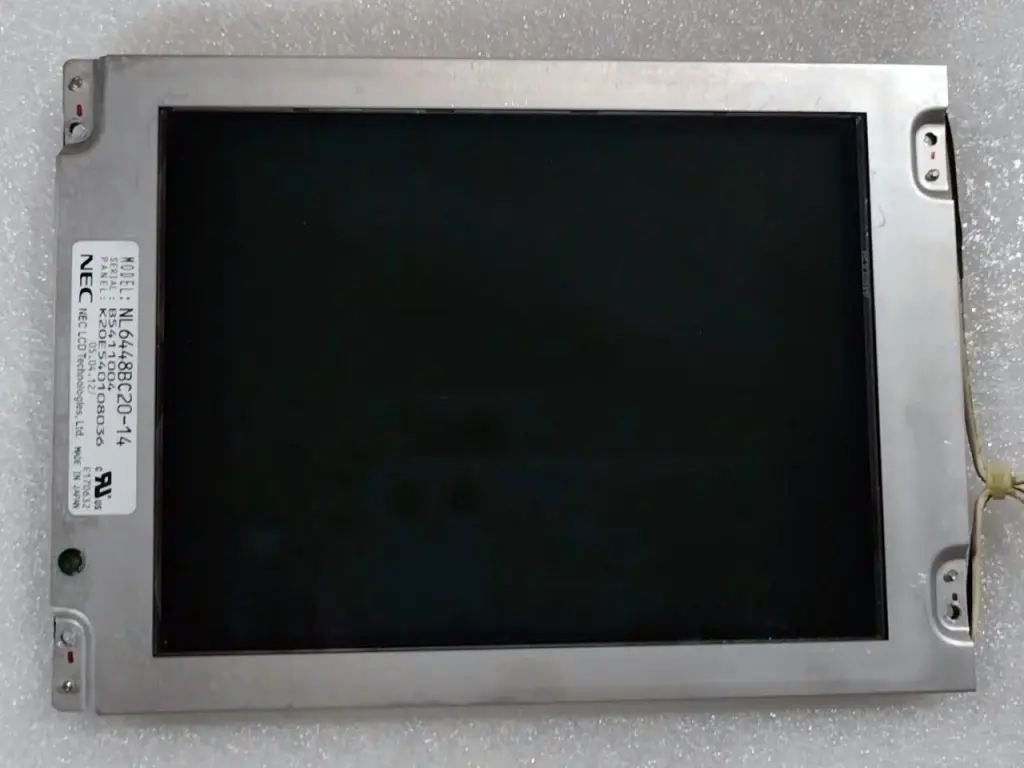
Deconstructing the Core Architecture: More Than Just Pixels
At first glance, the NL6448BC20-14 presents a classic VGA (640x480) resolution on a compact 6.5-inch diagonal. This 20:14 aspect ratio, a hallmark of many industrial panels, offers a balanced workspace for data readouts, control interfaces, and diagnostic information. The panel utilizes a transmissive TFT-LCD design with a CCFL backlight, a technology choice that speaks to its era and intended use case. CCFL backlighting, while less energy-efficient than modern LEDs, provides exceptionally uniform and stable illumination across the entire viewing area—a critical factor in medical imaging or instrumentation where color and brightness consistency are paramount.
The interface is a critical piece of the architecture. This panel typically employs an analog RGB interface, which requires a dedicated controller (like the NEC μPD16353 or compatible chips) to drive it. This separation of panel and controller offers system designers flexibility; the same panel can be adapted to different host systems with the appropriate controller board. The electrical and mechanical specifications, including pin configuration, mounting hole positions, and bezel dimensions, are meticulously defined to ensure drop-in compatibility within the chassis it was designed for, reducing mechanical integration headaches.
Performance Under Pressure: Reliability in Harsh Environments
The true value of a panel like the NL6448BC20-14 is revealed not on a lab bench, but in operational environments. Its specification sheet hints at a robust design: a wide operating temperature range (often from -10°C to 70°C), high brightness output (typically 400 nits or more), and a wide viewing angle. These features are not arbitrary; they are direct responses to application demands. In an ambulance-mounted medical device, the display must be readable in direct sunlight and function reliably in both freezing and scorching conditions.
Furthermore, the longevity and stability of its CCFL backlight, while requiring an inverter, are proven over tens of thousands of hours. For legacy systems still in service—in factory automation, test equipment, or specialized vehicles—maintaining a consistent visual interface over a decade or more is crucial. The panel's design mitigates risks like image retention and offers strong resistance to electromagnetic interference (EMI), ensuring that nearby motors or communication devices don't introduce visual noise or control errors onto the screen.
The System Integration Imperative: Controllers, Interfaces, and Power
Understanding this panel in isolation is insufficient. Its deployment is inherently tied to a system integration mindset. The choice of a matching LCD controller board is the most critical decision. This controller acts as the translator, converting signals from a host CPU (via LVDS, VGA, or other outputs) into the precise analog RGB timing the NL6448BC20-14 requires. Designers must consider:
-
Signal Compatibility: Ensuring the controller accepts the host's output format.
-
Resolution Scaling: Managing how other resolutions are adapted to the native 640x480 panel.
-
Power Sequencing: Properly managing the turn-on/off sequence for the panel, backlight inverter, and logic power to prevent damage.
-
Mechanical Integration: Sourcing or designing a mounting frame that secures the panel, controller, and inverter as one reliable unit.
This ecosystem approach transforms a bare panel into a functional display module, ready for embedded installation. It also highlights the panel's role as a stable, known-good component within a larger, potentially evolving system.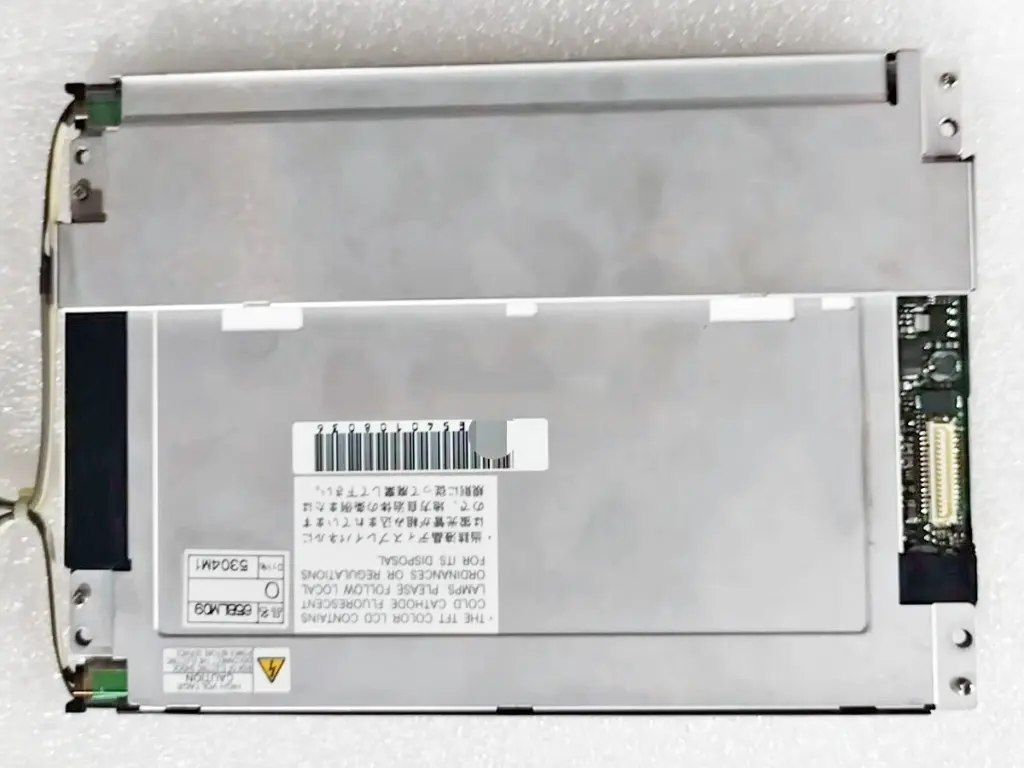
Legacy Strength vs. Modern Alternatives: A Strategic Evaluation
In an age dominated by LED-backlit, high-resolution, and touch-enabled displays, the NL6448BC20-14 occupies a specific niche. Its advantages are clear: proven reliability, exceptional uniformity, and direct compatibility with a vast installed base of NEC-driven equipment. For maintenance, repair, and overhaul (MRO) of existing systems, or for new designs that prioritize risk aversion and long-term supply stability over cutting-edge specs, this panel remains a compelling choice.
However, a strategic evaluation must also consider modern alternatives. Newer panels with LED backlights offer lower power consumption, thinner profiles, and longer lifespans. Higher resolutions can deliver sharper graphics. The decision ultimately hinges on the project's constraints:
-
Is this for a legacy system upgrade or a new design?
-
What are the critical environmental and reliability requirements?
-
Is the engineering team prepared to handle analog RGB integration, or is a modern digital interface (LVDS, MIPI) more suitable?
-
What is the total cost of ownership, including power, cooling, and expected replacement intervals?
For many, the NL6448BC20-14 represents a "golden standard" of industrial VGA displays—a component whose characteristics are fully understood and whose performance is trusted implicitly.
The NL6448BC20-14 is far more than a vintage display; it is a testament to engineered resilience tailored for critical applications. Its value lies in its predictable performance within a well-defined system architecture, offering unmatched stability in harsh conditions. While newer technologies provide advantages in efficiency and pixel density, this panel's enduring role is secured by the vast legacy systems it supports and the specific operational demands it meets. For engineers, the key takeaway is to evaluate it not as an isolated component, but as the visual heart of a reliable, integrated system, making it a strategically sound choice where proven performance outweighs the allure of the new.


