In the rapidly evolving landscape of embedded display technology, the demand for compact, high-visibility, and reliable LCD panels has never been more critical. The New F-51477GNF-SLY-ALN emerges as a specialized solution designed specifically for the 4.7-inch diagonal
n the rapidly evolving landscape of embedded display technology, the demand for compact, high-visibility, and reliable LCD panels has never been more critical. The New F-51477GNF-SLY-ALN emerges as a specialized solution designed specifically for the 4.7-inch diagonal, 320x240 resolution LCD panel screen. This article delves beyond the part number to explore the technical architecture, operational nuances, and integration value of this display module. Targeting engineers, product designers, and procurement specialists, we will dissect its role in bridging the gap between legacy QVGA standards and modern performance requirements. By examining its construction, interface compatibility, power considerations, and real-world application constraints, this analysis aims to provide a factual resource for decision-makers evaluating this specific model for industrial, medical, or retrofitting projects.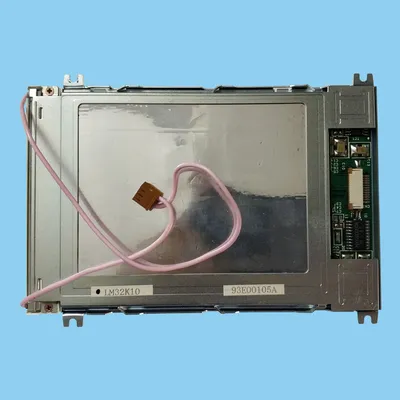
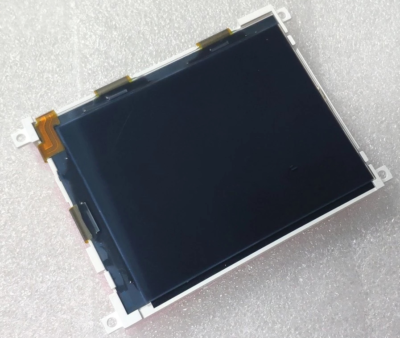
Architectural Integrity: Interpreting the Part Number and Display Core
The alphanumeric designation F-51477GNF-SLY-ALN is not arbitrary; it encodes critical specifications regarding the panel’s construction and intended use case. At its core, the display is a 4.7-inch diagonal TN (Twisted Nematic) liquid crystal module, operating at a standard QVGA resolution of 320 horizontal pixels by 240 vertical pixels. This resolution, while deemed entry-level by modern smartphone standards, remains a workhorse in Human-Machine Interfaces (HMI), point-of-sale terminals, and industrial control panels where cost-effectiveness and readability are paramount.
The “SLY” segment in the model often indicates specific optical enhancements, such as a surface treatment for anti-glare or a particular polarizer film arrangement. Typically, this results in a 6 o’clock viewing direction and a contrast ratio optimized for ambient lighting conditions rather than direct sunlight. The panel interface is most commonly parallel RGB (Red, Green, Blue) with an integrated SPI (Serial Peripheral Interface) or MCU 8/16-bit bus, allowing direct connection to a wide range of microcontrollers without the need for an expensive external frame buffer. Understanding this architectural constraint is vital; the F-51477GNF-SLY-ALN is designed for a master-slave configuration where the host processor continuously refreshes the pixel data.
Interface and Driver Compatibility: Wiring the Visual Pipeline
Effective deployment of the F-51477GNF-SLY-ALN hinges on matching its electrical characteristics with the host controller. The module typically houses a dedicated driver IC, often from the Sitronix or Ilitek family, which manages the 320x240 array. This driver IC translates incoming parallel data into row and column voltages for the liquid crystal cells. Engineers must verify the logic voltage level, which is usually 3.3V, although 5V tolerant I/O pins are common but not guaranteed.
The primary interface modes for this model include:
-
MCU 8080/6800 Mode: For direct memory mapping with embedded microcontrollers.
-
RGB Synchronous Mode: Requiring pixel clock (DOTCLK), horizontal sync (HSYNC), and vertical sync (VSYNC) signals from a graphics processor.
-
Serial Peripheral Interface (SPI): Primarily for command configuration rather than high-speed data streaming.
A common integration pitfall is neglecting the initialization sequence. Unlike plug-and-play monitor panels, the F-51477GNF-SLY-ALN requires a specific series of register commands (e.g., sleep out, display on, gamma correction) to function correctly. Failure to provide these commands results in a blank or garbled screen. Furthermore, the physical flex cable connector demands precision soldering or a compatible ZIF (Zero Insertion Force) connector, with a specific pin pitch that must match the host PCB layout.
Power Management and Backlight Optimization
The optical performance of the F-51477GNF-SLY-ALN is heavily dependent on its backlight unit. This module standardly utilizes white LEDs configured in a specific parallel or series arrangement. The voltage and current requirements for this backlight are distinct from the logic supply. Typically, four to six LEDs in a 1S4P or 2S3P configuration require a constant current driver capable of supplying approximately 60-80 mA at 12V to 20V, depending on the specific variant of the ALN tail design.
Power consumption is a critical factor in portable or battery-powered equipment. The LCD glass itself consumes minimal power (in the milliwatt range), but the backlight dominates the power budget. Using a high-efficiency boost converter to drive the LED string is recommended over a linear regulator to minimize heat dissipation. Additionally, the module may include a unique power management sequence: the backlight should be enabled after the LCD controller logic is stable, and disabled before power is cut, to prevent flash artifacts or latch-up damage. Proper decoupling capacitors near the module’s VCC and VLED pins are essential to absorb current spikes during row transitions.
Practical Application Constraints and Environmental Resilience
When integrating the F-51477GNF-SLY-ALN into a final product, the engineer must account for its operational envelope. As a TN panel, its optimal viewing angle is narrow, limited to approximately 70 degrees horizontal and 50 degrees vertical. Color saturation and contrast degrade significantly when viewed off-axis. This makes the module suitable for fixed-angle installations, such as a machine control interface, but problematic for a handheld device held at variable angles.
The operating temperature range is another crucial constraint. Most industrial variants of this model support a range of -20°C to +70°C. At the lower end, the liquid crystal fluid becomes more viscous, resulting in slower pixel response times and visible ghosting. At higher temperatures, the risk of image sticking or “burn-in” increases if a static image is displayed for extended periods. To mitigate this, designers should implement periodic screen updates or a screen saver logic when using the F-51477GNF-SLY-ALN in high-heat environments. Additionally, the module’s integrated polarizer is susceptible to humidity; conformal coating on the peripheral electronics and a sealed bezel are recommended for use in condensation-prone environments like commercial kitchens or outdoor kiosks.
A Strategic Component for Niche Applications
The New F-51477GNF-SLY-ALN LCD module represents a calculated compromise between legacy compatibility and modern functionality. Its 4.7-inch QVGA resolution remains a standard touchpoint for industrial reliability, while the specific driver interface requires deliberate electrical planning for successful integration. The module’s true value lies in its balance of cost, optical clarity for fixed-angle viewing, and robust power architecture when properly managed with external backlight drivers. For projects requiring a proven, standardized display size without the complexities of high-resolution panel sourcing, this model offers a reliable foundation, provided the engineering team respects its power sequencing, thermal boundaries, and initialization protocol. In the end, the F-51477GNF-SLY-ALN is not a novelty; it is a tool for precise, functional visibility in controlled environments.


