In the demanding landscape of industrial automation, the interface between human operators and complex machinery is not merely a screen; it is a critical point of control, reliability, and efficiency. The New KYOCERA 5.7 inch 320*240 LCD Display Panel KCS057QV1AA-A07-03-03 emerges as a specialized solution designed to thrive in environments where consumer-grade displays would fail. This article delves beyond surface-level specifications to explore the technical architecture, engineering philosophy, and operational value of this specific panel. It offers a deep analysis for procurement engineers, system integrators, and designers who require more than just a display—they need a dependable, long-life component optimized for harsh industrial conditions. We will examine how this model balances legacy resolution requirements with modern durability standards, its role in system architecture, and the performance characteristics that distinguish it as a robust choice for mission-critical applications.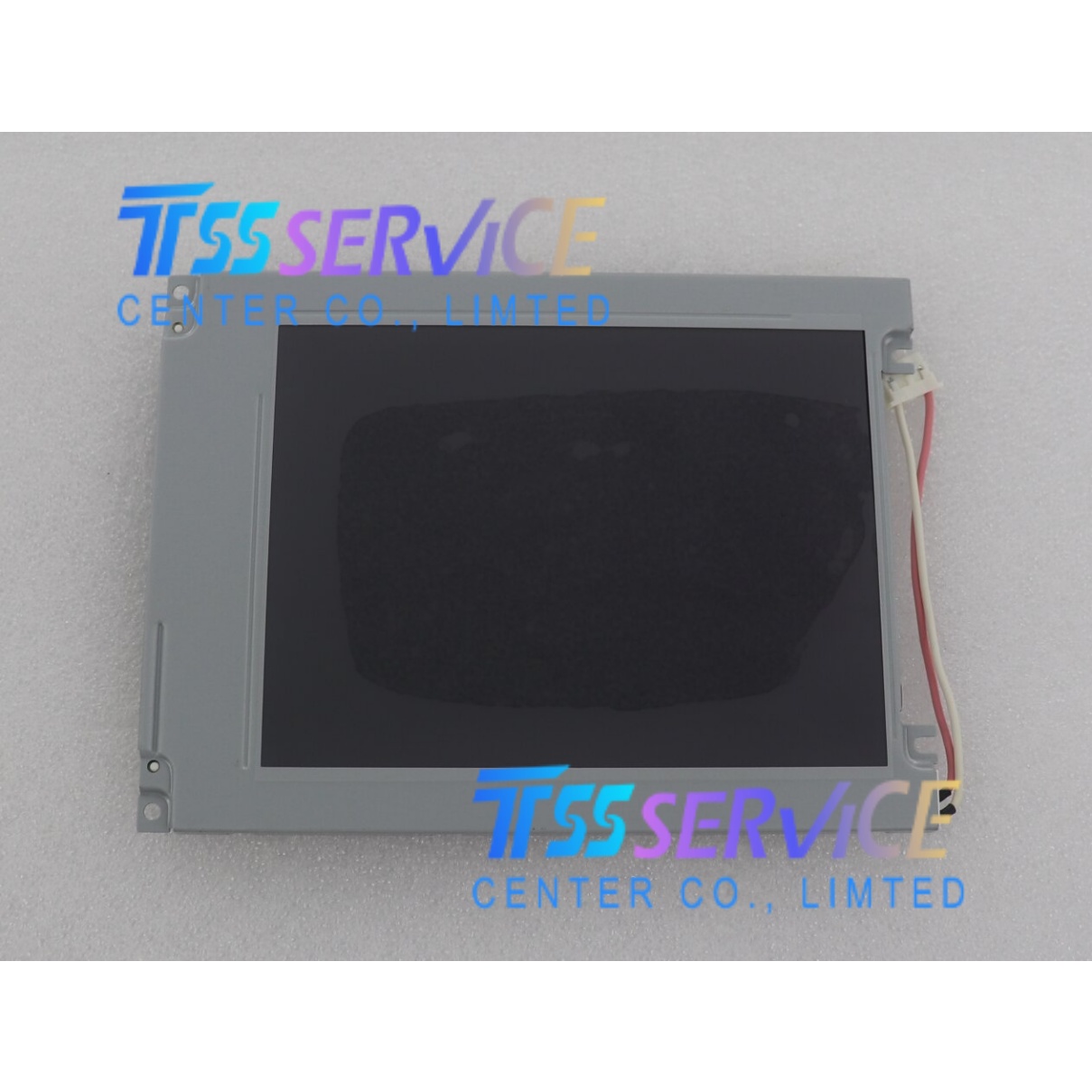
Decoding the Engineering Philosophy: Why 320x240 Still Matters
At first glance, a 5.7-inch panel with a resolution of 320x240 pixels may appear technologically dated compared to the high-definition screens dominating consumer markets. However, this perception overlooks a fundamental truth of industrial design: fitness for purpose. In factory floors, medical equipment, and heavy machinery, the primary requirements are not pixel density
or color vibrancy, but rather readability, response time, and longevity.
The QVGA (Quarter Video Graphics Array) resolution of the KCS057QV1AA-A07-03-03 is deliberately chosen for its compatibility with legacy control systems and microcontrollers that prioritize deterministic performance over graphics processing. Many Programmable Logic Controllers (PLCs) and Human-Machine Interfaces (HMIs) operate on protocols that are highly efficient at rendering simple, high-contrast graphics. This resolution allows for clear display of critical data points—such as temperature readings, pressure gauges, and machine status indicators—without the computational overhead required to drive higher-resolution panels.
Furthermore, the 5.7-inch diagonal size represents a sweet spot for panel-mounted applications. It is compact enough to fit into standard cutouts within control cabinets, yet large enough to present a comprehensive array of controls and data without causing eye strain during prolonged use. The focus here is on functional clarity. By optimizing for these specific industrial parameters, KYOCERA ensures that the display operates with minimal latency and maximum reliability, avoiding the flickering or ghosting issues that can plague higher-resolution panels when driven by less powerful industrial processors.
Structural Integrity and Environmental Resilience: Built for the Factory Floor
The KYOCERA KCS057QV1AA-A07-03-03 is not simply an LCD module; it is a ruggedized component engineered to withstand the physical and environmental stresses of industrial settings. Industrial displays face a unique set of challenges: constant vibration from nearby machinery, wide temperature fluctuations from unheated warehouses to sun-exposed control rooms, and exposure to dust, oil mist, and humidity.
This particular model addresses these challenges through a multi-layered approach to construction. The glass substrate and internal liquid crystal materials are selected for their thermal stability, typically supporting an operating temperature range wide enough to encompass most industrial climates. The backlight system, often a critical point of failure, is designed for extended operational life, frequently exceeding 50,000 hours of continuous use. This translates to years of uninterrupted service, reducing the total cost of ownership by minimizing downtime for replacement.
Mechanical resilience is further enhanced by robust mounting points and a frame designed to absorb shock. When integrated into a control panel, it can tolerate the low-frequency vibrations common in conveyor systems and packaging machines. Additionally, the display's surface treatment often includes anti-glare coatings to combat reflections from overhead lighting, a common source of operator error and fatigue. The panel’s compliance with industry standards for vibration and shock resistance means that system designers can deploy this display with confidence in environments ranging from automated assembly lines to outdoor test equipment, where less robust components would quickly degrade.
Interface Architecture and System Integration: Seamless Connectivity
A display’s value is fully realized only when it integrates effortlessly into the existing system architecture. The KCS057QV1AA-A07-03-03 utilizes a standardized interface protocol—often a parallel RGB or LVDS interface—which allows it to connect directly to a wide variety of embedded controllers and single-board computers common in the industrial sector. This standardization is a key advantage for engineers seeking to avoid costly custom wiring or signal conversion hardware.
The interface is designed for low electromagnetic interference (EMI), a critical feature in environments dense with motors, inverters, and high-frequency switching power supplies. Clean signal transmission ensures that the display remains stable and jitter-free even when cables run near high-voltage lines within a cabinet. Furthermore, the pinout configuration and driving voltage requirements are chosen to be compatible with common 3.3V or 5V logic levels used in microcontrollers, simplifying power supply design and reducing the need for additional level-shifting components.
Integration is further simplified by the panel's mechanical design. The exact dimensions, connector location, and mounting holes are documented with high precision, allowing for accurate placement in custom bezels and enclosures. For system integrators, this means reduced prototyping time and fewer last-minute adjustments during production. The display’s compatibility with standard touch panel overlays also broadens its application scope, enabling the creation of interactive HMIs without requiring a completely custom display solution. By offering a known, stable electrical and mechanical interface, KYOCERA reduces integration risk and accelerates time-to-market for OEMs.
Optical Performance and Long-Term Reliability: Consistency Over Brilliance
While consumer displays emphasize peak brightness and vivid colors, the KCS057QV1AA-A07-03-03 prioritizes optical consistency and readability under varying conditions. The panel typically features a TN (Twisted Nematic) or STN (Super Twisted Nematic) mode, which offers excellent contrast ratios and fast response times for monochrome or limited color applications. The 320x240 resolution, when combined with these mature LCD technologies, produces sharp, well-defined characters and symbols that are easily legible even at sharp viewing angles, a common requirement when a monitor is mounted above or below eye level.
Brightness levels are carefully calibrated not for maximum spectacle, but for sustained visibility in ambient light conditions that change throughout the day. A backlight that is too bright can cause eye strain in dark control rooms, while one that is too dim becomes unreadable in sunlit environments. The KYOCERA panel offers a balanced luminance output that remains stable over thousands of operational hours. This stability is achieved through high-quality LED backlighting and sophisticated driver circuits that regulate current precisely, preventing the gradual dimming that plagues cheaper displays.
Long-term reliability is further ensured by the panel's adherence to strict quality control standards during manufacturing. Each unit undergoes rigorous testing for pixel defects, contrast uniformity, and electrical performance. In applications where a display failure could halt an entire production line or compromise patient safety, this level of quality assurance is non-negotiable. The result is a component that not only looks good out of the box but continues to perform reliably year after year, maintaining its optical specifications through countless power cycles and temperature changes.
Conclusion
The KYOCERA KCS057QV1AA-A07-03-03 5.7-inch 320x240 LCD display is a testament to the principle that reliability and performance are not defined by raw specifications alone, but by how effectively a component fulfills its intended role. It offers a mature, proven solution for industrial applications requiring robust mechanical design, stable optical performance, and seamless system integration. For engineers and procurement managers seeking to build systems that must operate flawlessly for a decade or more, this panel provides a cost-effective, low-risk foundation. It is a choice that prioritizes functional excellence and operational longevity, ensuring that the interface between human and machine remains a point of strength, not a point of failure, in the industrial process.


