In the ever-evolving landscape of human-machine interfaces, the display panel remains the critical window for information exchange and user interaction. For industrial, medical, and embedded applications where reliability, clarity, and longevity are paramount, the choice of display technology dictates the performance and durability of the entire system
In the ever-evolving landscape of human-machine interfaces, the display panel remains the critical window for information exchange and user interaction. For industrial, medical, and embedded applications where reliability, clarity, and longevity are paramount, the choice of display technology dictates the performance and durability of the entire system. This article delves into the LQ10D368, a new and original 10.4-inch a-Si TFT-LCD module with a resolution of 640 x 480 pixels.
We will explore its core technological foundations, dissect the specific advantages offered by its seemingly traditional specifications, and examine its ideal application environments. Moving beyond basic datasheet parameters, this analysis aims to provide engineers, product designers, and procurement specialists with a deep understanding of where and why this display module stands out as a robust and optimal solution in a market increasingly crowded with generic alternatives.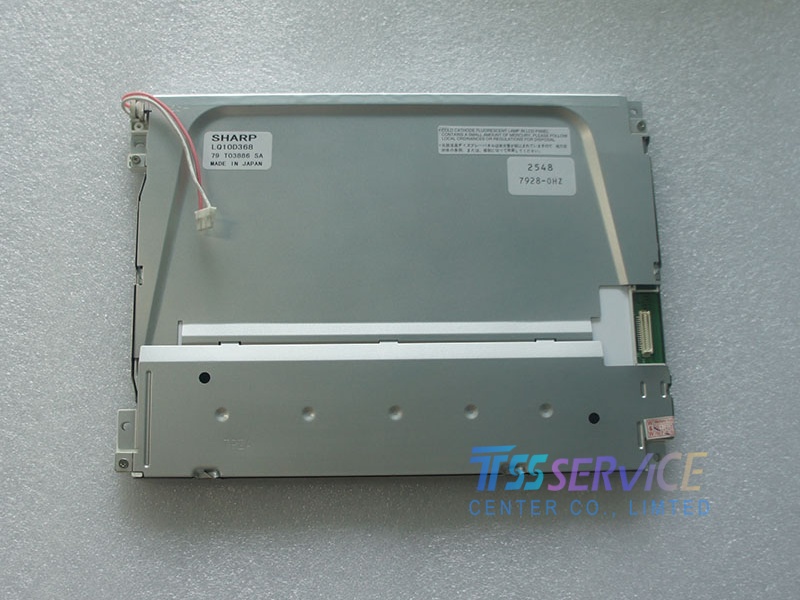
Deconstructing the LQ10D368: A Foundation of Proven Technology
At first glance, the specifications of the LQ10D368—a 10.4-inch diagonal, 640 x 480 (VGA) resolution, utilizing amorphous Silicon (a-Si) TFT technology—may appear conventional. However, this foundation is precisely its strength. The a-Si TFT process is one of the most mature and stable manufacturing methods in the LCD industry. For the LQ10D368, being "new and original" signifies production on contemporary, precision-controlled fabrication lines, ensuring high initial quality and consistent batch-to-batch reliability that older or refurbished panels cannot guarantee.
The 640 x 480 resolution on a 10.4-inch screen results in a pixel pitch that offers excellent character and graphic legibility without requiring excessive graphical processing power. This makes it inherently suitable for systems displaying structured data, machine status interfaces, diagnostic readouts, or control menus. The module typically incorporates a robust CCFL or LED backlight system designed for long operational life and stable brightness output. Its inherent design prioritizes signal integrity and noise resistance, crucial for operation in electrically noisy industrial environments.
The Strategic Advantages of Optimized Specifications
In an era of chasing higher pixel densities, the LQ10D368's VGA resolution presents several strategic advantages. Firstly, it significantly reduces system cost and complexity. It requires a less powerful and expensive display controller or system-on-chip (SoC), lowers memory bandwidth requirements, and simplifies power design. This translates directly into a lower total bill of materials (BOM) for the end product.
Secondly, this resolution ensures superior compatibility and stability. It is universally supported by every major operating system and embedded graphics library without the need for complex scaling. For legacy system upgrades or new designs based on proven platforms, integration is seamless. Furthermore, the lower transistor count per panel, compared to high-resolution displays, contributes to potentially higher manufacturing yields and enhanced long-term reliability, as the electronic design operates under less stress. The balance between clarity and system efficiency is expertly managed.
Ideal Application Ecosystems: Where Reliability is Non-Negotiable
The true value of the LQ10D368 is realized in specific, demanding application ecosystems. Its characteristics make it an outstanding candidate for:
-
Industrial Automation & HMI: Factory floor control panels, PLC interfaces, and test equipment where readability under various lighting conditions and resistance to vibration/temperature fluctuations are essential.
-
Medical Devices: Patient monitoring systems, diagnostic equipment, and laboratory instruments where display accuracy, consistency, and 24/7 operational readiness cannot be compromised.
-
Transportation & Avionics: Onboard information displays, control units for marine, rail, or auxiliary aerospace applications requiring wide temperature range operation and high reliability.
-
Point-of-Sale & Kiosk Systems: Self-service terminals and retail systems benefiting from its robust construction and clear menu display for public use.
In these fields, the display is not merely an output device but a critical component of a larger, mission-critical system. The LQ10D368's design philosophy aligns perfectly with these needs.
Beyond the Panel: Integration and Long-Term Value Considerations
Selecting a display module extends beyond on-paper specs to integration and lifecycle support. As an original module, the LQ10D368 comes with complete technical documentation, including detailed interface pinouts, timing specifications, and mechanical drawings, facilitating smoother and faster product development cycles. Its standard LVDS or RGB interface offers a direct connection path to most embedded processors.
Perhaps more importantly, sourcing a new and original panel from a reputable supply chain provides assurance against the risks of counterfeit, refurbished, or reclaimed components. It ensures predictable longevity in the supply chain, which is crucial for products with multi-year production and service life expectations. The investment in a quality, original module like the LQ10D368 mitigates future risks of field failures, costly redesigns, and brand reputation damage, delivering superior long-term value and peace of mind.
The LQ10D368 10.4-inch a-Si TFT-LCD demonstrates that optimal display selection is not a pursuit of the highest specifications, but of the most appropriate and reliable technology for the task. Its mature VGA resolution and proven a-Si TFT construction, when implemented as a new and original component, offer a compelling blend of performance, cost-effectiveness, and unwavering reliability. For engineers designing systems where durability and clarity under demanding conditions are paramount, this module represents a strategically sound choice that prioritizes system integrity and long-term operational success over transient technological trends.


