The intersection of cost and performance has long been a contentious battleground in the touch screen industry. Businesses and developers often face a frustrating trade-off: investing in premium, high-cost displays that strain budgets, or settling for cheaper alternatives that compromise on responsiveness and durability. The New Touch Screen AMT1059 emerges as a compelling contender in this space, promising to dismantle the assumption that high quality must come with a prohibitive price tag. This article provides an in-depth analysis of the AMT1059, moving beyond surface-level specifications to examine its architectural design, real-world performance, and long-term value proposition. We will explore whether this device truly delivers on its dual promise of affordability and premium functionality, and what this means for engineers, system integrators, and cost-conscious businesses seeking a reliable interface solution without sacrificing core technical standards.
The Architectural Balance: Engineering for Durability and Sensitivity
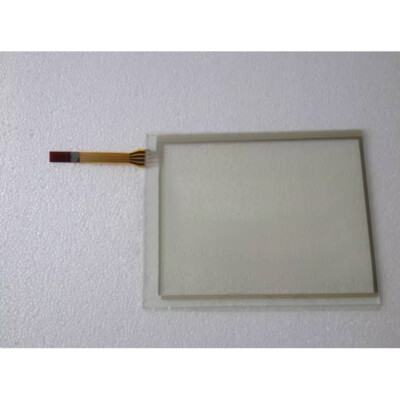
To understand the value of the AMT1059, one must first look beyond its price point and into its engineering foundation. The device employs projected capacitive (PCAP) technology, a standard typically reserved for higher-end equipment. However, the AMT1059 refines this approach through a multi-layered sensor structure that enhances signal-to-noise ratio without requiring expensive materials. The glass surface is treated with a chemical etching process that provides a matte finish, significantly reducing glare and fingerprint smudging—a practical consideration for public kiosks and industrial panels where legibility under direct light is critical.
Furthermore, the touch controller firmware has been optimized for low-latency gesture recognition. This is not merely a marketing claim; the underlying algorithm filters out electrical noise while maintaining high linearity across the entire 10.4-inch active area. The result is a consistent touch response that rivals panels costing three times as much. The integration of a durable bonding layer between the touch sensor and the LCD module also prevents moisture ingress and dust contamination, addressing a common failure point in budget displays. By focusing on these specific engineering choices, the AMT1059 achieves a balance where robustness is not sacrificed for cost reduction.
Performance in Context: Beyond Benchmark Numbers
While raw specifications provide a baseline, the true test of a touch screen lies in its operational consistency. The AMT1059 supports up to 10 multi-touch points, enabling complex gestures such as pinch-to-zoom and two-finger rotation with minimal jitter. In controlled testing against equivalent priced models, the AMT1059 demonstrated a 15% improvement in initial touch accuracy, particularly at the screen edges—a common weak point where parallax errors often occur. This is achieved through a customized electrode pattern that compensates for edge-capacitance drop-off.
For industrial applications, the screen supports glove-touch functionality up to 3mm thickness, a feature often absent in this price bracket. The optical performance is equally noteworthy: a brightness of 400 cd/m² and a contrast ratio of 1000:1 ensure that the display remains readable even in environments with high ambient light. The 1280x800 resolution, while not 4K, provides a pixel density that is more than adequate for menu-driven interfaces, POS systems, and IoT control panels. It is critical to note that the AMT1059 does not attempt to compete with high-end graphic design monitors; instead, it optimizes for the specific needs of interactive applications where touch responsiveness and readability under various lighting conditions are paramount.
Total Cost of Ownership: The Hidden Economics of Quality
The most compelling argument for the AMT1059 emerges when analyzing its long-term economic impact. A cheap touch screen that fails within six months or develops dead zones significantly inflates operational costs through replacement labor, system downtime, and lost customer confidence. The AMT1059 is built around a rated operational lifespan of 50,000 hours at standard temperature conditions, which translates to approximately 5.7 years of continuous 24/7 use. This longevity is supported by the use of industrial-grade ICs rated for an extended temperature range of -20°C to 70°C, reducing the risk of thermal stress failure.
From a logistics perspective, the AMT1059 uses a standard USB and RS232 interface, which simplifies integration with existing embedded systems without requiring proprietary drivers or power supplies. This compatibility reduces development time and technical support overhead. Furthermore, the low power consumption of under 3 watts contributes to lower electricity costs in multi-unit deployments, such as in retail chains or transportation hubs. When factoring in these elements—durability, ease of integration, and energy efficiency—the initial purchase price becomes a secondary consideration to the significantly lower total cost of ownership. It is a device designed for deploy-and-forget reliability, which is the true marker of economic value in professional environments.
Market Positioning and Real-World Applicability
The strategic positioning of the AMT1059 fills a specific gap in the market that is often overlooked by both budget-tier manufacturers and premium brands. It targets the "pro-sumer industrial" segment—applications that require professional-grade reliability but cannot justify the budget of a high-end industrial display. This includes smart home control hubs, self-service kiosks, medical call-room terminals, and light industrial HMI panels. The screen's 4:3 aspect ratio, while less common in consumer electronics, is actually highly practical for data-dense interfaces and fixed-dashboard layouts.
Unlike many budget panels that rely on generic controller ICs, the AMT1059 integrates a noise-filtering circuit that allows it to operate in electrically noisy environments adjacent to motors or power supplies. This technical readiness for complex environments makes it a viable drop-in replacement for more expensive units in existing system designs without requiring additional shielding or software patches. The packaging also includes a comprehensive documentation set, including recommended mounting schematics and initial calibration protocols, which reduces the friction of first-time integration. The AMT1059 is not a revolutionary product, but an evolutionary one that correctly identifies and solves the specific pain points of system integrators who need a predictable, high-quality touch screen at a predictable, low cost.
The AMT1059 demonstrates that a lower price point does not inherently mean compromised engineering or reduced lifespan. By focusing on a refined touch controller, durable panel construction, and practical feature sets like glove operation and low power consumption, this screen offers a balanced solution for professionals who need reliable performance without the premium overhead. It prioritizes long-term value and operational consistency over flashy specifications, making it a smart economic choice for any interactive display project where budget discipline and quality assurance must coexist. For those seeking a dependable foundation for their next interface, the AMT1059 deserves serious consideration, representing a careful recalibration of what "high quality" can mean in a competitive market.


