The evolution of industrial automation hinges on the ability to translate complex data streams into intuitive, actionable insights. At the heart of this transformation lies the Human-Machine Interface (HMI), the critical bridge between operators and machinery. The
New Touch Screen MT4424TE represents a significant leap forward in this domain, moving beyond simple push-button replacements to become a sophisticated, high-performance control center. This article delves deep into the architectural philosophy and practical implications of this device, exploring how its hardware capabilities are engineered to solve real-world operational challenges. We will dissect the core technological advancements—from its robust display and processing power to its connectivity and environmental resilience—not merely as a list of features, but as a cohesive system designed for reliability and efficiency in demanding industrial environments. This analysis aims to provide engineers, system integrators, and plant managers with a comprehensive understanding of the MT4424TE’s potential to optimize workflow, reduce downtime, and enhance data interaction.
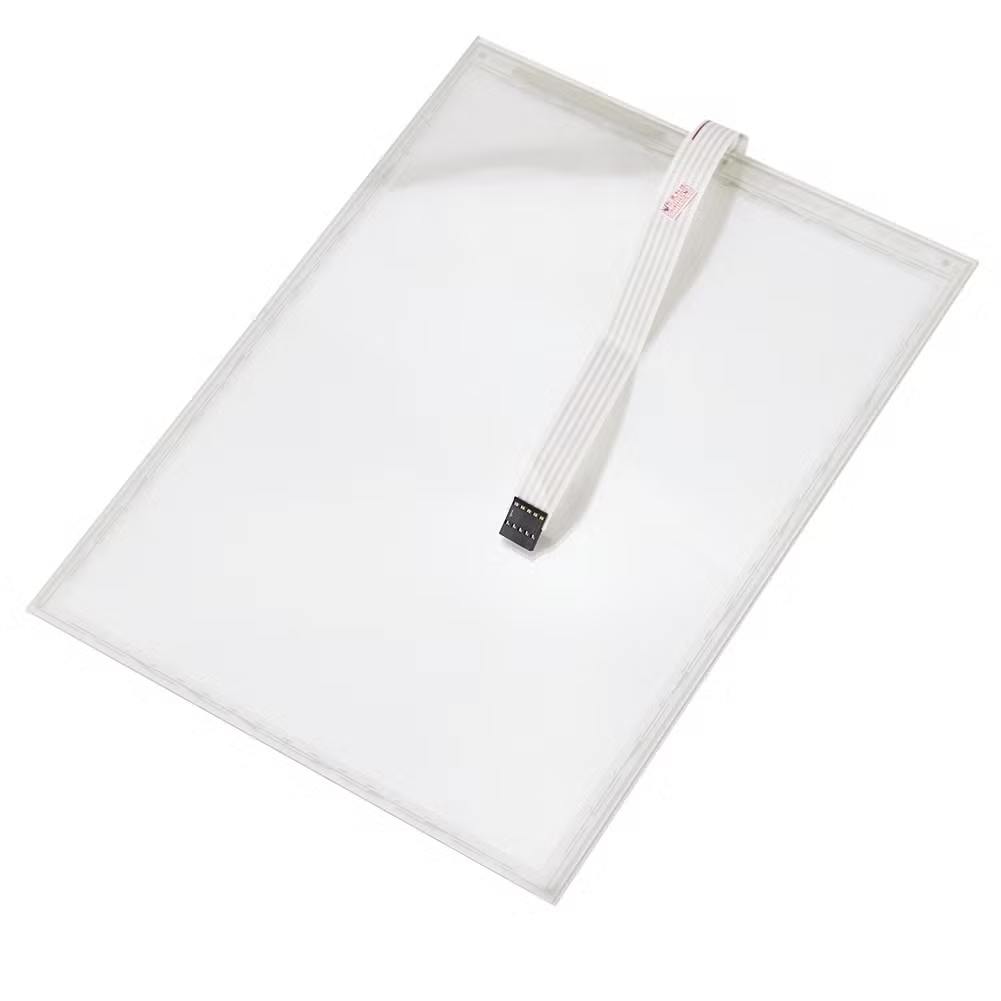
The Visual and Tactile Foundation: Engineering Clarity and Responsiveness
Any HMI’s primary function is to communicate information instantly and accurately. The
MT4424TE builds its user experience on a
10.4-inch TFT LCD display with a resolution of 1024 x 768 pixels, offering a 4:3 aspect ratio that is particularly well-suited for industrial applications where vertical space is often at a premium. However, raw resolution alone is insufficient. This panel delivers 16.7 million colors, ensuring vibrant, high-contrast visuals that remain legible even when viewed from wide angles—a critical requirement in factory settings where operators may not be positioned directly in front of the screen.
More transformative is the integration of a projective capacitive touch screen. While resistive touch screens have been the industrial standard for years, they suffer from calibration drift and reduced clarity due to multiple layers. The shift to projected capacitive technology in the MT4424TE offers several distinct advantages:
-
Multi-touch Gestures: Operators can use intuitive pinch-to-zoom or swipe gestures to navigate complex process diagrams or zoom into sensor readouts, reducing the time needed for interaction.
-
Superior Durability: The touch surface is inherently stronger and often supports the use of gloves, a non-negotiable requirement in safety-sensitive environments like chemical plants or automotive assembly lines.
-
Optical Clarity: By eliminating the air gap found in resistive layers, the display delivers brighter, sharper images with less reflection, reducing operator eye strain over long shifts.
This foundation of superior visual feedback and tactile responsiveness sets the stage for the HMI to handle more data and more complex interfaces without introducing cognitive friction for the user.
Processing Architecture: The Engine for Real-Time Data Integration
Beneath the responsive surface lies the true core of the MT4424TE: its processing ecosystem. This device is powered by a
Quad-core ARM Cortex-A7 processor, running at 1.2 GHz. While this may seem modest compared to a consumer tablet, its value is in its optimization for deterministic, real-time performance within an industrial control context. This architecture is purpose-built to handle the significant overhead of modern HMI tasks, particularly the rendering of sophisticated vector-based graphics and the execution of complex scripts without observable lag.
The crucial metric here is boot-up time and screen rendering speed. Traditional HMIs often require tens of seconds to initialize and load large projects. The MT4424TE leverages its processing power and optimized Linux-based operating system to achieve near-instantaneous startups. This translates directly to reduced downtime during machine restarts or power cycles.
Furthermore, the processor’s capability is amplified by 512 MB of DDR3 RAM and 4 GB of industrial-grade flash memory. The use of DDR3 RAM is a deliberate choice, providing a balance between speed and power efficiency, ensuring that the device does not overheat in an enclosed panel. The ample flash storage allows for accommodating not just the runtime project files, but also large historical data logs, recipe files, and user management databases directly on the device. This local data processing capability means the MT4424TE can function as a semi-autonomous data concentrator, offloading analytical tasks from a central PLC and reducing network traffic.
Connectivity and Networking: The Hub of the Smart Factory
In the era of Industry 4.0, an HMI is no longer a standalone window into a single machine; it is a vital node in a larger, interconnected network. The MT4424TE is engineered to be this hub, offering a comprehensive suite of ports that go far beyond the industry standard. The device is equipped with dual 10/100 Mbps Ethernet ports, a feature that fundamentally changes its role. These ports can be configured in multiple ways:
-
Gateway Functionality: One port connects to the machine-level PLC network, while the second connects to the plant-wide IT network, effectively acting as a secure data diode. This isolation is critical for preventing malicious traffic from reaching sensitive control systems.
-
Redundancy: If one network path fails, the HMI can seamlessly switch to the second port, ensuring continuous data flow for remote monitoring applications.
-
Protocol Bridging: The device can be used to translate between different industrial protocols, allowing a legacy PLC using Modbus RTU to communicate with a modern Ethernet/IP-based SCADA system.
Beyond Ethernet, the MT4424TE offers three isolated serial ports (RS-232/422/485), one of which is a 9-pin male RS-232 port often used for standard PLC connections. The inclusion of dual USB 2.0 Host ports (Type-A) allows for direct connection of peripherals like barcode scanners, USB keyboards, or a mouse, facilitating data entry and barcode-based tracking. A dedicated USB 2.0 Slave port (Type-B) is provided for high-speed project downloading and firmware updates. This level of connectivity transforms the MT4424TE from a simple display terminal into a versatile communication gateway, capable of unifying disparate parts of a production line into a single, coherent view.
Environmental Resilience: Built for the Factory Floor
An HMI’s value is only realized when it can operate reliably under the harsh conditions of the factory floor—vibration, dust, temperature extremes, and electrical noise. The
MT4424TE is purpose-built to withstand these challenges through meticulous mechanical and electrical design. Its rear casing is constructed from
die-cast aluminum, which serves a dual purpose: it acts as a robust structural chassis and as an efficient heat sink. This passive cooling design eliminates the need for a fan, a common point of failure in industrial electronics prone to clogging with dust and lint.
The device boasts an IP65 rating for the front panel. This means it is completely protected against dust ingress and against low-pressure water jets from any direction. This makes it suitable for washdown environments in food processing, pharmaceutical, or beverage plants. Critically, the front bezel is designed toform a watertight seal with a panel-mounted gasket, ensuring that no liquids can seep into the sensitive electronics.
Electrically, the
MT4424TE is designed for stability. It accepts a wide-range power input of
24 VDC (9-28 VDC), making it tolerant of voltage fluctuations common in industrial power supplies. It incorporates built-in electrical isolation on its communication ports, preventing ground loops that can damage both the HMI and the connected PLCs. The device is also CE and UL listed, adhering to rigorous international standards for safety and electromagnetic compatibility. This resilience translates to a longer Mean Time Between Failures (MTBF) and a lower total cost of ownership over the product's lifecycle, as it reduces the frequency of replacements and emergency maintenance visits.


