The evolution of industrial human-machine interfaces (HMIs) has reached a pivotal moment, where operational efficiency is no longer defined solely by processing power, but by the fluidity and intuitiveness of user interaction. The New Touch Screen MT508SV emerges as a contender in this space, promising to bridge the gap between complex backend automation and accessible frontline control. In an environment where downtime is measured in thousands of dollars per minute, the quality of the interface can dictate the resilience of an entire production line. This article explores the MT508SV not as a mere set of specifications, but as a strategic asset for system integrators and plant managers.
We will dissect the architecture that defines this device, from its tactile hardware engineering to its software ecosystem, and analyze how these elements converge to solve real-world industrial challenges. The focus is on practical utility—how the MT508SV redefines workflow ergonomics, reduces cognitive load on operators, and ultimately lowers the total cost of ownership. By examining its role within the broader scope of Industry 4.0 and data transparency, this piece aims to equip decision-makers with the critical insights needed to evaluate this technology beyond marketing claims.
Reimagining Tactile Intelligence: The Hardware Philosophy
The MT508SV distinguishes itself through a deliberate recalibration of what an industrial touch screen should feel like. Unlike consumer-grade tablets that are adapted for factory use, this unit is engineered from the ground up to handle the specific friction of a manufacturing environment. The surface is treated with a low-glare, oil-resistant coating that maintains clarity even when exposed to lubricants or direct overhead lighting. This is not a cosmetic upgrade; it is a functional necessity that prevents operator misreads and reduces eye strain during extended shifts.
Beneath the surface, the resistive touch technology has been refined to offer a multi-modal sensitivity. This allows the screen to register inputs through thick work gloves without requiring excessive pressure, a subtle yet crucial feature in cold storage facilities or clean rooms. Furthermore, the bezel has been redesigned with a slight tactile ridge that provides subtle haptic feedback, guiding the operator’s hand to the correct input zone without requiring visual confirmation.
From a connectivity standpoint, the MT508SV moves away from proprietary backplane systems. It embraces a flexible I/O architecture that supports both legacy serial protocols and modern industrial Ethernet standards. This dual-connectivity reduces the dependency on expensive protocol converters, a common pain point in retrofit projects. The unit is also equipped with a passive cooling system that eliminates the need for internal fans, thereby removing a primary failure point. This thermal design, combined with a robust IP65-rated front panel, positions the MT508SV as a device built for longevity, not just performance.
Architecting the User Journey: From Clutter to Clarity
A high-resolution display is meaningless if the software architecture fails to organize information in a logical hierarchy. The MT508SV is paired with an iterative design toolkit that allows engineers to embed contextual awareness directly into the interface. Instead of presenting a flat dashboard of alarms, the system supports dynamic screen layering. When a critical temperature exceeds a threshold, the HMI can automatically surface the relevant PID control panel, effectively triaging the problem for the operator.
The real value lies in the reduction of cognitive friction. Traditional HMIs often require an operator to navigate through four or five sub-menus to acknowledge and diagnose an alarm. The MT508SV’s firmware supports a “swipe-to-acknowledge” gesture combined with a forced confirmation dialog, which prevents the common safety hazard of accidental alarm dismissal. This is not gimmicky interaction design; it is a calculated method to ensure that safety protocols are respected without creating a cumbersome workflow.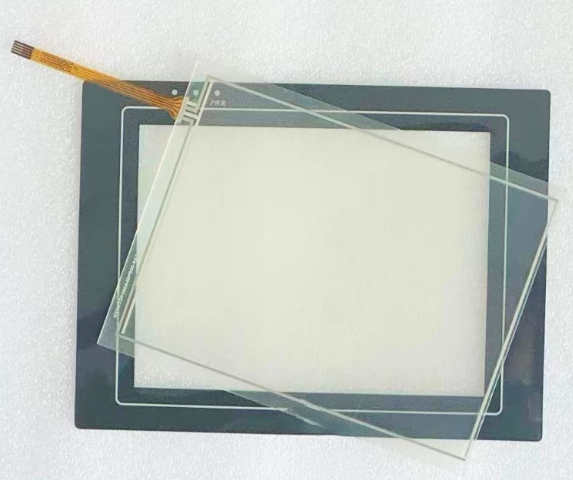
Another key feature is the adaptive font scaling based on viewing distance. Using a proximity sensor embedded in the bezel, the system can detect when an operator is standing at a distance versus working right in front of the screen. It adjusts the size of critical data points and buttons accordingly. This ensures that a supervisor walking the floor can get a quick status read from ten feet away, while a maintenance technician servicing the machine has a detailed, touch-sensitive interface. This fluidity between macro and micro views eliminates the need for multiple display units on a single machine.
Bridging the Data Gap: Transparent Diagnostics and IIoT Readiness
The MT508SV breaks the traditional barrier between the HMI and the Machine Historian. Rather than storing data in isolated silos, the device supports a native data push that can feed production metrics directly into edge gateways or cloud databases without requiring a separate middleware license. This is a cost-avoidance strategy that becomes evident during the first major audit or downtime investigation.
Consider the scenario of a intermittent sensor failure. A standard HMI might show a generic “fault” message. The MT508SV, leveraging its embedded recipe management logic, can correlate the fault with the specific production batch and operator timestamp. This allows the engineering team to trace the problem back to a specific raw material variance or an operator misstep, rather than facing a blind troubleshooting process. The screen effectively becomes a forensic tool.
Additionally, the device offers a predictive touch calibration feature. Over time, all resistive screens drift. The MT508SV runs a background calibration algorithm that tracks touch accuracy and schedules recalibration during planned downtime. It alerts the maintenance crew with a specific error code before the drift affects production quality. This proactive maintenance capability converts the HMI from a passive display into an active sensor that monitors its own health. For a plant manager, this translates directly into fewer unplanned stops and a more predictable OEE (Overall Equipment Effectiveness) metric.
Operational Resilience Through Firmware Architecture
Hardware durability is only half the equation; the MT508SV’s true strength lies in its non-destructive firmware update system. In legacy systems, a failed update often resulted in a "bricked" unit, requiring a factory return and days of outage. This device utilizes a dual-boot partition architecture. If a firmware update is interrupted—whether due to power loss or network interruption—the system automatically rolls back to the previous known-good state. This feature alone can save a facility thousands of dollars in emergency call-out fees.
The device also features a secure boot sequence that verifies the integrity of the operating system before the touch screen initializes. This validation protects against corrupted data or malicious code being introduced via a USB stick, a common security vulnerability in industrial settings. For regulated industries such as food & beverage or pharmaceuticals, this traceability is critical for compliance with FDA 21 CFR Part 11.
Furthermore, the MT508SV supports role-based access control (RBAC) directly at the screen level. An operator is denied the ability to change setpoints, while a quality engineer can view historical trends, and only a maintenance supervisor can alter PID parameters. This is enforced without needing a separate authentication server, which simplifies deployment in small to medium-sized factories. By embedding these security layers into the firmware, the MT508SV future-proofs the machine against evolving cybersecurity threats without burdening the OT team with complex IT configurations.
Conclusion
The New Touch Screen MT508SV represents a significant step in the maturation of industrial HMIs, shifting the focus from raw feature count to intelligent interaction and system resilience. By addressing the real friction points of factory floor operation—glove touch sensitivity, glare reduction, firmware safety, and seamless data flow—it offers a practical upgrade for any automated venue. The decision to adopt this screen should be based not on its display size, but on its ability to reduce operator error, factual diagnostic time, and vulnerability to downtime. Ultimately, the MT508SV is not just a better panel; it is a better interface for the human half of the automation equation.


