In the intricate world of industrial and medical device design, the display interface is far more than a simple window to data; it is the critical nexus of human-machine interaction. Selecting the right component demands a balance of technical precision, environmental resilience, and long-term reliability. This article provides a deep-dive analysis of the NL12880BC20-02D, a 12.1-inch TFT LCD screen from NEC's esteemed lineup. We will move beyond basic datasheet specifications to explore what mak
In the intricate world of industrial and medical device design, the display interface is far more than a simple window to data; it is the critical nexus of human-machine interaction. Selecting the right component demands a balance of technical precision, environmental resilience, and long-term reliability. This article provides a deep-dive analysis of the NL12880BC20-02D, a 12.1-inch TFT LCD screen from NEC's esteemed lineup. We will move beyond basic datasheet specifications to explore what makes this display a compelling choice for engineers and product developers.
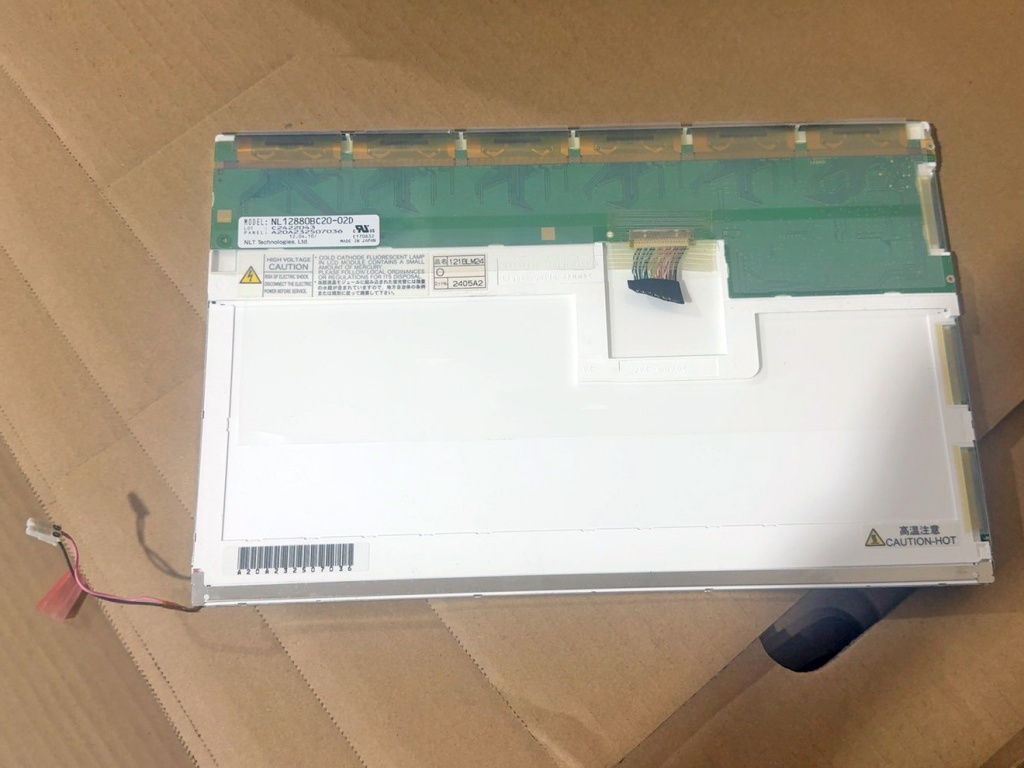
Our exploration will dissect its core technological foundation, unravel the significance of its unique UA-SFT technology and 20-pin interface. We will then evaluate its performance credentials in demanding visual applications, followed by a practical examination of its integration landscape. Finally, we will identify the specific professional domains where its characteristics translate into a definitive competitive advantage, providing a holistic view for informed decision-making.
Deconstructing the Core: UA-SFT Technology and the 20-Pin Interface
At the heart of the NL12880BC20-02D lies NEC's proprietary UA-SFT (Ultra Advanced-Super Fine TFT) technology. This is not a generic TN or standard IPS panel. UA-SFT represents a high-performance evolution of the IPS paradigm, engineered to deliver superior optical characteristics. The key differentiators include a exceptionally wide viewing angle—typically 170 degrees or more in all directions—ensuring color stability and image integrity even when viewed from extreme angles. This is paramount in applications where multiple operators or varying viewing positions are common.
Furthermore, UA-SFT technology provides enhanced color reproduction and contrast ratios compared to conventional TFTs. The 20-pin LVDS (Low-Voltage Differential Signaling) interface is another cornerstone of its design. This interface is a industry standard for robust, high-speed data transmission with reduced electromagnetic interference. The specific pin configuration of the NL12880BC20-02D dictates its single-channel LVDS operation, supporting its native resolution of 800 x 600 (SVGA). This combination of a high-fidelity panel technology with a reliable, noise-resistant interface forms the bedrock upon which its performance is built, ensuring a clean, stable signal from controller to screen.
Performance Under Scrutiny: Visual Fidelity and Ruggedness
The theoretical advantages of UA-SFT materialize into tangible performance benefits. The screen's SVGA resolution, while not ultra-high definition, offers a sharp pixel density for its 12.1-inch diagonal, perfectly suited for displaying complex diagnostic menus, schematic diagrams, or real-time system parameters without excessive graphical overhead. The high brightness, often reaching 500 cd/m² or more, coupled with a potent contrast ratio, guarantees legibility in brightly lit industrial floors or under medical examination lights.
Ruggedness is engineered into its DNA. The display is designed to operate reliably across an extended temperature range, often from -30°C to +80°C for storage and a robust operational range. This ensures functionality in non-climate-controlled environments. Its construction typically involves a robust metal frame and strengthened glass, providing resistance to vibration and mild impact—common challenges in mobile or heavy machinery applications. This durability translates directly into reduced downtime and lower total cost of ownership, as the display is less likely to be the point of failure in a harsh system.
Integration Landscape: Design Considerations and Compatibility
Successfully incorporating the NL12880BC20-02D into a product requires careful planning. The 20-pin LVDS interface necessitates a compatible controller board or system-on-chip (SoC) that can output an LVDS signal matching the screen's timing requirements (typically provided in a detailed datasheet). Designers must account for power sequencing, backlight driving (usually via a separate CCFL or LED inverter circuit), and potential need for a capacitive touchscreen overlay, which would be a separate component layered onto the display module.
Mechanical integration is equally critical. The module's outline dimensions, bezel size, and mounting hole positions must be precisely accommodated in the product housing. The inclusion of a metal bracket around the panel aids in secure mounting and heat dissipation. Furthermore, understanding the long-term supply chain stability of this NEC display is vital for products with multi-year lifecycles. Engaging with authorized distributors or understanding NEC's product lifecycle roadmap is a crucial step to mitigate future sourcing risks.
Ideal Application Domains: Where This Display Excels
The specific attributes of the NL12880BC20-02D make it a standout solution for several professional verticals. In industrial automation and HMI, its wide viewing angle, sunlight readability, and ruggedness are indispensable for control panels on factory floors, test equipment, and agricultural machinery. The medical device field benefits from its consistent color performance (crucial for diagnostic imaging adjuncts), reliability, and ease of sterilization around the bezel for patient-facing devices.
Additionally, it finds a strong fit in transportation and logistics, such as in-vehicle terminals for forklifts or delivery trucks, where shock resistance and broad temperature tolerance are mandatory. It is also suitable for specialized point-of-sale/kiosk systems in demanding environments like warehouses or outdoor settings. For each of these applications, the display is not a commodity but a mission-critical component that directly impacts usability, safety, and operational efficiency.
In conclusion, the NEC NL12880BC20-02D is a purpose-built industrial display that leverages advanced UA-SFT technology to deliver reliable, high-visibility performance in challenging environments. Its value proposition is clearest when evaluated through the lens of durability, viewing angle stability, and long-term integration needs rather than raw pixel count. For engineers designing systems where display failure is not an option, this module represents a robust and proven solution that bridges the gap between human operators and complex machines with unwavering clarity and resilience.


