AST-065B: The Engineering Rationale Behind the 6.5-Inch 4-Wire Analog Resistive Touch Screen
In an industrial landscape dominated by projected capacitive (PCAP) touch technology, the 6.5 Inch 4 Wire Analog Resistive Touch Screen model AST-065B remains a cornerstone for mission-critical applications. While consumer electronics have shifted toward multi-touch gestures, the AST-065B occupies a specific niche where precision under duress, cost efficiency, and environmental resilience are non-negotiable. This article dissects the technical architecture, material science, and operational advantages of this specific model, providing a deep analysis for engineers, procurement specialists, and integration designers.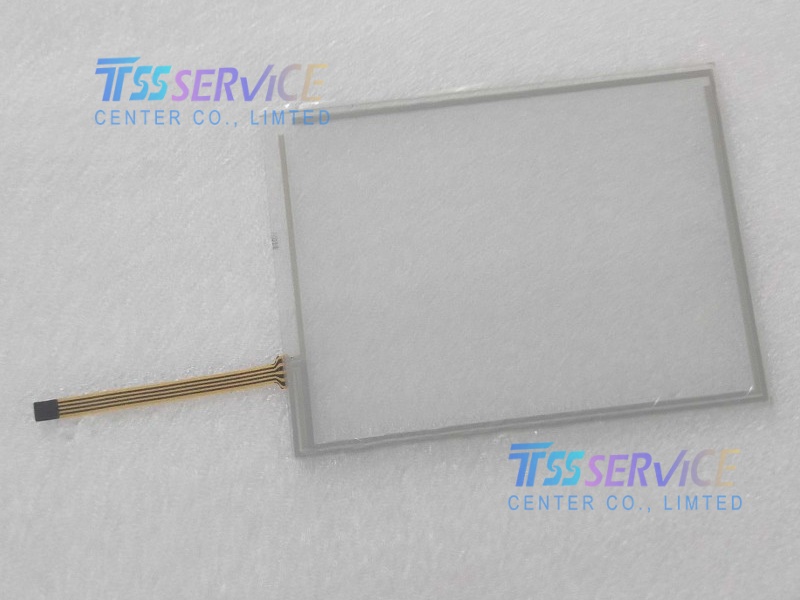
I. The Core Technology: 4-Wire Analog Resistive Sensing
The AST-065B utilizes a 4-wire analog resistive architecture, a mature but highly reliable technology. Unlike capacitive screens that detect changes in electrical fields, resistive screens rely on physical pressure to complete a circuit. The AST-065B consists of two transparent conductive layers—typically Indium Tin Oxide (ITO) coated on a glass substrate (bottom) and a flexible PET film (top). These layers are separated by micro-dots (spacer dots).
-
Voltage Gradient Method: The X-axis voltage is applied across one conductive layer while the Y-axis voltage is measured on the opposing layer. A touch event creates contact between the layers, allowing the controller to calculate the precise voltage ratio at the contact point. This provides a direct, linear representation of touch position without drift.
-
Durability of the 4-Wire Topology: While 5-wire screens offer higher durability in linearity, the 4-wire design of the AST-065B offers a superior cost-to-performance ratio for applications with controlled lifecycle expectations. The primary failure point is the flexible top layer, which is rated for over one million touches at a single point.
II. The "Glass" Advantage: Substrate Material and Optical Design
The designation "Touch Glass" in the AST-065B is critical. The bottom substrate is composed of chemically strengthened glass, typically soda-lime or aluminosilicate with a thickness ranging from 1.1mm to 2.0mm. This provides a rigid, non-warping base that maintains the critical air gap and spacer dot alignment over temperature cycles.
-
Optical Clarity: Because resistive technology requires an air gap between layers, light transmission is naturally lower than PCAP (typically 80-85% vs. 90-95%). The AST-065B compensates with anti-reflection (AR) and anti-glare (AG) surface treatments applied to the top PET film. The AG treatment diffuses ambient light, reducing specular reflections—a critical feature for outdoor or high-brightness industrial environments.
-
Surface Hardness: The top PET film is a hard-coated polyester, typically reaching a pencil hardness of 3H to 4H. While not impervious to sharp tools, this coating resists scuffing from constant finger, stylus, or gloved hand interaction. The glass substrate itself is impervious to crazing from moderate impacts.
III. The 6.5-Inch Form Factor: A Strategic Choice
The 6.5-inch diagonal aspect ratio (commonly 4:3 or wide VGA) is not arbitrary. It aligns with legacy industrial control panel cutouts and specific medical device housings where space is constrained but readability is paramount. This size offers a balance between the limited real estate of a 5.7-inch screen and the bulkier 7-inch panels.
-
Active Area vs. Bezel: The AST-065B typically features a wide bezel (border) to accommodate the silver bus bars and tail connection. This bezel is designed for gasket sealing, allowing for IP65 or NEMA 4 protection when mounted correctly.
-
Tail Connector Standardization: The majority of AST-065B units ship with a flexible printed circuit (FPC) tail utilizing a ZIF (Zero Insertion Force) connector with a 1.0mm or 1.25mm pitch. This standardization simplifies integration with common 4-wire controller ICs such as the ADS7846 or TSC2046.
IV. Performance Characteristics and Limitations
Honest engineering requires acknowledging trade-offs. The AST-065B excels in specific metrics but has inherent limitations compared to modern PCAP screens.
Strengths:
-
Glove and Stylus Operation: The resistive mechanism requires only pressure. It functions perfectly with any non-conductive material—latex gloves, thick work gloves, wooden styluses, or even a pen cap. This is unachievable with standard capacitive touch.
-
Environmental Resistance: The sealed nature of the resistive stack makes it immune to water droplets, condensation, or dust on the surface. A single droplet of water on a PCAP screen can register as a ghost touch; the AST-065B ignores it entirely.
-
Cost of Goods: For medium and high volumes, the AST-065B represents a 40-60% reduction in BOM (Bill of Materials) cost compared to an optical-bonded PCAP solution.
Limitations:
-
Multi-Touch: True multi-touch (e.g., pinch-to-zoom) is impossible on a standard 4-wire analog resistive screen. Some controllers simulate dual-touch via matrix scanning, but it is not native to the technology.
-
Calibration Drift: Over time, mechanical wear on the top film can cause slight calibration drift. The AST-065B typically requires a 4-point calibration during initial integration and occasional recalibration in high-vibration environments.
-
Brightness Reduction: The multiple air-to-material interfaces (PET, ITO, air gap, glass) reduce effective display brightness by roughly 20%. Engineers should specify a display backlight 15-20% brighter than the target luminance to compensate.
V. Integration Best Practices
To maximize the lifecycle and accuracy of the AST-065B, three integration factors must be addressed:
-
Mechanical Mounting: The screen must be mounted with a uniform pressure around the perimeter. Uneven bezel pressure will create Newton's rings (optical interference patterns) and false touches. Use gaskets with Shore A hardness of 50-60.
-
Controller Tuning: The default ADC (Analog-to-Digital Converter) settings in most controllers are generic. For the AST-065B, specific parameters should be tuned: Debounce time (10-20ms for industrial use), Threshold voltage (set to 50-70% of the maximum touch value to prevent jitter), and Z-axis pressure filtering to reject light accidental brushes.
-
ESD Protection: The FPC tail is vulnerable to electrostatic discharge. Integrate a TVS (Transient Voltage Suppression) diode array on the I2C or SPI lines as close to the connector as possible.
VI. Conclusion: The Uncontested Application Domain
The AST-065B 6.5 Inch 4 Wire Analog Resistive Touch Screen is not a "downgrade" from capacitive technology; it is a specialized tool. Its optimal deployment scenario is any environment where the input method is unpredictable—gloved hands in a freezer, rain on a marine console, greasy fingers in a factory, or a metal stylus in a cleanroom. For engineers designing systems where reliability under harsh conditions outweighs the user interface beauty of multi-touch, the AST-065B remains an empirically superior choice. By understanding its material limitations and proper calibration methodology, integrators can achieve a touch sensor lifecycle that far exceeds the operational lifespan of the host device itself.


