In the quest for smarter, more sustainable cities, a powerful convergence is taking place on our streets. Municipal infrastructure is evolving from performing single functions to becoming multi-sensory nodes in a vast urban network. This article delves into the innovative integration of air quality sensors into LED streetlights, a synergy that transforms simple illumination into a dynamic environmental monitoring platform. We will explore how this technology works, its profound benefits for data-driven governance, and the tangible impact it creates for citizens, urban planners, and the health of our planet, marking a significant step towards truly responsive and breathable urban environments.
The Convergent Node: More Than Just Light
The modern LED streetlight is already a marvel of efficiency, offering superior illumination with drastically reduced energy consumption. However, its true potential lies in its ubiquity and strategic placement. Every streetlight is a permanently powered pole positioned at regular intervals throughout the public realm, providing an ideal physical framework for additional technology. By integrating compact, advanced air quality sensors directly into the luminaire housing, cities can deploy a high-density environmental monitoring network without the cost and clutter of installing thousands of standalone sensor units.
This convergence creates a multifunctional urban node. The streetlight continues its primary role of providing safe illumination while simultaneously, and unobtrusively, sampling the surrounding atmosphere. It represents a fundamental shift from isolated infrastructure to an interconnected, data-generating asset, laying the foundational hardware layer for a living, breathing digital map of the city's environmental health.
Sensing the Invisible: Parameters and Precision
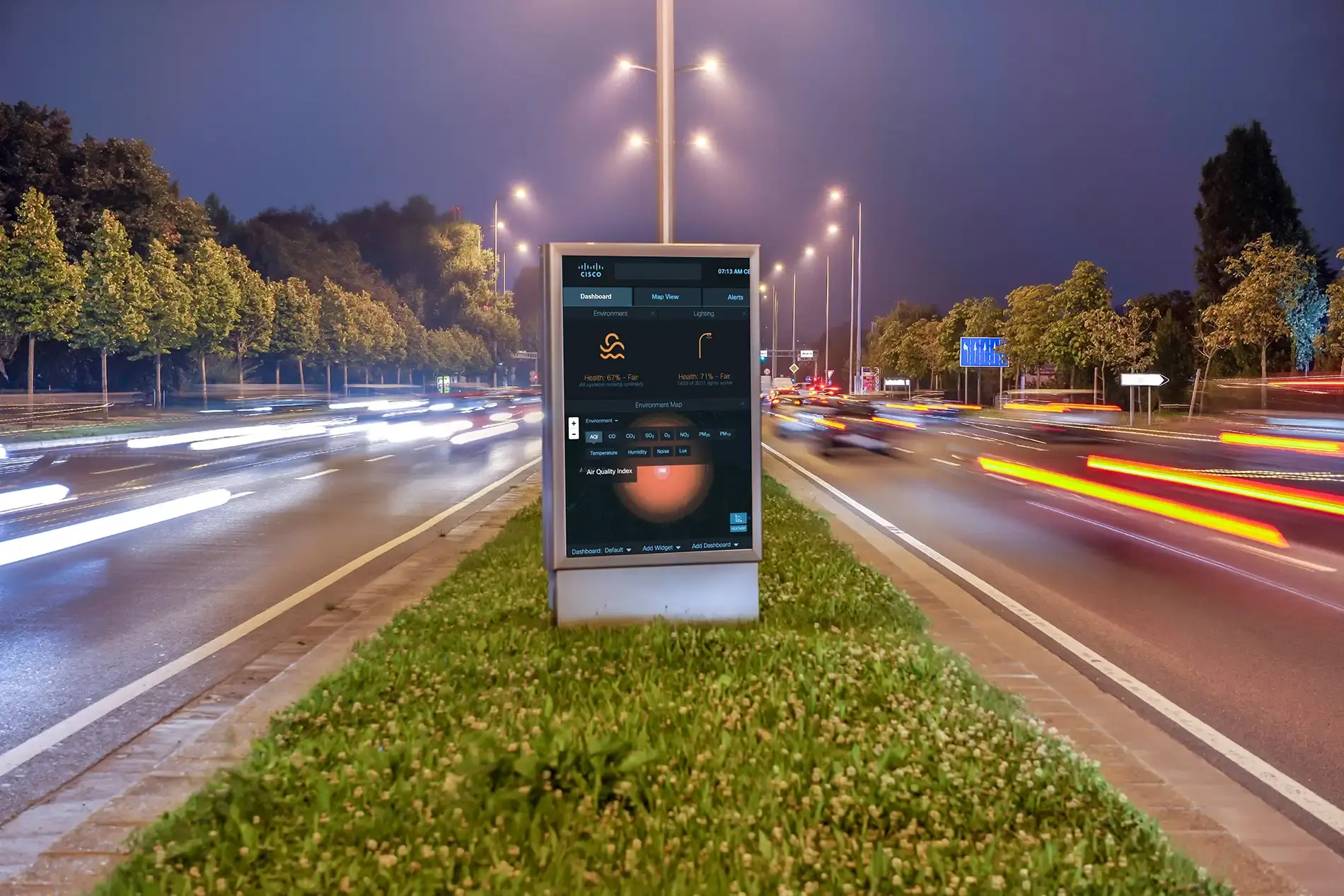
At the heart of this system are the integrated sensors, capable of detecting a suite of critical airborne pollutants and environmental factors in real-time. Typical parameters measured include particulate matter (PM2.5 and PM10), which are microscopic particles linked to respiratory and cardiovascular diseases; nitrogen dioxide (NO2) and sulfur dioxide (SO2), primarily from vehicle emissions; ozone (O3); carbon monoxide (CO); and often complementary data like temperature, humidity, and atmospheric pressure.
The technology behind these sensors has advanced significantly, utilizing laser scattering for particulates and electrochemical or metal-oxide semiconductor cells for gases. While not intended to replace highly calibrated regulatory stations, these sensors provide high-resolution, hyper-local data. This granularity is key—it reveals pollution hotspots at the neighborhood, block, or even intersection level, information that was previously invisible to city managers and residents alike, enabling targeted action rather than city-wide generalizations.
The Data Journey: From Lamppost to Cloud Platform
Collected data is worthless without transmission and analysis. Integrated LED streetlights are equipped with communication modules, using low-power wide-area networks (LPWAN) like LoRaWAN or LTE-M, to securely upload readings at regular intervals to a centralized environmental data platform. This platform acts as the system's brain, aggregating millions of data points from across the sensor network.
Here, raw data is cleaned, processed, and contextualized. It can be fused with other data streams—such as traffic flow, weather conditions, or industrial activity—to uncover correlations and root causes. The platform transforms isolated measurements into actionable intelligence, creating visualizations like heat maps, trend graphs, and pollution forecasts. This seamless flow from sensing to insight is what empowers evidence-based decision-making, turning static infrastructure into a proactive management tool.
Empowering Action: Applications for Cities and Citizens
The real-world applications of this integrated data are transformative. For city authorities, it enables:
Dynamic Urban Management: Redirecting traffic flows in real-time away from pollution peaks or triggering street-side misting systems to reduce particulate concentration.Informed Policy & Planning: Validating the impact of low-emission zones, optimizing public transit routes, and guiding green space development based on air quality data.Efficient Maintenance: Predicting and managing urban heat island effects or correlating pollution levels with public health service usage.
For citizens, accessible data via public dashboards or mobile apps fosters environmental awareness, allowing individuals to make informed choices about outdoor activities, commute times, or even residential locations, democratizing access to environmental health information.
Overcoming Implementation Hurdles
Despite its promise, deployment faces challenges. Key considerations include the initial capital investment, which, while offset by long-term LED energy savings and operational efficiencies, requires upfront funding. Ensuring data accuracy and sensor calibration over time is critical to maintain trust; this necessitates robust maintenance protocols. Data privacy and security must be paramount, as the network handles vast amounts of geographically specific information.
Furthermore, success depends on moving beyond a pure "technology install." It requires cross-departmental collaboration (between public works, environmental health, and IT), clear data governance policies, and a strategy for actively utilizing the insights generated. The greatest hurdle is often not the technology itself, but aligning organizational silos to act on the intelligence it provides.
The Future Street: A Platform for Urban Innovation
Looking forward, the air-quality-sensing streetlight is merely the beginning. It establishes a scalable platform for future integrations. Imagine these same poles equipped with noise monitors, pedestrian counters, gunshot detection, or EV charging points. They can host smart parking sensors or serve as connectivity hubs for IoT devices.
This vision is of an adaptive urban nervous system, where infrastructure continuously senses and responds to the city's pulse. The integrated LED streetlight, therefore, is not an end product but a foundational gateway. It paves the way for cities that are not only brighter and more energy-efficient but also healthier, more responsive, and profoundly more attuned to the well-being of their inhabitants and the environment.
The integration of air quality sensors into LED streetlights represents a paradigm shift in urban management, merging sustainability with intelligence. It transforms passive infrastructure into an active, data-generating network that provides unprecedented visibility into environmental health. By enabling hyper-local monitoring, empowering data-driven policy, and engaging citizens, this technology addresses both the operational needs of cities and the fundamental right of residents to clean air. As we build the cities of tomorrow, such convergent solutions will be crucial, proving that the path to a smarter, more resilient future is quite literally, already above us.


