In the intricate world of industrial and embedded systems, the display panel is far more than a simple output window; it is the critical interface through which machines communicate with operators and the environment. Among the myriad of specialized components, the SP12N002 4.8" FSTN-LCD Panel designed for Hitachi platforms stands out as a quintessential example of engineering tailored for reliability and clarity under demanding conditions. This article delves into the technical essence and practical significance of this specific display module.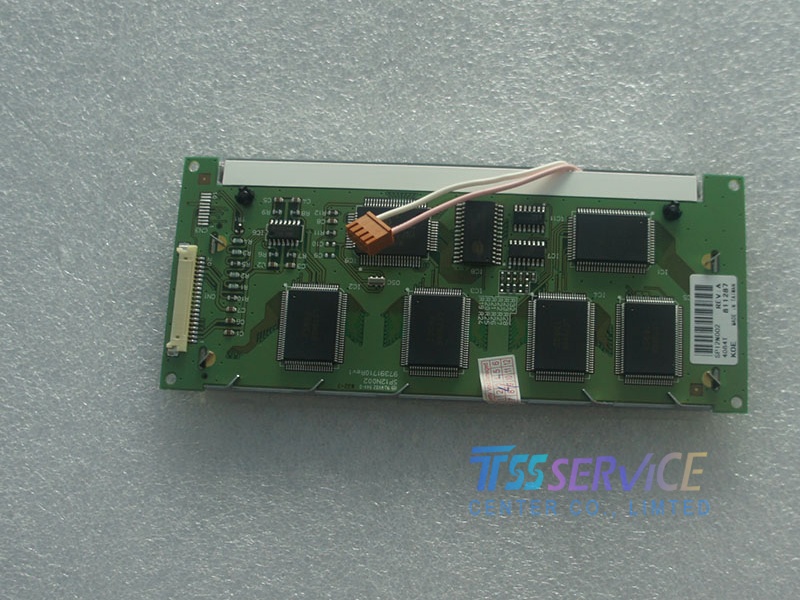
We will explore not just its basic specifications, but the underlying technology that makes it suitable for its target applications. From the science behind its FSTN screen to its electrical and mechanical integration points, this deep dive aims to provide engineers, procurement specialists, and technology integrators with a comprehensive understanding. The goal is to move beyond a datasheet overview, examining why this particular panel is specified for critical roles in medical devices, industrial control units, and instrumentation, and what makes it a persistent choice in an era of rapidly evolving display technologies.
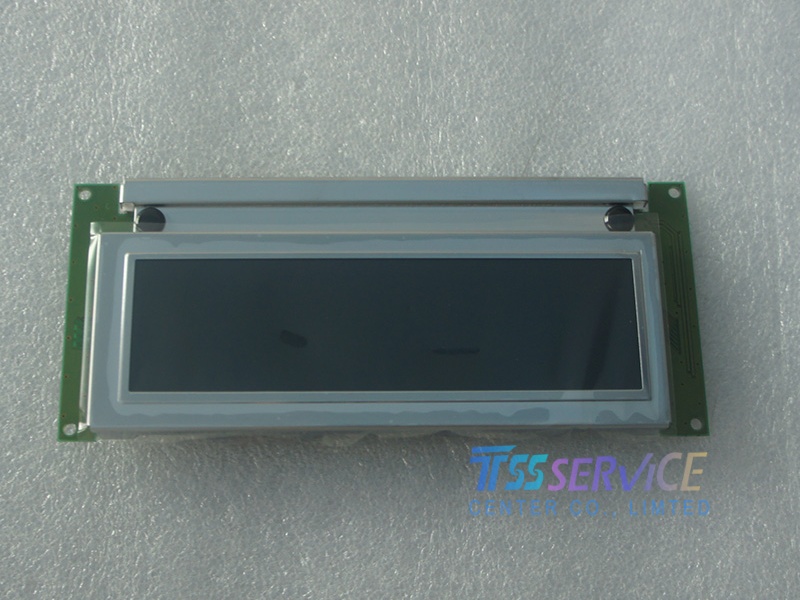
Decoding the FSTN Technology Advantage
At the heart of the SP12N002 lies its FSTN (Film Compensated Super-Twisted Nematic) LCD technology. This represents a significant evolution from the earlier STN (Super-Twisted Nematic) displays. While STN panels improved multiplexing capability over basic TN screens, they were plagued by inherent color biases—often appearing in blue or yellow hues—and suboptimal contrast when viewed from certain angles.
FSTN technology solves this by incorporating a precise retardation film over the STN cell. This film compensates for the birefringence (light splitting) effect, effectively "neutralizing" the color shift. The result is a display that presents a sharp, black-on-white or white-on-black appearance with dramatically improved contrast, wider viewing angles, and superior readability. For the 4.8-inch SP12N002, this translates into a legible, high-contrast interface that reduces operator eye strain, a non-negotiable feature in environments where data must be interpreted quickly and accurately.
Key Specifications and Physical Interface
The SP12N002 is defined by a set of precise parameters that dictate its integration and performance. Its 4.8-inch diagonal active area typically offers a resolution of 320 x 240 pixels (QVGA), a standard that balances information density with excellent character visibility. The module is built around a CCFL (Cold Cathode Fluorescent Lamp) backlight, known for its even, bright, and stable white illumination, which is crucial for the FSTN film to achieve its high-contrast effect.
Electrically, the interface is a critical compatibility point. This panel is designed for a parallel RGB or CPU interface, commonly matching Hitachi's standard controller timing. The pin configuration, voltage requirements (typically 3.3V or 5V for logic and a higher voltage for the backlight inverter), and signal timing are engineered for direct integration with a family of Hitachi processors and controllers, minimizing additional logic components. Mechanically, its outline dimensions, mounting hole positions, and connector type are standardized to fit existing form factors in legacy and current system designs.
Target Applications and Operational Environments
The technical choices embodied in the SP12N002 directly correlate with its primary application domains. It is not a display for consumer entertainment but a component built for mission-critical instrumentation. You will find it serving as the primary interface in industrial control panels for factory automation, process monitoring systems, and test/measurement equipment. Its reliability and clarity are equally valued in medical devices, such as portable diagnostic units or bedside monitors, where unambiguous data presentation is paramount.
Furthermore, its robustness makes it suitable for transportation and logistics hardware, telecommunication infrastructure, and specialized point-of-sale systems. These environments often subject displays to temperature extremes, constant operation, and high ambient light. The FSTN technology ensures viewability under bright light, while the industrial-grade construction of such panels guarantees longevity beyond that of commercial-grade LCDs.
Integration Considerations for System Designers
Successfully incorporating the SP12N002 into a product requires attention to several key design factors. First is power management, particularly for the CCFL backlight. This requires an inverter circuit to generate the high AC voltage needed, which must be properly shielded to prevent electromagnetic interference (EMI) from affecting sensitive analog circuits elsewhere in the system.
Second, the LCD controller must be correctly configured to match the panel's timing requirements for horizontal/vertical sync, dot clock, and data enable signals. Designers must also account for the thermal profile, ensuring the display operates within its specified temperature range, which may involve heat dissipation strategies. Finally, the mechanical integration must account for stress-free mounting to avoid pressure points on the glass that can cause discoloration or damage, and the use of appropriate gasketing if environmental sealing is required.
The Backlight System: CCFL Longevity and Alternatives
The CCFL backlight is a defining yet sometimes challenging aspect of this display generation. CCFLs offer excellent uniformity and a wide operating temperature range, contributing to the panel's industrial suitability. However, they have limitations: they require a high-voltage drive, consume relatively more power than modern alternatives, and have a finite lifespan that gradually dims over thousands of hours.
This has led to a common consideration: LED backlight retrofitting. Many system maintainers and designers explore replacing the CCFL with an LED light bar. LEDs offer instant-on capability, lower power consumption, longer lifespan, and eliminate the need for a high-voltage inverter. However, such a retrofit is not trivial; it requires careful optical engineering to ensure even illumination and may necessitate modifications to the driver circuitry. Understanding this subsystem is key to long-term maintenance and potential design updates.
Procurement and Legacy System Sustainability
For organizations maintaining equipment built with the SP12N002, procurement is a strategic concern. As a component that may be in the mature or legacy phase of its lifecycle, availability can shift from mainstream manufacturers to specialized distributors or aftermarket suppliers. Identifying reputable sources is critical to avoid counterfeit or refurbished components that fail to meet original specifications.
This scenario also forces a broader sustainability analysis. Companies must decide between sourcing original or compatible displays, designing a costly full-system upgrade, or seeking an approved form-fit-function equivalent from another vendor. The decision hinges on the expected lifecycle of the end product, certification requirements (especially in medical or aerospace fields), and total cost of ownership. The enduring design of panels like the SP12N002 often makes continued component-level replacement the most economically viable path for critical infrastructure.
FAQs
Q1: What does FSTN stand for and why is it better than STN? A1: FSTN stands for Film Compensated Super-Twisted Nematic. It is superior to basic STN because it uses a retardation film to cancel out the inherent color bias (blue/yellow), resulting in a true black-and-white, high-contrast display with wider viewing angles.
Q2: What is the typical resolution of the SP12N002 4.8" panel? A2: It typically features a QVGA resolution of 320 x 240 pixels.
Q3: What type of backlight does this panel use? A3: It traditionally uses a CCFL (Cold Cathode Fluorescent Lamp) backlight system for even, bright white illumination.
Q4: Can I replace the CCFL backlight with an LED? A4: Yes, retrofitting with an LED light bar is a common practice to improve lifespan and reduce power, but it requires careful engineering to ensure even lighting and compatible drive electronics.
Q5: What are the main applications for this display? A5: It is designed for industrial and embedded applications, including industrial control panels, medical devices, test equipment, and transportation systems.
Q6: What interface does the SP12N002 use? A6: It uses a parallel digital interface (typically RGB or CPU bus) designed for compatibility with a range of Hitachi controllers.
Q7: Is this panel suitable for outdoor use? A7: While it has good contrast for indoor/brightly lit environments, it is not typically sunlight-readable like a transflective display. Outdoor use would require a protective, shaded enclosure.
Q8: How do I ensure I'm buying a genuine SP12N002 panel? A8: Source from authorized or highly reputable industrial electronic distributors, verify manufacturer part numbers and markings, and be wary of prices significantly below market average.
Q9: What happens when the CCFL backlight fails? A9: The display will become very dim or dark. The panel itself may still be functional, and the solution is to replace the CCFL tube or retrofit an LED backlight.
Q10: Are there direct drop-in replacements from other brands? A10: Possibly, but careful verification is needed. You must match the physical dimensions, mounting holes, interface pinout, electrical specifications, and controller timing exactly. "Compatible" panels should be thoroughly tested in the actual system.
The SP12N002 4.8" FSTN-LCD Panel exemplifies a class of industrial components where reliability, clarity, and specific system compatibility trump raw specs like color depth or ultra-high resolution. Its value is derived from its focused design: FSTN technology delivers exceptional monochrome readability, its interface simplifies integration with established Hitachi-based architectures, and its robust construction ensures performance in controlled yet demanding environments.
For engineers and product managers, understanding this display goes beyond procurement; it involves appreciating its role in the ecosystem of legacy and enduring systems. As the industry gradually shifts towards LED-backlit TFTs, the principles embodied by the SP12N002—fitness for purpose, longevity, and clear communication—remain timeless. Whether maintaining critical infrastructure or designing new systems with similar requirements, the lessons from this specialized panel underscore that the best technical choice is always the one that most precisely meets the operational need.


