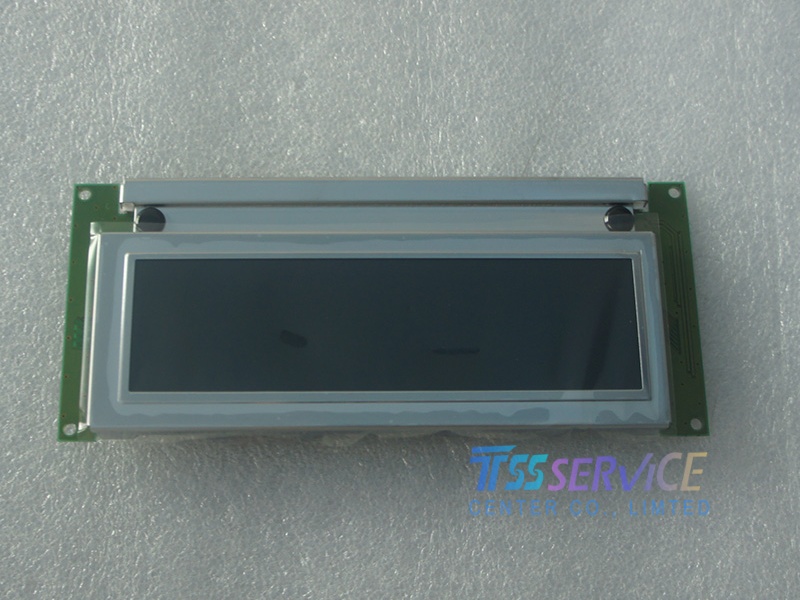
In the intricate world of industrial and embedded systems, the display is often the critical bridge between complex machine operations and human oversight. For engineers, designers, and procurement specialists working with legacy or specialized equipment from industry giants like Hitachi, finding a reliable, drop-in replacement display module is a task of paramount importance. This article delves deep into the SP12N002 4.8-inch FSTN-LCD panel, a component engineered specifically for Hitachi appl
In the intricate world of industrial and embedded systems, the display is often the critical bridge between complex machine operations and human oversight. For engineers, designers, and procurement specialists working with legacy or specialized equipment from industry giants like Hitachi, finding a reliable, drop-in replacement display module is a task of paramount importance. This article delves deep into the SP12N002 4.8-inch FSTN-LCD panel, a component engineered specifically for Hitachi applications.
We will move beyond basic datasheet specifications to explore the technological rationale behind its FSTN screen, its precise mechanical and electrical integration points, and the tangible benefits it delivers in demanding operational environments. Our analysis aims to provide a comprehensive understanding of why this particular panel is not just a component, but a vital solution for ensuring continuity, clarity, and performance in critical display interfaces.
Decoding FSTN Technology: Superiority in Monochrome Clarity
At the heart of the SP12N002 lies its FSTN (Film Compensated Super Twisted Nematic) display technology, a significant evolution from older TN and basic STN types. While standard STN displays can suffer from inherent color backgrounds (often a bluish or yellowish tint) and limited viewing angles, FSTN technology incorporates a retardation film to compensate for this optical interference. The result is a display with a stark, high-contrast black-on-white or white-on-black appearance
.
This enhancement is not merely aesthetic. In industrial settings where operators may view screens from various angles or under different lighting conditions, the improved contrast and wider viewing cone of FSTN reduce eye strain and minimize interpretation errors. The 4.8-inch diagonal size offers a compact yet legible canvas, ideal for displaying parameter lists, status messages, diagnostic codes, or simple graphical elements. For Hitachi systems originally designed with this technology, the SP12N002 ensures visual fidelity and user experience remain consistent with the original equipment manufacturer's intent, making it a true performance-equivalent replacement.
Mechanical and Electrical Integration: A Seamless Hitachi Replacement
A replacement panel's true test is its ability to integrate seamlessly without system redesign. The SP12N002 excels here through its form-fit-function compatibility with designated Hitachi modules. Mechanically, its outline dimensions, mounting hole patterns, and bezel design are precisely engineered to align with existing chassis cutouts and fixtures, allowing for a straightforward, tool-free or minimal-effort swap.
Electrically, the interface is paramount. This panel typically features a standard CCFL (Cold Cathode Fluorescent Lamp) backlighting system, matched to the original's voltage and inverter requirements, and a defined pinout for power, control signals, and data. This direct compatibility eliminates the need for costly and time-consuming adapter boards or firmware modifications. For maintenance engineers, this translates to:
-
Reduced Downtime: Quick replacement restores equipment operation.
-
Lower Risk: No unforeseen compatibility issues arise.
-
Inventory Simplicity: A single, verified part number replaces obsolete stock.
This plug-and-play philosophy is the core value proposition for technical teams managing the lifecycle of critical Hitachi assets.
Application Scenarios: Where Reliability is Non-Negotiable
The robustness of the SP12N002 panel makes it indispensable across a spectrum of demanding Hitachi applications. Its primary domain is in industrial automation and control systems, where it serves as the human-machine interface (HMI) for programmable logic controllers (PLCs), motor drives, and process monitoring stations. In these environments, the display must withstand electrical noise, continuous operation, and potential temperature fluctuations.
Beyond the factory floor, this panel finds purpose in medical devices, test and measurement equipment, and specialized instrumentation from the Hitachi portfolio. In a medical analyzer, for instance, the clarity of the FSTN screen is crucial for presenting diagnostic data accurately. The longevity and stable performance of the module ensure the entire instrument remains serviceable for years, protecting substantial capital investments. These scenarios underscore the panel's role not as a commodity, but as a mission-critical component that upholds the reliability of the larger system it enables.
The Strategic Value of Authorized Component Sourcing
Procuring a display like the SP12N002 highlights a critical strategic decision: the choice between generic alternatives and authorized, quality-guaranteed components. While cheaper, unofficial panels may promise similar specs, they often compromise on:
-
Optical Performance: Lower-grade glass and polarizers yielding poor contrast.
-
Build Quality: Inconsistent backlight lifespan and fragile connectors.
-
Long-term Availability: No supply chain guarantee, risking future repairs.
Sourcing the authentic SP12N002 ensures every unit meets the original electrical, optical, and environmental specifications. It guarantees compatibility and comes with traceability and technical support. For businesses, this mitigates operational risk, reduces total cost of ownership by avoiding repeat failures, and maintains the integrity and safety certification of the end equipment. In essence, it is an investment in system longevity and operational peace of mind.
The SP12N002 4.8-inch FSTN-LCD panel exemplifies the importance of precision-engineered components in sustaining industrial ecosystems. Its advanced FSTN technology delivers unmatched monochrome clarity, while its exact mechanical and electrical design ensures flawless integration into Hitachi systems. The panel proves its worth in critical applications where display reliability is paramount, and sourcing it from authorized channels protects the value and functionality of vital capital equipment. Ultimately, selecting this panel is a strategic decision that prioritizes long-term performance, system integrity, and operational continuity over short-term cost savings.