In the intricate world of electronic components, the display often serves as the critical interface between machine and user. This article delves into a specific and vital component: the SP14Q002-C1 5.7-inch 320*240 FSTN-LCD screen. Beyond a simple part number, this specification represents a carefully engineered solution designed for applications where reliability, readability, and power efficiency are non-negotiable.
In the intricate world of electronic components, the display often serves as the critical interface between machine and user. This article delves into a specific and vital component: the SP14Q002-C1 5.7-inch 320*240 FSTN-LCD screen. Beyond a simple part number, this specification represents a carefully engineered solution designed for applications where reliability, readability, and power efficiency are non-negotiable. We will explore not just its technical parameters, but the underlying technology and the practical design philosophy that makes it a preferred choice in demanding industrial, medical, and instrumentation environments.
Our exploration will systematically unpack the significance of its FSTN technology, analyze the rationale behind its 5.7-inch QVGA resolution, examine its performance in challenging operating conditions, and finally, consider its optimal integration into product design. This deep dive aims to provide engineers, product designers, and procurement specialists with a comprehensive understanding of where and why the SP14Q002-C1 stands out.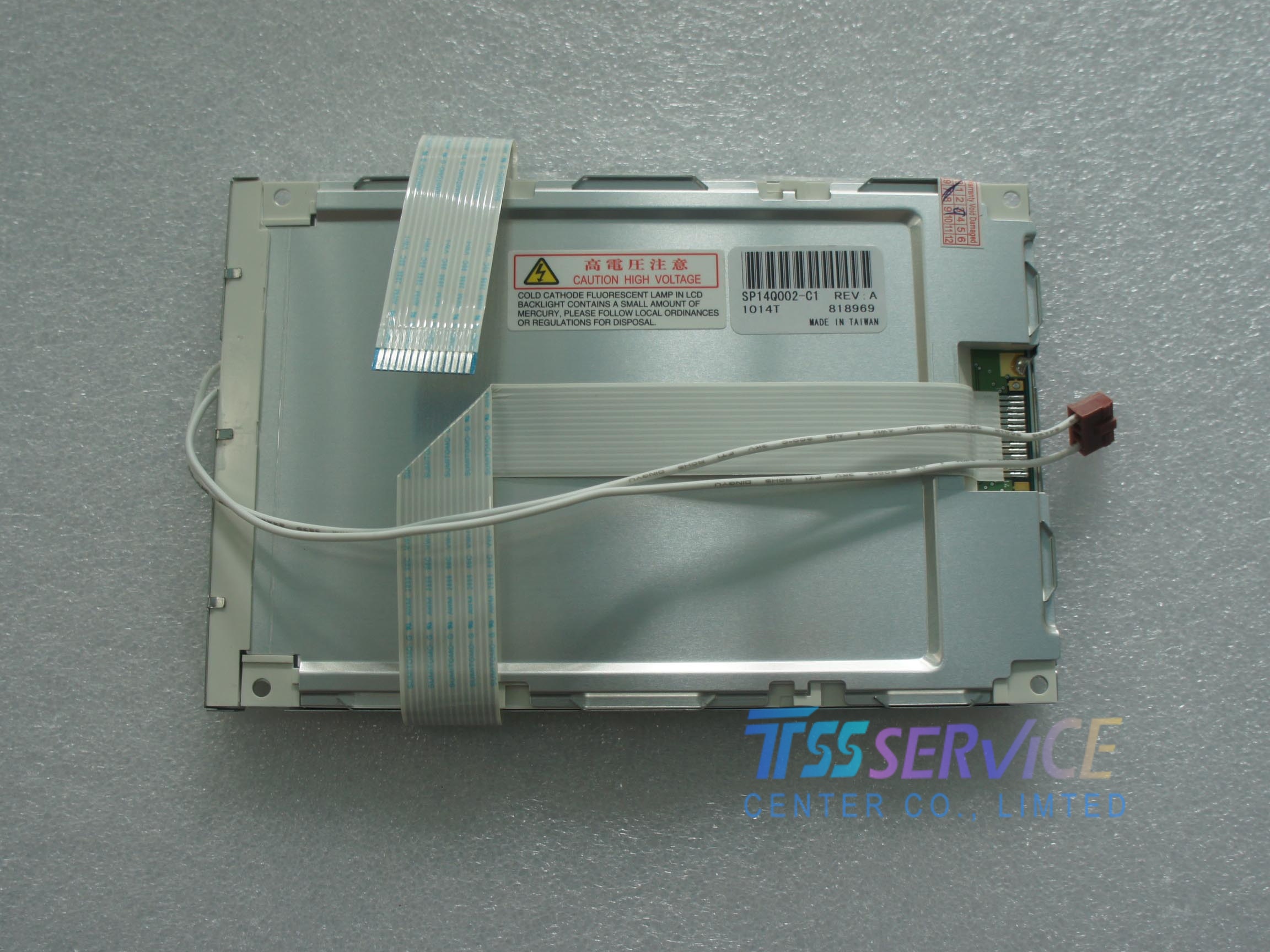
Decoding FSTN: The Engine of Superior Monochrome Readability
At the heart of the SP14Q002-C1's performance is its FSTN (Film Compensated Super-Twisted Nematic) technology, a significant evolution from older TN and STN types. While basic TN displays suffer from poor contrast and narrow viewing angles, and STN improves upon this but can introduce a color bias (often blue or yellow), FSTN incorporates a retardation film. This film compensates for the birefringence effect in the liquid crystal layer, resulting in a high-contrast, truly black-on-white or white-on-black appearance.
The practical advantages are profound:
-
Enhanced Visual Clarity: Text and graphics appear sharp and defined, reducing operator eye strain during prolonged use.
-
Wider Viewing Angles: The image remains stable and readable from various perspectives, crucial for panels mounted in enclosures or viewed by multiple users.
-
Professional Aesthetic: The neutral, high-contrast output is associated with reliability and is preferred in professional and industrial settings over the colored hues of STN.
This foundational technology makes the SP14Q002-C1 not just a display, but a clear and reliable communication channel.
The 5.7-Inch QVGA Format: A Study in Balanced Utility
The choice of a 5.7-inch diagonal with a 320x240 pixel (QVGA) resolution is a deliberate compromise that defines the module's application scope. This format sits in a strategic sweet spot between smaller, information-sparse displays and larger, more power-hungry graphical units. The 4:3 aspect ratio is inherently efficient for displaying traditional user interfaces, menus, data logs, and schematic diagrams commonly found in control systems and test equipment.
The QVGA resolution provides sufficient pixel density for rendering legible text, basic icons, and simple graphics without demanding excessive processing power from the host microcontroller. This balance is key:
-
It keeps system cost and complexity lower compared to driving a high-resolution TFT.
-
It ensures fast rendering and update times for real-time data.
-
The physical size is large enough to present multiple data points simultaneously, yet compact enough to fit into standardized panel cutouts and portable devices.
This dimension and resolution pair is a testament to purpose-driven design, optimizing for functionality over mere specification.
Engineered for Endurance: Performance in Hostile Environments
A display in a laboratory benchtop is one thing; the same display on a factory floor, in a medical device, or inside a vehicle is another. The SP14Q002-C1 is engineered for the latter. Its robustness is defined by a wide operating temperature range, typically from -20°C to +70°C, ensuring functionality in both chilled and sun-exposed environments. This thermal resilience prevents image slowdown or complete failure when ambient conditions fluctuate.
Furthermore, its construction prioritizes longevity and stability. The use of a CCFL (Cold Cathode Fluorescent Lamp) or high-quality LED backlight system ensures uniform, consistent illumination across the entire screen area with a long lifespan. The module is designed to resist electromagnetic interference (EMI), a critical factor in electrically noisy industrial settings. This environmental fortitude transforms the display from a commodity component into a mission-critical element, guaranteeing that the human-machine interface remains operational when it is needed most.
Integration and Application: From Component to Solution
Understanding the SP14Q002-C1's specifications is only half the journey; successful integration completes it. This module typically features a standard parallel interface (e.g., 8-bit 6800 or 8080 series), making it compatible with a vast array of microcontrollers and microprocessors without requiring complex protocol converters. Designers must account for power sequencing, contrast voltage (V0) adjustment, and backlight driver circuitry to achieve optimal performance.
Its application landscape is vast and telling:
-
Industrial Automation: HMI panels for PLCs, control units for manufacturing equipment, and diagnostic readers.
-
Medical Devices: Patient monitors, diagnostic instruments, and portable medical equipment where clarity and reliability are paramount.
-
Test & Measurement: Oscilloscopes, signal generators, and multimeters displaying waveforms and numerical data.
-
Transportation & Fleet: On-board information systems and control displays.
In these contexts, the SP14Q002-C1 moves beyond being a simple output device; it becomes the trusted face of complex technology, where its reliability directly impacts system uptime and user confidence.
The SP14Q002-C1 5.7-inch FSTN-LCD module exemplifies how targeted engineering creates exceptional value. It is not a generic display, but a specialized tool that masters the fundamentals of readability, utility, endurance, and integration. By combining robust FSTN technology with a balanced QVGA format and industrial-grade construction, it delivers unwavering performance in contexts where failure is not an option. For designers seeking a proven, reliable, and clear monochrome display interface, this module stands as a benchmark, proving that focused specifications often yield the most broadly capable solutions.


