In the intricate world of electronic components, the display often serves as the critical interface between machine and user. This article delves into a specific and vital component: the SP14Q002-C1 5.7-inch 320*240 FSTN-LCD screen. Beyond a simple list of specifications, we will explore the unique value proposition of this display module, dissecting its core technology, inherent advantages, and the specific industrial and commercial applications where it excels. Understanding the "why" behind i
In the intricate world of electronic components, the display often serves as the critical interface between machine and user. This article delves into a specific and vital component: the SP14Q002-C1 5.7-inch 320*240 FSTN-LCD screen. Beyond a simple list of specifications, we will explore the unique value proposition of this display module, dissecting its core technology, inherent advantages, and the specific industrial and commercial applications where it excels. Understanding the "why" behind its design is crucial for engineers, product designers, and procurement specialists seeking reliable, readable, and cost-effective visual solutions.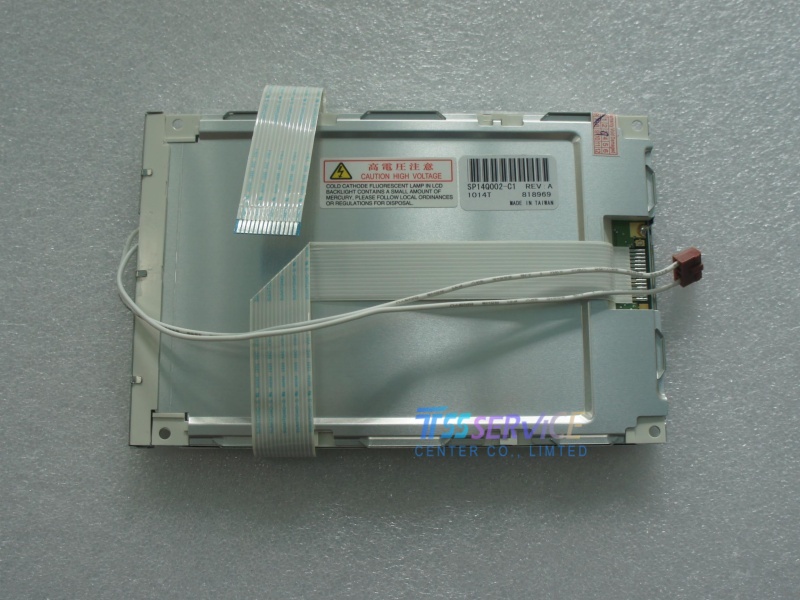
Our analysis will progress from the foundational technology to its practical implementation, providing a comprehensive guide for evaluating this component's fit within your next project.
Decoding the Technology: The Superiority of FSTN-LCD
At the heart of the SP14Q002-C1 lies its FSTN (Film Compensated Super Twisted Nematic) technology, a significant evolution from the older TN (Twisted Nematic) and basic STN displays. The core challenge with early LCDs was achieving high contrast and wide viewing angles without active matrix driving. STN improved upon TN by using a greater twist angle of the liquid crystals (180-270 degrees), enabling higher multiplexing rates and more display lines. However, this introduced a strong birefringence effect, causing pronounced color shifting (often a yellow-blue cast) and background coloration.
FSTN elegantly solves this by adding a precise compensating film layer. This film counteracts the birefringence of the liquid crystal layer itself, effectively "neutralizing" the color shift. The result is a display with:
-
High Contrast and True Black-on-White Readability: The background appears a neutral, clear white or gray, with dark, sharp characters, drastically improving legibility.
-
Wider Viewing Angles: The compensation film stabilizes the optical performance, meaning the display content remains visible from more extreme angles without severe contrast inversion.
-
Stability for Complex Content: This makes the 320x240 resolution, with its 40,960 individually addressable pixels, truly effective for displaying graphics, icons, and multi-line text without visual artifacts.
This technological foundation makes the SP14Q002-C1 not just a display, but a highly readable one.
Specifications in Context: Balancing Performance and Pragmatism
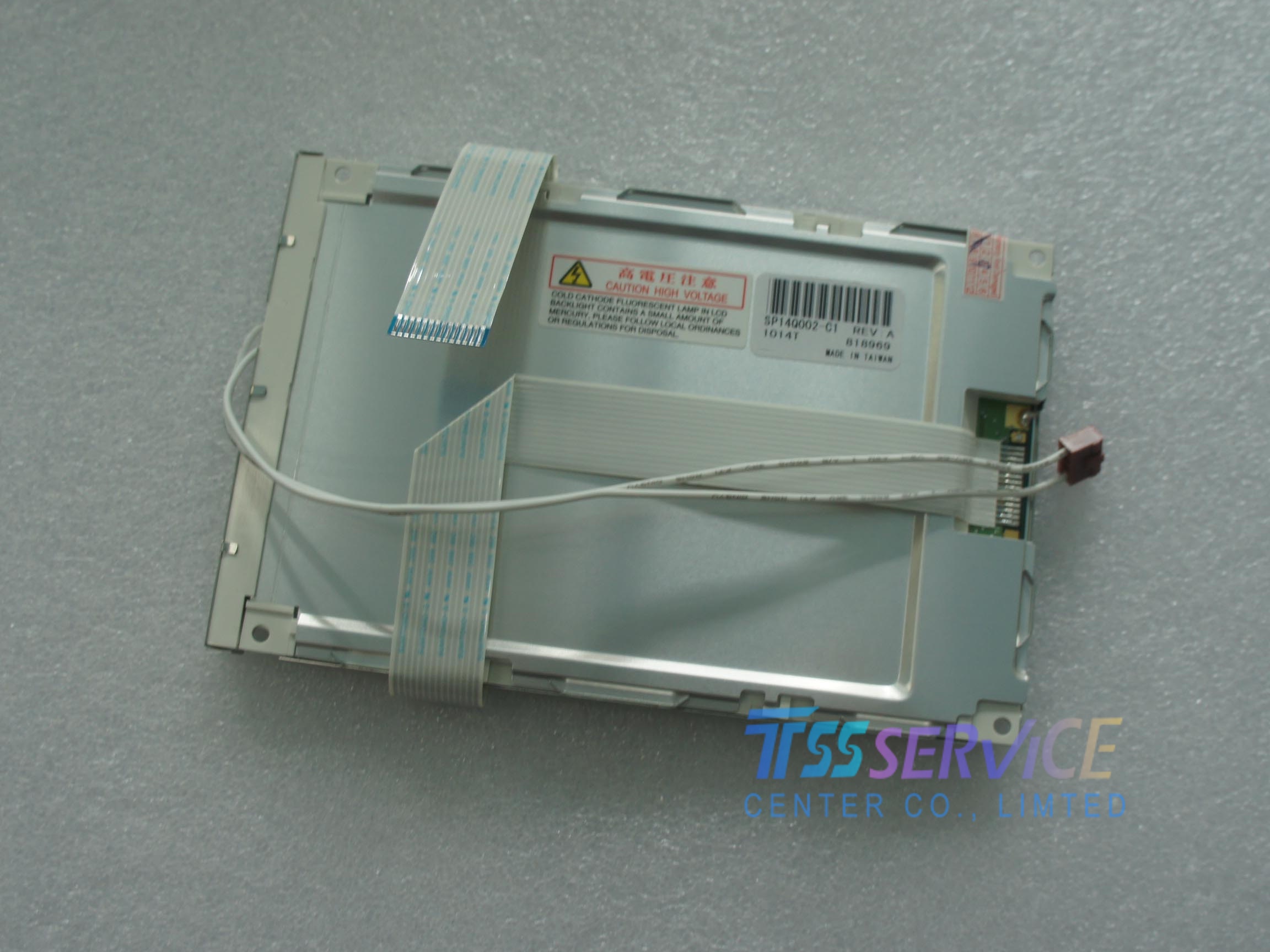
The specifications of the SP14Q002-C1 tell a story of deliberate, optimized design for embedded systems. The 5.7-inch diagonal size is a classic standard, offering substantial screen real estate without becoming unwieldy. The 320 x 240 pixel resolution, known as QVGA, is a key strength. It provides ample detail for user interfaces, data visualization, and basic graphics while remaining computationally lightweight. Driving this resolution requires less processing power and memory bandwidth than higher-resolution displays, leading to lower system cost and power consumption.
Further emphasizing its industrial pedigree are features like the wide operating temperature range (typically -20°C to +70°C) and a robust mechanical interface. It is designed to withstand the vibrations, temperature fluctuations, and extended operational hours common in factory automation, medical devices, and instrumentation. The inclusion of a CCFL or LED backlight option allows designers to choose between uniform brightness (CCFL) and lower power consumption/longer life (LED). This balance of clear readability, moderate resolution, and environmental robustness defines its core value proposition.
Strategic Advantages in a Competitive Landscape
Choosing the SP14Q002-C1 over other display types (like TFT or OLED) is a strategic decision driven by specific project requirements. Its primary advantages are cost-effectiveness, reliability, and sunlight readability. For applications where full-color video is unnecessary, a monochrome FSTN-LCD offers a significantly lower Bill of Materials (BOM) cost—not just for the panel itself, but also for the simpler controller and lower-specification driving circuitry.
Reliability is paramount. FSTN-LCDs have a proven track record and a simple, solid-state construction with no organic materials that degrade over time (unlike OLEDs). Furthermore, with the optional transflective polarizer, this display achieves excellent sunlight readability. It can use ambient light to illuminate the screen, making it perfectly viewable in bright outdoor conditions where a purely emissive display would wash out, all while conserving backlight power. This combination makes it an enduring choice for set-and-forget applications.
Ideal Application Scenarios: Where This Display Excels
The technical and strategic benefits of the SP14Q002-C1 converge in well-defined application verticals. It is not a consumer gadget screen but a workhorse for industrial and specialized commercial equipment.
-
Industrial Human-Machine Interfaces (HMIs): Control panels for PLCs, CNC machines, and factory automation systems where clarity, reliability, and 24/7 operation are non-negotiable.
-
Test and Measurement Instruments: Oscilloscopes, spectrum analyzers, and multimeters that require precise data presentation and must perform in lab and field conditions.
-
Medical and Laboratory Devices: Patient monitors, diagnostic equipment, and lab analyzers where accurate data reading under various lighting conditions is critical.
-
Point-of-Sale (POS) and Kiosk Systems: For menu boards, order terminals, and information kiosks where cost, longevity, and indoor/outdoor visibility are key considerations.
-
Transportation and Fleet Telematics: In-vehicle terminal displays for logistics and heavy machinery, benefiting from the wide temperature range and vibration resistance.
In these environments, the display is a tool, not an entertainment center, and the SP14Q002-C1 is engineered precisely for that role.
The SP14Q002-C1 5.7-inch FSTN-LCD module exemplifies how mature, refined technology continues to deliver immense value in specialized markets. Its FSTN technology provides the crucial foundation of superior monochrome readability, which, when combined with its pragmatic QVGA resolution, robust construction, and sunlight-viewable options, creates a compelling solution for demanding embedded applications. For product designers prioritizing long-term reliability, clear information presentation, and total cost of ownership over flashy color graphics, this display remains a strategically sound and technically excellent choice, proving that optimal performance is always contextual to the application's core requirements.


