In the intricate world of electronic components, the display panel often serves as the critical interface between a device and its user. For engineers and product developers sourcing components for industrial controls, medical instruments, or portable test equipment, selecting the right LCD is a decision that impacts readability, durability, and overall user experience.
In the intricate world of electronic components, the display panel often serves as the critical interface between a device and its user. For engineers and product developers sourcing components for industrial controls, medical instruments, or portable test equipment, selecting the right LCD is a decision that impacts readability, durability, and overall user experience. This article delves into a specialized component designed to meet these demanding needs: the New STN LCD Screen Display Panel 240*128, model AG240128BFTCW32H from AMPIRE.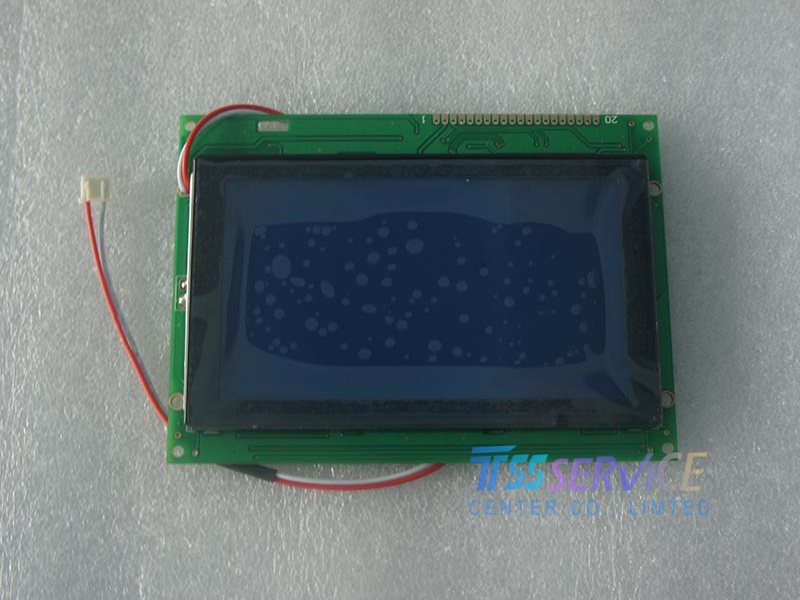
Our exploration will move beyond basic specifications to uncover the practical implications of its technology. We will analyze the advantages of its STN (Super Twisted Nematic) construction and the specific benefits brought by its anti-glare (AG) treatment. Furthermore, we will examine its electrical interface and mechanical design, providing a comprehensive understanding of why this particular panel is becoming a preferred choice for applications where clarity under various lighting conditions and reliable performance are non-negotiable.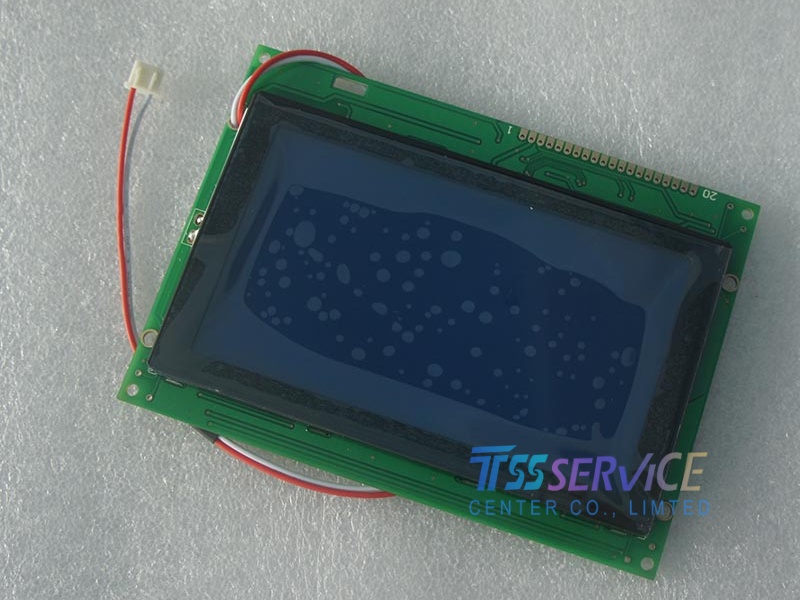
Decoding the STN Advantage: Clarity and Contrast in Demanding Environments
The core of the AG240128BFTCW32H's performance lies in its STN (Super Twisted Nematic) technology. Unlike simpler TN (Twisted Nematic) displays, STN panels employ a higher twist angle of the liquid crystal molecules—typically 180 to 270 degrees. This fundamental difference yields significantly improved contrast and a more stable, legible image across a wider viewing angle. For the 240x128 pixel resolution, this translates into sharper character definition and the ability to display more complex graphics or data sets without the blurring or ghosting effects that can plague lower-grade panels.
This enhancement is crucial for its target applications. In an industrial setting, an operator might need to view a machine's status from an oblique angle. In outdoor portable equipment, sunlight readability is paramount. The STN technology in this AMPIRE panel provides a passive matrix solution that offers a superior visual performance bridge between basic TN and more expensive active-matrix displays. It delivers the necessary legibility without imposing excessive power consumption or cost, making it an optimal balance of performance and practicality for embedded systems.
The Critical Role of Anti-Glare Treatment in Optical Performance
Specifying an LCD without considering its surface treatment is like designing a camera without a lens coating. The "AG" in the model number stands for Anti-Glare, a feature that fundamentally transforms usability. This panel employs a finely textured surface treatment that diffuses ambient light. Instead of reflecting light as a sharp, disruptive glare spot, the AG layer scatters it, dramatically reducing reflections from overhead lighting, windows, or other bright sources.
The practical benefit cannot be overstated. It directly combats visual fatigue for users who must monitor the display for extended periods. It ensures that critical data remains readable in high-ambient-light conditions, such as on a factory floor or in a medical lab. This treatment works synergistically with the STN layer's inherent contrast to guarantee that the information on the 240x128 pixel area is always accessible. For product designers, integrating this panel means one less worry about the end-use environment compromising the device's core functionality.
Electrical and Mechanical Integration: The FTCW32H Interface Blueprint
Understanding the pinout and interface is essential for successful implementation. The suffix "FTCW32H" encodes vital information about the panel's electrical and mechanical configuration. This model features a standard parallel RGB or 6800-series MPU interface, a versatile and widely supported protocol that simplifies driver IC selection and microcontroller integration. The inclusion of an LED backlight, typically white or yellow-green, ensures uniform illumination with straightforward power requirements.
Mechanically, the panel is designed for robust integration. It comes as a complete module, often including the driver board, which streamlines assembly. The dimensions and mounting hole patterns are standardized for common chassis designs. The 32H likely denotes specific connector type or pin count, emphasizing the need for designers to consult the detailed datasheet for precise voltage levels, signal timing diagrams, and backlight driving circuits. This attention to integratable detail allows development teams to focus on application software rather than low-level display hardware debugging.
Target Applications and Comparative Value Proposition
Where does the AMPIRE AG240128BFTCW32H truly shine? Its combination of mid-resolution graphics capability, superior optical performance, and robust interface makes it ideal for a distinct class of professional and industrial devices. Primary applications include programmable logic controller (PLC) human-machine interfaces (HMIs), clinical diagnostic equipment, telecommunications test gear, and specialized automotive diagnostic tools. In these fields, reliability and data integrity are paramount.
Compared to a standard TN panel, its value proposition is clear: significantly better viewing angles and contrast for a moderate cost increase. Compared to a high-resolution TFT, it offers lower power consumption, simpler control requirements, and often better sunlight readability at a fraction of the cost. It occupies a strategic niche, providing a high-performance passive display solution for B2B and industrial products where color is not a requirement, but exceptional monochrome readability and durability are. Choosing this panel is a decision to prioritize functional user experience over mere specification checklist items.
In conclusion, the AMPIRE AG240128BFTCW32H STN LCD panel represents a thoughtfully engineered solution for serious embedded applications. Its STN technology and anti-glare treatment work in concert to deliver exceptional readability in challenging environments, while its standard interface ensures smooth integration. This panel is not merely a component; it is a strategic choice for designers aiming to build devices where information must be communicated clearly, reliably, and effectively. By selecting a display with these calibrated features, engineers invest in the end-user's experience and the professional credibility of the final product.


