In the demanding world of industrial automation, medical equipment, and human-machine interfaces (HMIs), the display panel is far more than a simple window to data—it is a critical component that ensures reliability, clarity, and longevity under punishing conditions. This article delves into the Kyocera T-51963GD035J-MLW-ADN, a 3.5-inch LCD panel engineered specifically for such rigorous applications. We will move beyond basic specifications to explore the technological philosophy and design choices that make this display a trusted solution for engineers and system integrators.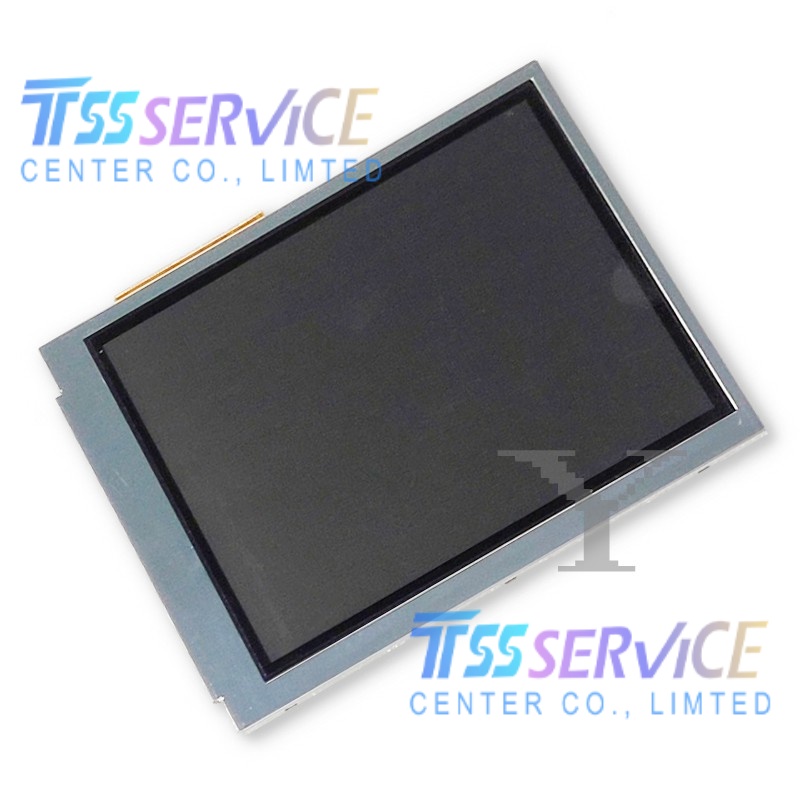
The core question we address is: what distinguishes a truly industrial-grade display from a commercial one? By examining the Kyocera panel's robust construction, advanced optical performance, integrated touch technology, and environmental resilience, we uncover the layers of engineering that contribute to system uptime and user satisfaction in mission-critical settings.
Engineering for Endurance: The Industrial Design Philosophy
The Kyocera T-51963GD035J-MLW-ADN is conceived from the ground up for industrial duty. Its foundation is a TFT LCD with a resolution of 320 x RGB x 240, providing sharp and legible graphics essential for complex control interfaces. Unlike consumer displays, its design prioritizes longevity and stability. The panel operates across a wide temperature range, typically from -30°C to +80°C, ensuring functionality in freezing cold warehouses or beside hot machinery. This resilience is achieved through carefully selected materials and components rated for thermal stress, preventing image lag, discoloration, or failure.
Furthermore, the display incorporates a robust metal bezel and a sturdy interface, designed to withstand vibration and mechanical shock common in factory environments. The backlight system, often a point of failure, is engineered for extended life, often exceeding 50,000 hours. This focus on mean time between failures (MTBF) is a cornerstone of the industrial philosophy, directly reducing total cost of ownership by minimizing downtime and maintenance needs. It’s not just about showing an image; it’s about guaranteeing that image remains flawless for years on end.
Optical Excellence in Challenging Environments
A display must be readable in all lighting conditions, from dark control rooms to sun-drenched factory floors. The Kyocera panel addresses this with a high-brightness specification, typically reaching 1000 nits or more. This intense luminosity actively combats washout from ambient light. More importantly, it pairs this with an advanced optical bonding process. Here, the touch sensor and cover glass are laminated directly to the LCD cell with a clear resin, eliminating the air gap found in standard assemblies.
This bonding technology yields multiple critical benefits: it significantly reduces surface reflections, enhancing readability under bright lights. It improves mechanical durability and seals the display against moisture and dust ingress. Most notably, it eliminates the parallax effect—where the touch point appears offset from the underlying graphic—resulting in a more direct, accurate, and responsive tactile experience. This optical clarity and robustness are non-negotiable for safety-critical inputs and precise operator interactions.
The Integrated Touch Interface: Reliability at Your Fingertips
Interactivity is key, and the "-ADN" suffix in the model name signifies the inclusion of a projected capacitive (PCAP) touchscreen. PCAP technology, known from smartphones, offers superior multi-touch capability, clarity, and durability compared to resistive touch. For industrial use, Kyocera’s implementation is fortified. The touch sensor is designed to function reliably even when the operator is wearing gloves, a common scenario in manufacturing or medical settings.
The integration is seamless and reliable. By combining the display and touch sensor into a single, optically bonded unit, Kyocera provides a fully integrated module that simplifies the design-in process for engineers. It reduces the complexity of sourcing separate components, managing alignment, and dealing with multiple suppliers. This plug-and-play approach not only accelerates development timelines but also ensures a higher level of system integration integrity, as the display and touch are tested and qualified as one cohesive unit from a single trusted vendor.
Application Synergy: Where Technology Meets Real-World Demand
The true test of any industrial component is its performance in application. The Kyocera T-51963GD035J-MLW-ADN finds its niche in environments where failure is not an option. In industrial automation, it serves as the face of PLCs, CNC machine controls, and test/measurement equipment, providing operators with clear, interactive feedback. The medical device field relies on its reliability for portable diagnostics, patient monitoring systems, and surgical equipment interfaces, where hygiene (thanks to the seamless glass surface) and unwavering performance are paramount.
Beyond these, it is ideal for transportation systems, ruggedized handheld terminals, and advanced kiosks. The display’s combination of a compact 3.5-inch form factor, high brightness, PCAP touch, and extreme environmental tolerance makes it a versatile building block. For system integrators, selecting this panel mitigates risk. It transfers the burden of display reliability from their engineering team to Kyocera’s proven industrial design, allowing them to focus their expertise on core application software and hardware integration.
In conclusion, the Kyocera T-51963GD035J-MLW-ADN 3.5-inch LCD panel exemplifies the convergence of optical performance, rugged engineering, and intelligent integration required for modern industrial applications. It transcends being a mere component to become a reliability partner, addressing critical challenges from sunlight readability and glove-compatible touch to thermal endurance. For engineers designing systems that must perform consistently in harsh, demanding environments, specifying this display is a strategic decision that prioritizes long-term operational integrity and user experience over initial cost, ultimately safeguarding the value and functionality of the entire end-product.


