In the heart of modern industrial automation, human-machine interfaces (HMIs) are no longer simple input devices—they are the gateways through which operators perceive, control, and trust complex machinery. The quality of the display screen, therefore, becomes a critical factor in operational efficiency and safety.
In the heart of modern industrial automation, human-machine interfaces (HMIs) are no longer simple input devices—they are the gateways through which operators perceive, control, and trust complex machinery. The quality of the display screen, therefore, becomes a critical factor in operational efficiency and safety. The TIANMA 12.3-inch TM123XDHP90-00 is a specialized LCD display module engineered to meet these stringent demands. Unlike consumer-grade panels optimized for vivid colors and wide viewing angles at a low cost, this TIANMA unit is designed for longevity, clarity in harsh lighting, and deterministic performance. This article will dissect the four key pillars that make the TM123XDHP90-00 a superior choice for industrial applications: its intrinsic optical design, its robust mechanical architecture, its advanced interface capabilities, and its decisive value proposition in real-world deployments. We will explore not just what this screen is, but why its specific engineering choices matter for mission-critical environments.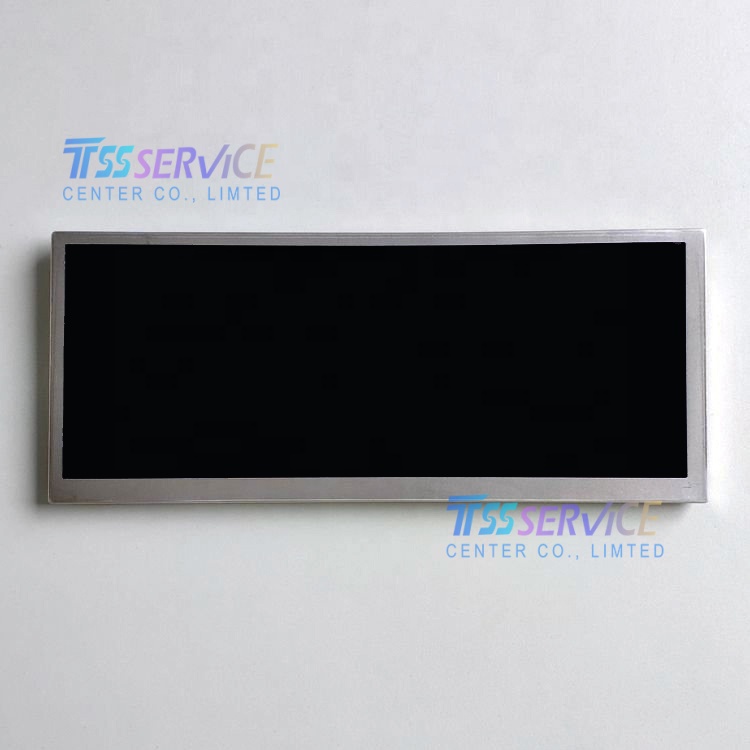
Optical Engineering: Beyond Resolution and Luminance
The TM123XDHP90-00 is often initially evaluated on its basic specifications—a 12.3-inch diagonal, WXGA (1280 x 720) resolution, and high brightness. However, a deeper analysis reveals that its true value lies in the balance of its optical characteristics. The panel utilizes Advanced Super-Viewing Angle (ASV) technology, which ensures that color shift and contrast degradation are minimized even when operators view the screen from extreme angles—a common scenario on a sprawling factory floor or inside a vehicle cabin. The typical luminance rating exceeds 700 cd/m², but this is not merely about being "bright." This level of illumination, combined with an anti-glare (AG) surface treatment, actively suppresses specular reflections from ambient lighting, making data readable even in direct sunlight.
Furthermore, the contrast ratio of 1000:1 is not a marketing number but a functional requirement for displaying safety-critical alarms or dark-field microscope images. The screen’s ability to render deep blacks prevents visual fatigue during long shifts. Importantly, the LED backlight is designed for a uniform light distribution and a long operational life, typically exceeding 50,000 hours. This means the optical performance degrades predictably and slowly, reducing the need for mid-life recalibration or replacement—a hidden cost often overlooked when selecting displays for medical or industrial test equipment.
Structural Resilience: The Architecture of Reliability
An industrial display must withstand more than just high temperatures. The TM123XDHP90-00 is engineered as a structural component of the final device. Its mechanical design prioritizes rigidity and thermal dissipation. The module employs a robust metal bezel and a specially reinforced backlight chassis, which not only protects the delicate LCD cell from vibration and shock (meeting stringent automotive and industrial standards) but also acts as a heatsink for the LED driver circuitry. This passive thermal management is critical because active fans introduce dust and points of failure in harsh environments.
The industrial temperature range from -20°C to +70°C is achieved through the use of wide-temperature liquid crystal materials and a carefully selected polarizer film. This is not a guarantee that can be added later; it is a fundamental design choice that affects the entire supply chain. The physical interface uses a high-retention LVDS (Low-Voltage Differential Signaling) connector, which is more resistant to accidental disconnection than consumer-grade FPC connectors. The module's overall depth and mounting hole pattern are standardized to allow for seamless integration into existing HMI panels from leading OEMs, reducing the engineering burden for replacement or new design-in projects.
Interface and Signal Integrity: The Digital Nervous System
While the physical screen captures data, the interface electronics are responsible for delivering it without error. The TM123XDHP90-00 implements a single-channel 8-bit LVDS interface, a mature and highly reliable standard for industrial communication. LVDS is inherently resistant to electromagnetic interference (EMI) and allows for cable runs that are longer than those of parallel RGB interfaces, which is crucial when the display is physically separated from the main control board by a few feet. The display’s input timing controller (TCON) is embedded and pre-programmed to accept standard Sync signals without complex initialization sequences, ensuring plug-and-play compatibility with a wide range of SoCs and FPGAs.
From a signal integrity perspective, the display features integrated termination resistors on the LVDS lines, which reduces reflections and ringing that can cause pixel jitter or data corruption in noisy electrical environments. This is a small but vital detail that differentiates it from generic panels. The power management circuit is designed to handle inrush current gracefully, preventing voltage drops that could reset the main processor. For designers, this means fewer decoupling capacitors and less board-level debugging. The module also provides comprehensive test patterns via a dedicated pin, allowing for rapid functional verification during production without needing a live video source, which significantly speeds up assembly line quality control.
Total Cost of Ownership: The Economic Case for Quality
The initial price of an industrial-grade display like the TIANMA TM123XDHP90-00 is higher than that of a standard consumer panel. However, a rigorous total cost of ownership (TCO) analysis reveals a compelling economic advantage. The primary driver is reduced field failure rate. The combination of robust mechanical design, wide temperature tolerance, and high-grade backlight LEDs means the display is far less likely to fail from common industrial causes like thermal cycling, dust ingress, or connector fatigue. This directly translates to fewer warranty claims and less expensive emergency field service calls.
Furthermore, the long-term availability commitment from TIANMA is a critical factor. Consumer panels are often discontinued within 18 months, forcing expensive redesigns. Industrial displays are typically supported for 3 to 5 years, ensuring product longevity. The standard form factor and electrical interface also simplify the sourcing of replacements. Finally, the higher luminance and contrast reduce operator error. A screen that is difficult to read, even by a small percentage, can lead to costly mistakes in production or logistics. The TM123XDHP90-00 provides a high degree of visual clarity, which, when combined with low maintenance, makes the upfront premium a sound investment for any serious industrial application.
Conclusion
The TIANMA TM123XDHP90-00 is not merely a commodity display; it is a precisely engineered component that addresses the core challenges of industrial visualization. By prioritizing optical stability in challenging light, mechanical resilience against environmental stress, signal integrity for reliable data delivery, and a design philosophy that minimizes total cost over the product life, it stands as a benchmark in the 12.3-inch category. For engineers and procurement professionals seeking to build HMI solutions that are both dependable and forward-looking, this display offers a clear path to reducing downtime and improving operational safety. Its true value lies not in a spec sheet, but in the confidence it brings to every interaction between a human and a machine.


