For decades, the rectangle has reigned supreme in the world of displays. From our smartphones to our car dashboards, this familiar shape has defined the boundaries of digital interaction. However, this dominance has often come at a cost—forcing product designers to compromise their vision to fit within a rigid, rectangular frame. This long-standing paradigm is now being fundamentally challenged.
For decades, the rectangle has reigned supreme in the world of displays. From our smartphones to our car dashboards, this familiar shape has defined the boundaries of digital interaction. However, this dominance has often come at a cost—forcing product designers to compromise their vision to fit within a rigid, rectangular frame. This long-standing paradigm is now being fundamentally challenged.
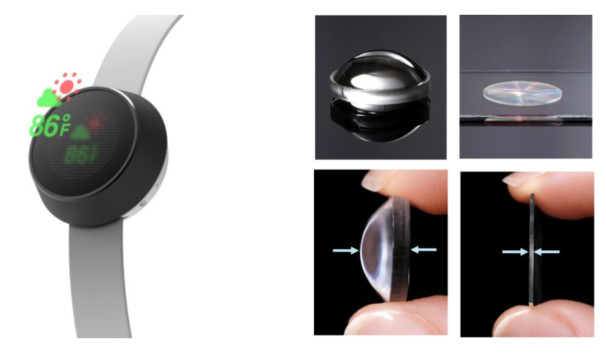
Kyocera Corporation, a global leader in advanced ceramics and components, has announced the commencement of mass production of high-resolution circular LCDs. This breakthrough is poised to revolutionize industries where form and function must seamlessly merge, most notably in smartwatches and automotive dashboards. By liberating designers from traditional constraints, Kyocera is not just manufacturing a new screen; it is enabling a new era of aesthetic and ergonomic design, where technology can finally conform to the natural shapes of the objects and interfaces we use.
Engineering the Curve: The Technical Leap Behind Circular Displays
Creating a high-performance circular LCD is a feat of precision engineering far more complex than simply cutting a round shape from a standard rectangular panel. The core challenge lies in the liquid crystal alignment and the driver circuitry. In rectangular displays, the alignment of liquid crystals and the placement of Thin-Film Transistors (TFTs) follow a uniform, grid-like pattern. Adapting this to a circle requires a complete re-engineering of the pixel layout and the driver electronics at the periphery.
Kyocera's achievement hinges on its proprietary driver integration and advanced substrate technology. The company has successfully developed a method to place the necessary driving components efficiently around the circular edge without compromising the slim bezel or the structural integrity of the display. Furthermore, these circular LCDs boast impressive specifications: high resolution for sharp graphics and text, excellent brightness and contrast for sunlight readability in automotive applications, and low power consumption crucial for wearable devices. This technical mastery transforms the circle from a design novelty into a viable, high-performance component ready for mass-market adoption.
Beyond the Bezel: Transforming Smartwatch and Wearable Design
The impact of circular LCDs is most immediately visible in the smartwatch and wearable technology sector. While circular watch faces have been the standard in traditional horology for centuries, most smartwatches have either accommodated rectangular displays within a round body (creating unsightly "flat tires" or black borders) or fully embraced a rectangular form factor, abandoning classic watch aesthetics. Kyocera's technology resolves this conflict elegantly.
A true, full-circle display allows smartwatch makers to deliver a digital experience that honors traditional watch design. It enables seamless, immersive watch faces, more intuitive user interfaces with circular menus that mimic physical watch crowns, and ultimately, a product that looks and feels like a premium timepiece first and a tech gadget second. This fusion of classic design language with cutting-edge functionality is key to appealing to a broader market and deepening user attachment to their devices. The circular display is not just a screen; it becomes the centerpiece of a cohesive and desirable wearable ecosystem.
The Dashboard Reimagined: Circular Displays in Automotive UX
The automotive industry represents another frontier for circular LCDs, with potentially even greater implications for user experience (UX) and safety. Modern vehicles are increasingly digital, but many digital instrument clusters and center console screens remain confined to rectangles, sometimes clashing with the organic curves of a car's interior design. Circular displays offer a path to perfect harmony.
Imagine a digital gauge cluster that perfectly fits within a classic, round binnacle, rendering analog-style speedometers and tachometers with digital clarity and customizability. Consider dedicated circular displays for climate control, audio volume, or drive mode selection, providing both a tactile, intuitive interface and a sophisticated, cockpit-like aesthetic. By integrating circular LCDs, automakers can reduce visual clutter, create more driver-centric interfaces that present information in a naturally glanceable format, and elevate the entire cabin's ambiance. This move aligns with the trend towards more personalized and emotionally resonant automotive interiors, where technology enhances rather than dominates the driving experience.
Kyocera's move into mass production of circular LCDs marks a pivotal shift from the one-size-fits-all rectangle to a more human-centric design philosophy. By solving the profound technical challenges, they have unlocked new potentials for elegance in wearables and intuitive integration in automotive dashboards. This innovation empowers brands to create products where the display disappears into the design, fostering a deeper, more natural connection between users and their technology. The future of interfaces is not just sharper or brighter—it is thoughtfully shaped.


