In the rapidly evolving landscape of human-machine interfaces, the demand for compact, reliable, and visually competent display solutions has never been higher. While consumer electronics often chase the spectacle of high-resolution, large-format screens, the industrial and commercial sectors quietly rely on a different class of components: rugged, standardized, and power-efficient panels
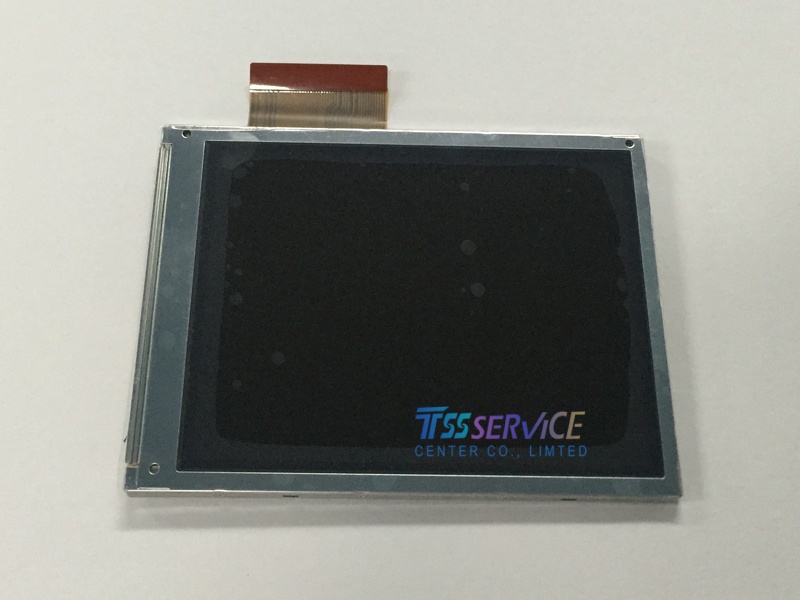
In the rapidly evolving landscape of human-machine interfaces, the demand for compact, reliable, and visually competent display solutions has never been higher. While consumer electronics often chase the spectacle of high-resolution, large-format screens, the industrial and commercial sectors quietly rely on a different class of components: rugged, standardized, and power-efficient panels. Among these unsung heroes sits the TX09D70VM1CBB, a 3.5-inch QVGA TFT LCD panel manufactured by Hitachi. This article delves deep into the specific architecture, technical characteristics, and application logic of this particular module. Rather than simply listing specifications, we will explore why this seemingly modest display continues to play a critical role in medical devices, test equipment, and factory automation. We will dissect its interface mechanics, its optical performance parameters, and its place within the broader ecosystem of embedded design, providing a comprehensive view for engineers and procurement specialists who require more than just a datasheet summary.
Decoding the Interface: Why 18-bit RGB Still Matters
At the heart of the TX09D70VM1CBB lies a fundamental design choice that defines its suitability for specific tasks: the 18-bit parallel RGB interface. In an era where serial interfaces like MIPI DSI and LVDS dominate the mobile and premium display markets, the persistence of the parallel RGB standard demands an explanation. This interface offers 262,144 colors—a significant leap from the 65k colors of a 16-bit system. For applications requiring gradient rendering in medical imaging or waveform visualization in oscilloscopes, this color depth is not a luxury but a necessity. The parallel nature of the bus allows for a direct, low-latency connection to microcontrollers and FPGAs without the need for a dedicated serializer or protocol bridge. This simplifies the PCB layout and reduces the bill of materials for designs where space is at a premium. However, engineers must be mindful of the 18 data lines plus control signals, which occupy a significant number of GPIO pins. This trade-off between interface simplicity and pin count is a critical factor in processor selection. The 60 FPS refresh rate supported by this interface ensures flicker-free operation, which is essential for applications that involve user interaction over long periods, such as in handheld test instruments.
Optical Architecture and Viewing Characteristics in Confined Spaces
Moving beyond the electrical interface, the optical construction of the TX09D70VM1CBB reveals its design philosophy tailored for front-facing, direct-view applications. With a native resolution of 320 × 240 pixels (QVGA), the display achieves a pixel density approximately 115 PPI. While not high by smartphone standards, this resolution is ideal for displaying simple graphical user interfaces, text, and numerical data without the processing overhead required for higher pixel counts. The module employs a TN (Twisted Nematic) panel technology. While TN suffers from narrower viewing angles compared to IPS or VA—typically a contrast ratio drop beyond 60 degrees off-axis—this characteristic is often a non-issue in fixed-position industrial equipment. The horizontal viewing angle of 70 degrees and vertical angle of 50 degrees are adequate for the intended operator position. More importantly, the TN technology provides a faster response time, typically under 20 ms, which is advantageous for displaying changing data without ghosting. The 500 cd/m² brightness rating places it in the "high-brightness" category, ensuring readability in well-lit factory floors or outdoor shaded environments. This luminous output, combined with an anti-glare surface treatment, minimizes specular reflections that can obscure critical readings.
Power Integrity and Thermal Management for Continuous Operation
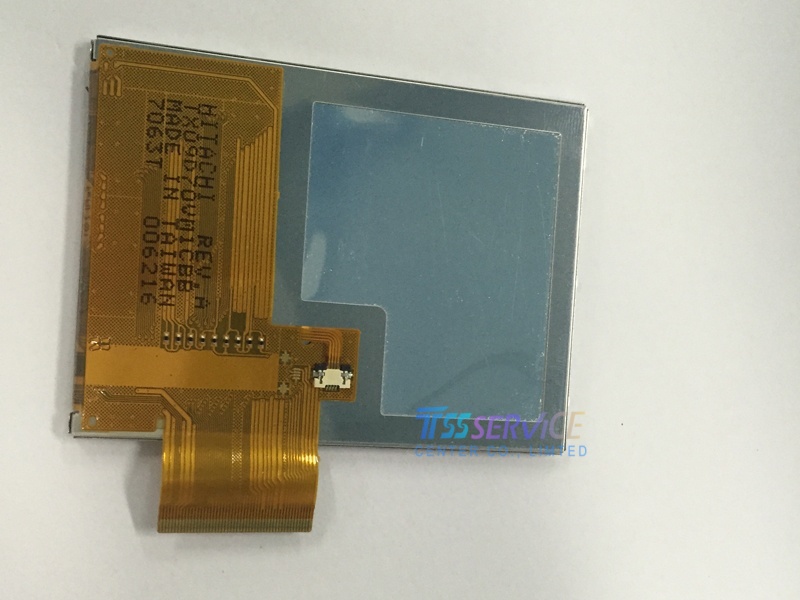
A defining characteristic of industrial-grade displays is their ability to run continuously for thousands of hours without degradation. The TX09D70VM1CBB is engineered with power management as a core feature, not an afterthought. The module operates primarily on a single 3.3V power rail for logic, with a dedicated supply for the backlight LED driver. The typical power consumption hovers around 1.5 to 2 Watts, heavily dependent on the backlight current setting. This low power profile is crucial for portable devices like battery-powered patient monitors. The LED backlight, rated for a lifespan of over 50,000 hours, utilizes a parallel LED array configuration. This means that if a single LED fails, the entire backlight does not go dark; instead, there is a gradual, uniform reduction in brightness, allowing for scheduled maintenance rather than emergency replacement. Designers must pay careful attention to the backlight current-limiting resistor. Operating the LEDs at the maximum rated current will increase brightness but significantly shorten the lifespan due to thermal stress. An optimal design targets 80% of the maximum rated current to achieve a balance between visibility and longevity. The absence of a built-in touch sensor in the standard module allows engineers to either integrate a resistive touch panel overlay or rely on tactile buttons, maintaining the lowest possible power envelope for the display subsystem.
Longevity, Sourcing, and the Legacy of Hitachi Displays
Perhaps the most undervalued aspect of the TX09D70VM1CBB is its supply chain stability and long-term availability. Hitachi (now part of the Japan Display Inc. lineage) has historically maintained a policy of supporting industrial display products for extended periods—often 5 to 7 years or more after initial release. This is in stark contrast to consumer-grade displays that become obsolete within two generations of mobile phones. For a medical device manufacturer seeking FDA or CE certification, once a display is qualified, requalifying a replacement panel is an expensive and time-consuming process involving electrical safety testing, optical testing, and documentation updates. The TX09D70VM1CBB offers a degree of design stability that is increasingly rare. Its RoHS compliance and standardized mechanical footprint (approximately 76.9 mm × 63.9 mm) make it a direct replacement for several legacy panels in existing equipment. However, engineers must be cautious of "second-source" or compatible panels from smaller manufacturers, as they may have different gamma curves, backlight uniformity, or temperature tolerances. The original Hitachi module guarantees specific color coordinates and gray-scale linearity that are critical for consistent visual output across a production run. When selecting this panel, requesting a fresh stock from a reputable distributor is paramount, as LCD panels can degrade in storage even without power.
The TX09D70VM1CBB is not a glamorous display, but it is a reliable one—a distinction that holds immense value in the world of embedded systems. Its 18-bit parallel interface offers simplicity and low latency, while its robust optical construction ensures readability under harsh lighting and continuous duty cycles. The modest QVGA resolution is perfectly tuned for applications where data clarity trumps pixel density. For the design engineer, this panel represents a low-risk integration with well-documented specs and proven power management. For the product manager, it ensures a long procurement lifecycle and a stable bill of materials. Ultimately, the TX09D70VM1CBB proves that in industrial and medical design, the most effective technology is often not the newest, but the one that has been refined to perform a specific job with unwavering consistency.


