In the rapidly evolving landscape of industrial automation and embedded systems, the display interface serves as the critical bridge between human operators and machine logic. Among the myriad options available, the TX09D80VM3CCA, a 3.5-inch TFT LCD module from Hitachi
Introduction: The Intersection of Visual Clarity and Tactile Precision in Industrial HMI
In the rapidly evolving landscape of industrial automation and embedded systems, the display interface serves as the critical bridge between human operators and machine logic. Among the myriad options available, the TX09D80VM3CCA, a 3.5-inch TFT LCD module from Hitachi, stands out as a specialized solution that balances compact form factor with robust performance. Paired with a 4-wire resistive touch panel, this component is engineered for environments where reliability, optical clarity, and cost-effective interactivity are non-negotiable. This article delves into the technical architecture of the TX09D80VM3CCA, exploring its optical specifications, the engineering rationale behind its resistive touch technology, its power management considerations, and its strategic deployment across demanding industrial and medical applications. By moving beyond a simple datasheet summary, we aim to provide engineers and product designers with a comprehensive understanding of why this specific module remains a relevant choice in a market flooded with capacitive alternatives.
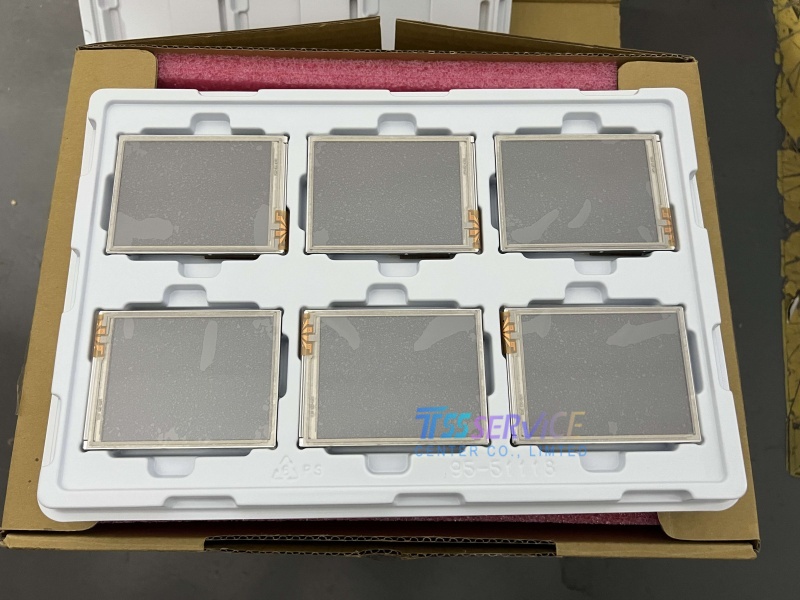
Optical Architecture and Display Performance Metrics
The TX09D80VM3CCA is not merely a small screen; it is a finely tuned optical system designed for high legibility under challenging lighting conditions. At its core, the module utilizes a 3.5-inch diagonal TFT (Thin-Film Transistor) active matrix with a native resolution of 320 x 240 pixels (QVGA). While this resolution may seem modest by consumer smartphone standards, it is a deliberate engineering choice that ensures the graphics controller can refresh the screen quickly without excessive bandwidth, which is critical for real-time data visualization. The display's luminance rating, typically in the range of 300 to 400 cd/m², is achieved through a side-lit LED backlight system.
One of the most significant technical aspects is the viewing angle and contrast ratio. Unlike standard TN (Twisted Nematic) panels, Hitachi has engineered this module to provide a wider vertical and horizontal viewing cone, often achieving a 6 o'clock or 12 o'clock optimal view direction. This is paramount for devices mounted on operator panels where the user may not be directly facing the screen. The anti-glare surface treatment further enhances utility by diffusing ambient light reflections, preventing the operator from being blinded by overhead factory lighting. The combination of high contrast (often exceeding 500:1) and precise color saturation ensures that warning indicators and critical data points are instantly distinguishable, even when viewed from an acute angle.
The Engineering Logic of the 4-Wire Resistive Touch Interface
In an era dominated by capacitive multi-touch screens, the decision by Hitachi to pair the TX09D80VM3CCA with a 4-wire analog resistive touch sensor is a testament to functional specificity. The fundamental advantage of this technology lies in its pressure-based detection mechanism. Unlike capacitive screens that require the electrical conductivity of a human finger, the resistive layer registers touch through physical pressure applied to the outer polyester film, forcing it to contact the inner glass substrate. This makes the interface operable with any stylus, a gloved hand, or even a simple tool.
From an engineering perspective, the 4-wire implementation is elegantly simple yet robust. It consists of two transparent conductive layers coated with Indium Tin Oxide (ITO). When pressure is applied, the controller reads a voltage divider on the X-axis and then the Y-axis to determine the exact coordinates. The primary trade-off for this durability is the lack of multi-touch support and a slightly lower light transmission (approximately 10-15% light loss compared to a basic glass panel). However, for the target deployment environments of the TX09D80VM3CCA—such as hospital infusion pumps, food processing terminals, or automotive diagnostics—the ability to function flawlessly despite moisture, grease, or protective screen covers drastically outweighs the aesthetic limitations. The resistive layer also offers superior immunity to electromagnetic interference (EMI), ensuring that touch accuracy remains consistent near high-voltage machinery.
Power Integrity, Signal Timing, and System Integration
Integrating the TX09D80VM3CCA into a custom embedded system requires a nuanced understanding of its electrical characteristics. The module operates on a standard single 3.3V power supply, but the current draw is heavily influenced by the LED backlight configuration. The backlight is typically driven by a dedicated boost converter, often requiring an external PWM (Pulse-Width Modulation) signal to dim the display to 0% without turning off the logic power. This is a critical feature for power-sensitive designs, as the display can draw over 150 mA at full brightness. Engineers must ensure that the power rail for the backlight is isolated from the logic rail to prevent flicker or noise injection into the LVDS or parallel RGB signal lines.
The interface signal timing is another area requiring meticulous attention. The display relies on a standard 18-bit or 24-bit parallel RGB interface. The datasheet specifies precise setup and hold times for the HSYNC, VSYNC, and DOTCLK signals. Deviations here can result in image tearing or partial line corruption. Furthermore, the 4-wire touch connector demands a dedicated analog-to-digital converter (ADC) or a specialized touch controller IC. A common pitfall is ignoring the analog routing for the resistive touch lines. These traces must be kept as short as possible and shielded from fast-switching digital signals to prevent electrostatic interference that would cause "jittery" cursor behavior. Proper decoupling capacitors near the panel's FPC connector are not a recommendation but a requirement.
Strategic Deployment in Harsh and Safety-Critical Environments
The true value proposition of the TX09D80VM3CCA is realized when it is evaluated not on a lab bench, but within its operational context. This display excels in Medical Grade Equipment, specifically portable diagnostic units and patient monitoring systems. The resistive touch screen allows clinicians wearing surgical gloves to interact with software interfaces without needing to remove their protective equipment, maintaining sterility. The high contrast and anti-glare properties ensure that graphs and numeric readouts are visible under operating room lights or in recovery rooms with varying ambient illumination.
In the Industrial Automation sector, this module is frequently found in PLC control panels and temperature controller interfaces. The key advantage here is the sealed bezel design that allows the module to be gasketed against a front panel, creating a dust-tight and splash-proof barrier. The robustness of the 4-wire touch sensor means that an operator can clear condensation or accidental splashes with a rag without issuing false touches. Furthermore, the module's wide operating temperature range (typically -20°C to +70°C) makes it suitable for outdoor kiosks or environments adjacent to heat treatment processes. This thermal resilience, combined with the mechanical durability of the touch layer, reduces total cost of ownership by minimizing field failures and replacement cycles.
The TX09D80VM3CCA represents a convergence of mature, highly reliable technologies that prioritize function over fashion. Its QVGA optical engine, while not high-definition, delivers exceptional clarity for numeric and graphical user interfaces, while the resistive touch layer guarantees operability in environments where capacitive systems would fail. For the design engineer, this module offers a low-risk path to a production-ready HMI, provided that attention is paid to power supply isolation and analog signal routing. Ultimately, the TX09D80VM3CCA reaffirms the principle that in the world of embedded displays, consistency, ruggedness, and situational awareness often trump the allure of higher pixel counts.


