Introduction: The Legacy of Precision in Embedded Display Technology
In the rapidly evolving landscape of industrial and embedded display solutions, the TX09D80VM3CEA from Hitachi stands as a compelling testament to the enduring value of mature technology refined to perfection. As a 3.5-inch LCD panel paired with a 4-wire resistive touch screen, this component occupies a specific yet vital niche. While contemporary consumer electronics chase ever-larger screens and capacitive multi-touch, the TX09D80VM3CEA serves demanding environments where reliability, precision, and cost-effectiveness are paramount. This article delves beyond the surface-level specifications of this Hitachi panel. We will explore its technical architecture, the operational advantages of its resistive touch interface, and the specific industrial contexts where this legacy display remains the optimal choice. Understanding this component is not merely an exercise in nostalgia; it is a strategic insight for engineers and product managers who must balance performance with longevity in mission-critical systems.
Architectural Precision: Deconstructing the Hitachi LCD Core
At the heart of the TX09D80VM3CEA is a 3.5-inch diagonal TFT (Thin-Film Transistor) active matrix LCD, a design philosophy rooted in the principle of consistent accuracy. With a native resolution of 320 x 240 pixels (QVGA), the panel delivers a pixel density that is ideally suited for displaying structured data, simple graphical user interfaces, and alphanumeric information without the need for scaling artifacts. The display interface is typically a 24-bit parallel RGB connection, a standard in the embedded world that provides a direct and low-latency path from the host processor to the screen drivers. This directness is critical for applications where timing is precise, such as in medical point-of-care devices or CNC machine controls.
The panel's optical characteristics are equally engineered for utilitarian performance. It offers a typical brightness level of around 320 cd/m² and a contrast ratio of 300:1, which, while modest by today's smartphone standards, provides excellent readability in controlled indoor lighting environments. The viewing angle, specified at 70/70/50/70 degrees (left/right/up/down), is deliberately optimized for a fixed viewing position, such as that of an operator facing a machine panel. This specific orientation minimizes off-axis color shift and contrast inversion, ensuring that the information presented on the screen is legible without misinterpretation from the intended viewing angle. Hitachi's design choices here prioritize functional clarity over aesthetic breadth, making the TX09D80VM3CEA a masterclass in focused engineering for a specific use case.
The Tactile Advantage: Why 4-Wire Resistive Touch Still Matters
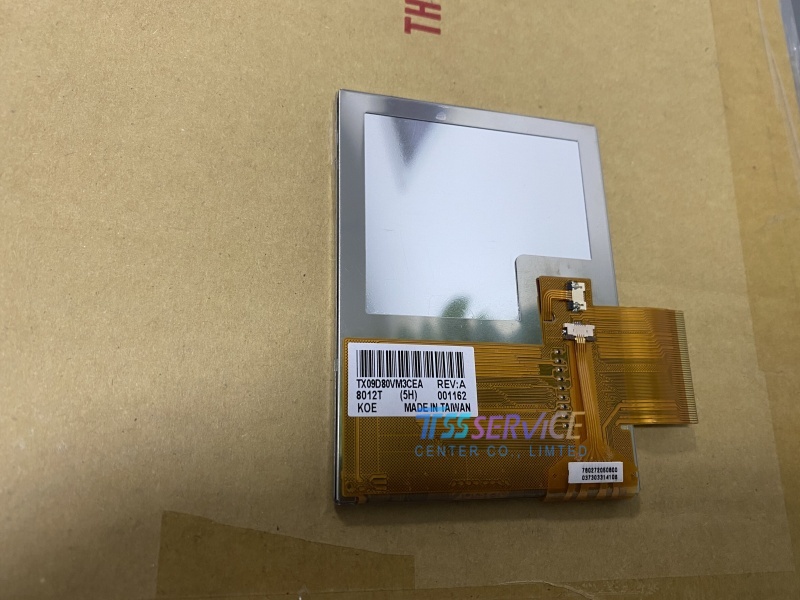
The inclusion of a 4-wire resistive touch screen is a defining feature of the TX09D80VM3CEA, and its value proposition is often misunderstood by those accustomed to capacitive technology. The fundamental principle of a 4-wire resistive touch sensor is its reliance on pressure. Two transparent conductive layers (typically Indium Tin Oxide) are separated by micro-spacers. When pressure is applied to the top layer, it makes contact with the bottom layer, creating a voltage divider that the controller reads as X and Y coordinates. This mechanism provides several distinct advantages in an industrial context.
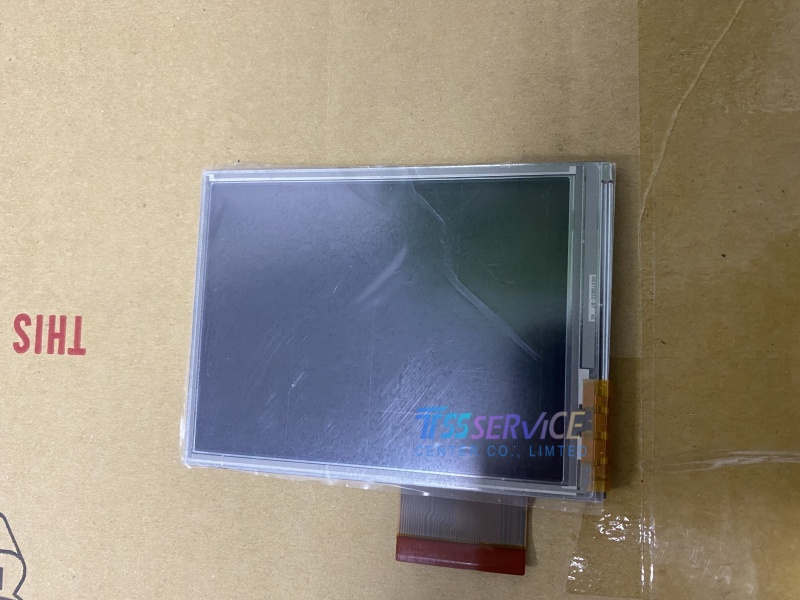
First, and most crucially, is environmental resilience. A resistive touch screen can be operated with any stylus—a gloved hand, a plastic pen, or even a screwdriver. In factories, medical labs, or outdoor kiosks where operators wear gloves for safety or hygiene, a capacitive screen becomes unusable, while a resistive screen functions flawlessly. Second, resistive technology is inherently immune to water, dust, and condensation. While water droplets on a capacitive screen can cause false touches or create "ghost" inputs, a resistive sensor can be safely wiped clean or operate in humid conditions without interference. Third, the lower power consumption of a 4-wire resistive touch controller is beneficial for battery-powered or heat-sensitive embedded systems.
This does not come without trade-offs. Resistive screens are generally less durable in terms of scratch resistance (the top flexible layer is softer) and offer only single-touch capability. However, for the targeted applications of the TX09D80VM3CEA, these are not limitations but design constraints that ensure the interface is perfectly matched to the operating environment. The technology provides a tactile, deterministic input method that "feels" precise to the user, offering a distinct physical feedback when the two layers make contact.
Integration Ecosystems: From Interface to Operation
Successfully deploying the TX09D80VM3CEA requires a comprehensive understanding of its integration ecosystem. The panel is not a "plug-and-play" consumer peripheral; it is a raw industrial component that demands a well-designed host board. The 24-bit parallel RGB interface, while offering low latency, uses a significant number of GPIO pins and requires careful PCB layout to manage signal integrity for the clock (CLK), data enable (DE), and horizontal/vertical sync signals (HSYNC/VSYNC). Engineers must ensure that the timing parameters, typically 60Hz refresh, are accurately configured in the LCD controller firmware to avoid flicker or blanking issues.
Furthermore, the backlight is typically LED-driven and requires a constant current source, not a voltage source. The lifespan and brightness stability of the panel are directly tied to the quality of this backlight driver. A poorly designed driver can lead to premature dimming or even failure. The touch screen brings its own integration layer. The 4-wire resistive touch must be connected to an analog-to-digital converter (ADC) controller. A common and robust solution is the use of a dedicated touch screen controller IC like the ADS7843, which manages the X and Y plate switching and provides a digital (SPI) interface to the main processor. Proper debouncing and calibration routines in the embedded software are essential to map the raw ADC values to accurate screen coordinates correctly.
The physical integration is also critical. Due to its size and weight of approximately 60 grams, the panel is well-suited for faceplate mounting using a gasket for dust protection. The FPC (Flexible Printed Circuit) connectors for both the LCD and touch screen are delicate components that must be handled with care to avoid tearing or damaging the traces. A successful design treats the TX09D80VM3CEA not as a single part but as the centerpiece of a tightly integrated subsystem involving power management, signal routing, and mechanical housing design.
Strategic Applications: Where Legacy Meets Necessity
The true value of the TX09D80VM3CEA is most apparent in specific vertical markets where its combination of size, interface, and touch technology provides a clear operational advantage. It is not a general-purpose display for consumer toys; it is a tool for industries that demand reliability over reactivity. One of its strongest applications is in the medical device industry. Patient monitors, diagnostic ultrasound units, and infusion pumps require a display that is easy to clean with harsh disinfectants, can be operated with a gloved hand, and presents critical data without the risk of accidental capacitive touches or screen glare. The 3.5-inch size is ideal for portable or bedside units where space is at a premium.
Another dominant market is industrial automation and HMI (Human-Machine Interface). On a factory floor, operators are often wearing heavy gloves for safety. A CNC control panel, a robotic teach pendant, or a PLC programming interface cannot afford to misinterpret an operator's command due to touch sensitivity issues. The robust, single-point precision of the 4-wire resistive touch is an asset, not a limitation. Furthermore, the QVGA resolution is perfectly adequate for displaying status bars, numeric readouts, and simple menu trees that are typical of such equipment.
Finally, the panel finds a home in telecommunications and security systems. In building access control panels, elevator displays, or intercom systems, the TX09D80VM3CEA provides a clear, readable interface that can withstand outdoor temperature swings (within its operating range) and, in some cases, vandalism. The ability to seal the screen against moisture ingress is a key differentiator compared to more sensitive capacitive alternatives. In these environments, the "last-gen" technology is not a drawback; it is a proven solution that reduces total cost of ownership by avoiding field failures and complex recalibrations. The panel's long product lifecycle, a hallmark of Hitachi's industrial display strategy, ensures that manufacturers can design and support their products for a decade or more without being forced into costly screen redesigns.
Conclusion
The Hitachi TX09D80VM3CEA is far more than a simple LCD panel; it is a meticulously engineered solution for a demanding subset of the display market that prioritizes longevity, environmental resilience, and deterministic input over consumer-centric metrics like resolution and multi-touch. Its 3.5-inch size and 4-wire resistive touch technology form a harmonious architecture that excels in medical, industrial, and security applications where operator gloves, moisture, and durability are daily realities. For the engineer or product manager facing a design challenge in these fields, this panel represents a low-risk, high-reliability choice that will provide consistent service for years. It stands as a powerful reminder that in the world of embedded systems, the best technology is often the one that simply works, without compromise, in the environment where it is placed.


