In the world of industrial and embedded display systems, the choice of a human-machine interface (HMI) component is rarely about aesthetics alone. Engineers and system integrators often face the critical challenge of balancing visual clarity, physical durability, and interface simplicity.
In the world of industrial and embedded display systems, the choice of a human-machine interface (HMI) component is rarely about aesthetics alone. Engineers and system integrators often face the critical challenge of balancing visual clarity, physical durability, and interface simplicity. The TX14D25VM1BAA, a 5.7-inch TFT LCD module manufactured by a leading display house, stands as a compelling solution for applications where reliability and standard compatibility are non-negotiable. With a native resolution of 320x240 pixels (QVGA) and a conventional RGB interface, this panel bridges the gap between legacy system requirements and modern visual demands. This article explores the technical architecture, interface logic, environmental resilience, and practical deployment strategies of this specific model. We will move beyond the surface-level specifications to understand when, why, and how this display excels in demanding roles such as medical instrumentation, industrial automation, and outdoor kiosks.
The Architectural Precision of the 5.7-Inch QVGA Panel
Understanding the TX14D25VM1BAA begins with its optical and physical construction. The 5.7-inch diagonal measurement falls into a classic "mid-size" category, offering a viewing area that is spacious enough for complex data readouts yet compact enough for panel-mounted enclosures. The 320x240 QVGA resolution might appear modest compared to modern smartphone displays, but in the context of industrial LCDs, this granularity is often a deliberate choice. At this size, the pixel density creates a crisp, readable character size without requiring anti-aliasing overhead, which is critical for fixed-font HMI applications.
The TN (Twisted Nematic) technology employed in this module provides a fast response time, typically in the range of 10 to 25 milliseconds, which eliminates motion blur for dynamic data updates. However, the trade-off is a narrower viewing angle, generally around 70 degrees horizontally and 50 degrees vertically. This is not a flaw but a feature: in many industrial environments, the operator sits directly in front of the unit. The narrow cone prevents light leakage and maintains high contrast from the primary viewing position. Additionally, the panel is engineered with an anti-glare surface treatment to diffuse ambient light, a crucial factor for readability under harsh fluorescent or sunlight-adjacent conditions. The 500:1 contrast ratio ensures that deep blacks and bright whites remain distinguishable, preserving the integrity of critical status indicators like alarm triggers or system idle screens.
Mastering the RGB Interface: Timing, Voltage, and Synchronization
The interface specification of the TX14D25VM1BAA is where its design philosophy truly shines. The parallel RGB interface is a 24-bit or 18-bit digital link, depending on the specific configuration, which requires dedicated timing signals: VSYNC (vertical sync), HSYNC (horizontal sync), DOTCLK (pixel clock), and DE (data enable). Unlike serial interfaces like LVDS or MIPI, the RGB interface provides direct, pixel-by-pixel control. This eliminates the need for expensive bridge chips, reducing BOM costs and PCB complexity for the host controller.
For integration success, engineers must respect the tight timing parameters. The pixel clock typically runs between 6.0 MHz and 8.0 MHz, dictating the rate at which data must be latched. A common pitfall is failing to account for the horizontal blanking period (back porch and front porch) which must be precisely configured in the microcontroller’s TFT controller registers. The interface voltage is standard 3.3V, but many industrial designs involve level shifting if the MCU operates at 5V. The display also requires a separate backlight driver, usually a boost converter supplying the LED strings with constant current. The RGB interface’s inherent simplicity, however, means that a single 40-pin FPC connector handles all signal and some power lines, making the physical connection straightforward for a PCB designer.
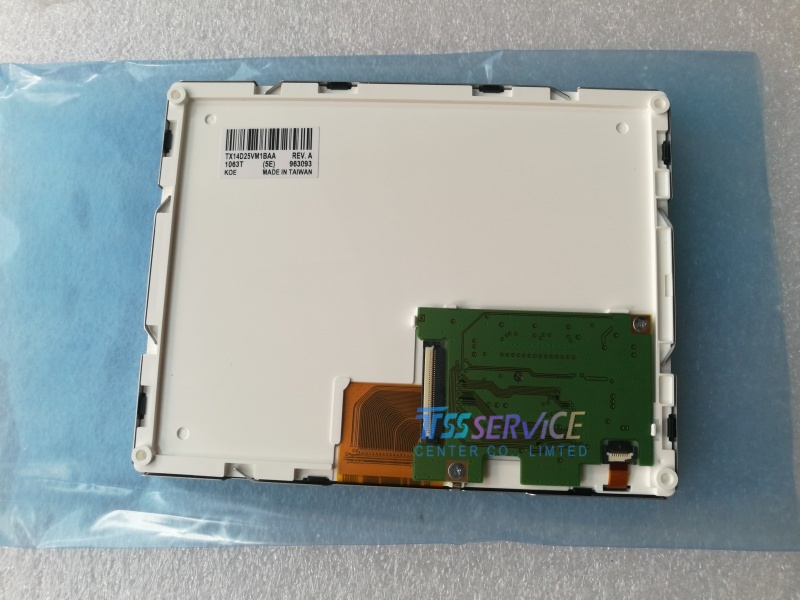
Environmental Hardiness and Thermal Design Considerations
Moving beyond electrical specifications, the TX14D25VM1BAA is engineered for extended temperature range operation, typically rated from -20°C to +70°C for the operating range. This is not a commercial-grade screen meant for climate-controlled offices. In an outdoor kiosk in sub-zero environments, the liquid crystal fluid remains responsive, preventing the "frozen screen" failure mode seen in cheaper modules. The storage temperature range extends even further, usually to -30°C or lower, which is vital for products stored in unheated warehouses or shipped via air freight in cargo holds.
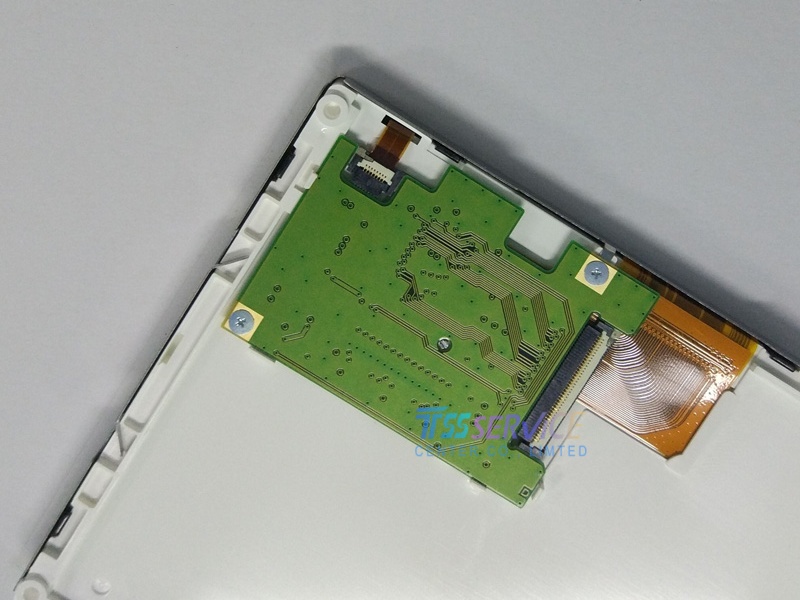
The mechanical robustness is bolstered by the use of a metal bezel and a sturdy backlight frame. The backlight unit itself uses long-life white LEDs, with a typical rated lifetime of 50,000 hours to half-brightness. This translates to over five years of continuous 24/7 operation before noticeable dimming occurs. For thermal management, the design relies on passive cooling: the backlight heat is dissipated through the rear chassis. In a confined panel enclosure, system designers should ensure a small air gap or a thermal pad to conduct heat away from the display driver ICs. Furthermore, the panel supports a silicon-gel bond option for the cover glass, which prevents condensation and dust ingress. This makes the unit suitable for FDA-compliant medical equipment requiring cleanability with harsh disinfectants, as well as for food processing HMI panels that encounter steam and moisture.
Strategic Deployment: From Industrial PLCs to Medical Monitors
The true value of the TX14D25VM1BAA becomes apparent when analyzing its system-level integration in real-world verticals. In industrial automation, this display is frequently mated with a 32-bit ARM Cortex-M7 microcontroller running a lightweight RTOS. The QVGA resolution is ideal for displaying ladder logic states, PID controller graphs, and pushbutton status rectangles. The RGB interface allows for direct pixel manipulation, enabling real-time waveform updates for vibration analysis or temperature trending without the overhead of a frame buffer accelerator.
In the medical sector, the 5.7-inch form factor fits standard medical device enclosures for patient monitors, syringe pumps, and portable ultrasound scanners. The panel’s color depth—262k colors—is sufficient to render medical imaging data in false-color palettes. The careful selection of the low-glare surface prevents specular reflections from overhead surgical lights, a critical safety requirement. For retrofit and replacement markets, the TX14D25VM1BAA is a direct drop-in for older panels that used CCFL backlights. By offering an LED backlight and the same mounting hole pattern, it allows manufacturers to upgrade existing product lines without redesigning their mechanical tooling. The longevity of the RGB interface standard means that a product developed today can remain serviceable for 10 to 15 years, aligning with the lifecycle requirements of capital equipment.
Conclusion
The TX14D25VM1BAA is more than a commodity display; it is a carefully engineered bridge between legacy control systems and contemporary performance expectations. Its 320x240 resolution, while modest, provides precise, direct pixel control ideal for industrial and medical HMIs where reliability trumps pixel density. The RGB interface offers design simplicity and longevity, while the extended temperature range and robust backlight ensure consistent performance in harsh environments. For engineers seeking a display that balances cost, integration ease, and long-term serviceability, this 5.7-inch panel remains a thoroughly viable and strategic choice. When your application demands a workhorse display rather than a flashy novelty, the TX14D25VM1BAA proves its worth under every operating condition.


