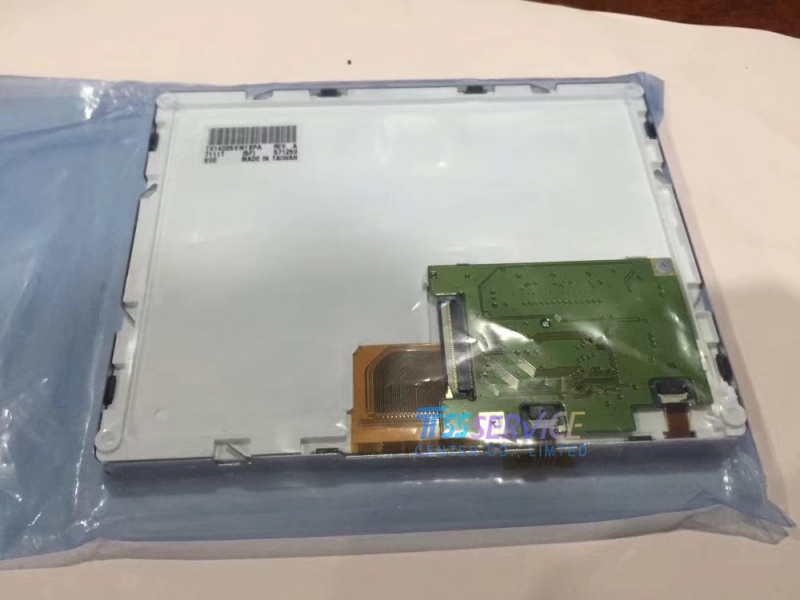
In the rapidly evolving landscape of industrial human-machine interfaces (HMI), the demand for reliable, durable, and optically clear display solutions has never been higher. The TX14D25VM1BPA, a 5.7-inch TFT LCD module equipped with a 4-wire resistive touch panel, represents a specific yet critical intersection of legacy reliability and modern application requirements.
In the rapidly evolving landscape of industrial human-machine interfaces (HMI), the demand for reliable, durable, and optically clear display solutions has never been higher. The TX14D25VM1BPA, a 5.7-inch TFT LCD module equipped with a 4-wire resistive touch panel, represents a specific yet critical intersection of legacy reliability and modern application requirements. While the market surges toward capacitive multi-touch and high-resolution panels, the resistive touch technology embedded in this module offers distinct advantages in harsh industrial environments where glove operation, dust, and moisture are constant concerns. This article delves into the technical architecture, operational nuances, and strategic value of the TX14D25VM1BPA, moving beyond superficial specifications to explore its true engineering merit. We will examine how this particular module balances cost, durability, and performance, making it a persistent choice for medical devices, factory automation, and outdoor kiosks. The goal is to provide engineers and procurement specialists with a grounded perspective on when and why this display solution remains relevant in a world obsessed with the next generation of touch technology.
The Engineering Rationale Behind the 4-Wire Resistive Touch Interface
The TX14D25VM1BPA’s most defining feature is not its display resolution but its touch input methodology. The 4-wire resistive touch panel operates on a principle of pressure-based conductivity. When a stylus or gloved finger presses the flexible top layer, it contacts the bottom conductive layer, creating a voltage divider that the controller interprets as precise X and Y coordinates. This seemingly archaic technology offers profound advantages in specific verticals. Unlike capacitive sensors that require a grounded, conductive object (such as a bare finger), resistive sensors respond to any physical pressure—a screwdriver tip, a thick rubber glove, or a wooden stylus.
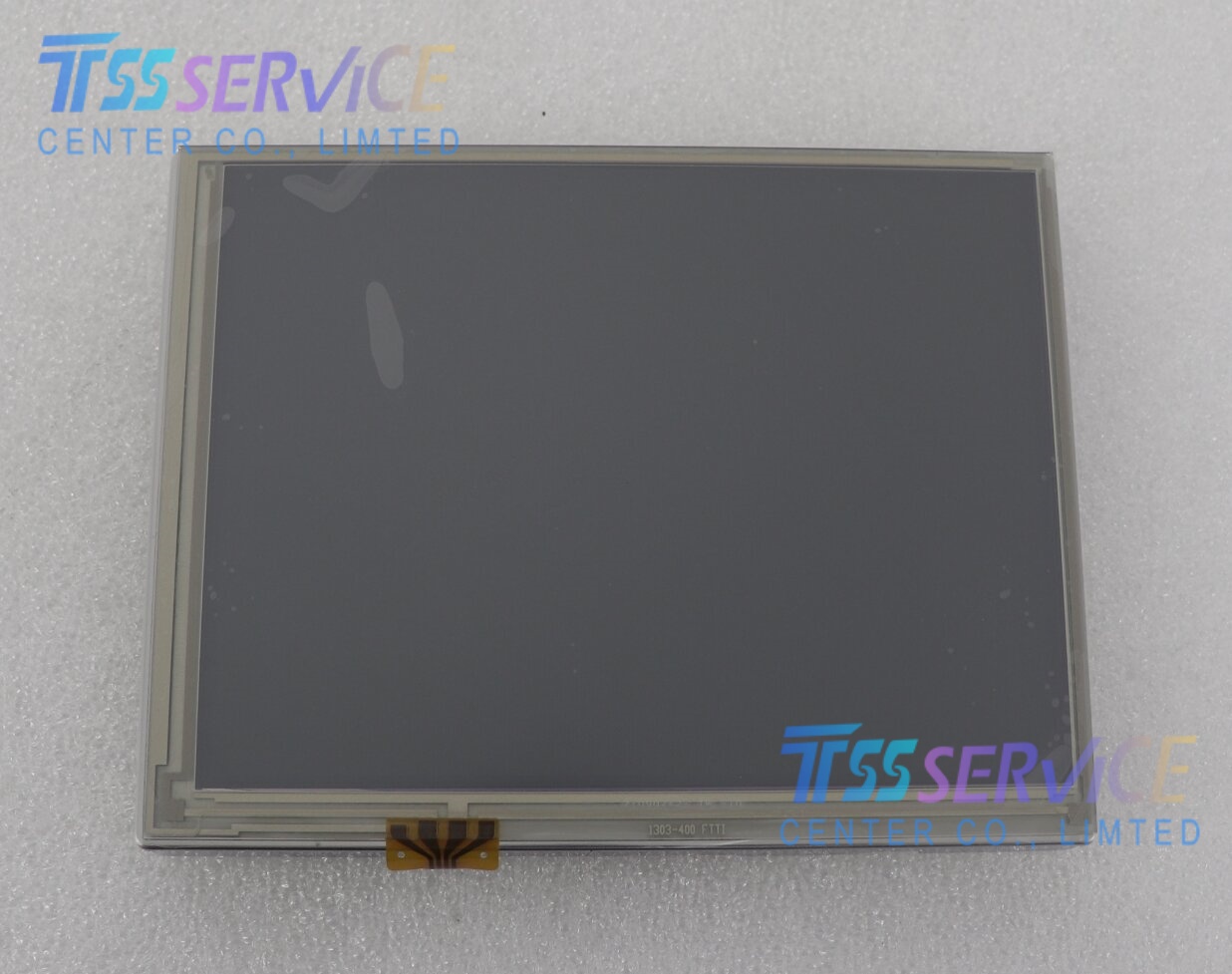
From an industrial hygiene perspective, this is critical. In food processing plants or pharmaceutical cleanrooms, operators wear thick, impermeable gloves that render capacitive screens useless. The 4-wire architecture also boasts excellent resistance to surface contaminants. Spilled oil, water droplets, or paint overspray do not cause phantom touches or calibration drift, a common failure point in high-end capacitive panels. Furthermore, the single-layer PET film construction of the top sheet is inherently more robust against accidental impacts than the glass-heavy construction of modern touchscreens. While the trade-off is a slightly lower light transmittance (roughly 75-80% versus 90% for capacitive) and a shorter mechanical lifespan (typically 1 million touches per point versus unlimited for glass), the TX14D25VM1BPA’s touch panel is engineered for physical resilience rather than aesthetic perfection. It is a deliberate sacrifice of optical clarity for operational certainty.
Optical Performance and Signal Integrity in the 5.7-Inch Form Factor
Moving beyond the touch interface, the core TFT-LCD module itself presents a study in pragmatic engineering. The 5.7-inch diagonal size is not arbitrary; it is a standard dimension heavily utilized in portable medical carts, handheld diagnostic tools, and control pendants for CNC machinery. The TX14D25VM1BPA typically utilizes a TN (Twisted Nematic) panel architecture, which inherently supports fast response times (often below 20ms) and high brightness capabilities, but suffers from narrower viewing angles (typically 60-70 degrees horizontal/vertical). For a seated operator looking directly at a static control panel, this is a non-issue. For a passenger entertainment system, it would be a deal-breaker.
A critical yet often overlooked parameter is the LVDS (Low-Voltage Differential Signaling) interface used for data transmission. LVDS provides high noise immunity, which is essential when the display is mounted near electric motors, variable frequency drives (VFDs), or high-voltage power supplies common in industrial settings. The signal integrity maintained by the LVDS interface ensures that the 640x480 (VGA) resolution, while modest, remains stable and flicker-free. The module’s backlight driver is also worth scrutiny. The TX14D25VM1BPA often employs long-life white LEDs with a dimming range that can be controlled via PWM. This is not just a power-saving feature; it allows the system integrator to adapt the screen brightness to ambient light conditions in a warehouse or outdoor environment, reducing operator eye strain without requiring complex optical bonding. The true value here lies in the total optical system stability—the consistent color temperature and luminance decay curve over the LED lifespan, which is well-characterized for predictive maintenance.
Mounting Mechanics, Cable Management, and Environmental Sealing Strategies
Installing a display in a ruggedized enclosure requires attention to mechanical integration, and the TX14D25VM1BPA’s design accommodates this with a standard 5.7-inch cutout and mounting lugs. However, the devil is in the details of the connector interface. The module typically uses a 20-pin or 30-pin FFC/FPC connector for the display signal and a separate 4-pin connector for the touch panel. Engineers must account for the minimum bend radius of these flat cables during design. Sharp bends or tight z-axis clearances can cause intermittent signal loss or broken traces, especially in high-vibration environments.
The environmental sealing strategy offers another layer of depth. The 4-wire resistive touch panel itself is naturally sealed along its perimeter with a pressure-sensitive adhesive (PSA). When properly integrated into a front bezel with a gasket, the display assembly can effectively block the ingress of dust and splashing water (IP54 or higher). This is achieved without the expense of an optical bonding process. Furthermore, the module’s operating temperature range—typically -20°C to +70°C—makes it suitable for unheated storage facilities or outdoor kiosks in temperate climates.
A pragmatic checklist for integration includes:
-
Connector Orientation: Ensure the FPC cable exits downward to prevent liquid ingress along the cable path.
-
Anti-Vibration Padding: Use compressible foam between the display and the front bezel to absorb shocks.
-
Grounding Strap: Although not always included, a dedicated grounding point for the touch panel surface helps drain electrostatic discharge (ESD).
-
Brightness Reserve: Plan for a backlight that achieves>600 cd/m² at the source, as the resistive overlay will reduce effective brightness by 20-25%.
These mechanical considerations directly impact the Mean Time Between Failures (MTBF) of the final product, making the TX14D25VM1BPA a wise choice for high-stakes, low-repair environments.
Strategic Sourcing, Longevity, and Total Cost of Ownership
The final and perhaps most compelling angle is the long-tail availability of the TX14D25VM1BPA. Unlike high-volume consumer panels that are redesigned every 12 months, this industrial-grade module is often produced on stable, low-volume manufacturing lines with supply commitments spanning 5-10 years. For medical device manufacturers (complying with FDA 21 CFR Part 820) or defense contractors, this lifecycle stability is paramount. A component change mid-production cycle requires costly re-qualification, validation, and potential redesign of the user interface.
The total cost of ownership (TCO) analysis heavily favors the resistive module in specific scenarios. While the upfront cost is comparable to a basic capacitive panel, the reduced failure rate due to glove usage and the simplicity of the touch controller (no complex gesture recognition firmware required) lower the field support burden. The controller typically uses a standard serial interface (UART or I2C), which is easier to integrate into legacy microcontroller-based systems than the complex high-speed I2C or USB stacks required for capacitive touch. Furthermore, the touch calibration is a one-time factory process, often using a simple 4-point alignment algorithm. This eliminates the need for automatic re-calibration routines that can fail in noisy electrical
environments. For a project manager, the TX14D25VM1BPA represents a low-risk, high-predictability component that simplifies the supply chain and reduces the total engineering overhead required to bring a robust product to market.
Conclusion
The TX14D25VM1BPA 5.7-inch TFT LCD module with a 4-wire resistive touch panel is far more than a legacy component; it is a carefully optimized tool for environments where reliability trumps aesthetic refinement. Its resistive touch technology offers unmatched compatibility with gloves and contaminants, while the stable LVDS interface and robust temperature range ensure consistent performance in harsh conditions. For engineers tasked with designing industrial, medical, or outdoor equipment, this module provides a proven path to a long product lifecycle and a manageable total cost of ownership. Ultimately, the TX14D25VM1BPA succeeds not by being the most advanced screen available, but by being the most resilient and predictable choice for applications where a touch failure is simply not an option.
600 cd/m² at the source, as the resistive overlay will reduce effective brightness by 20-25%."}}},"folded":false,"type":"bullet","comments":null}},"doxcn1lD5wJyy46XAVAZ7zE1djb":{"id":"doxcn1lD5wJyy46XAVAZ7zE1djb","snapshot":{"children":[],"text":{"apool":{"numToAttrib":{"0":["author","7597729576936017103"]},"nextNum":1},"initialAttributedTexts":{"attribs":{"0":"*0+58"},"text":{"0":"These mechanical considerations directly impact the Mean Time Between Failures (MTBF) of the final product, making the TX14D25VM1BPA a wise choice for high-stakes, low-repair environments."}}},"comments":null,"revisions":null,"locked":false,"hidden":false,"author":"7597729576936017103","align":"left","folded":false,"type":"text","parent_id":"RHAMdakfUoC1BsxhIBGczDEqnTe"}},"doxcnoyCUP12jgpTQiz4mH9EWSh":{"id":"doxcnoyCUP12jgpTQiz4mH9EWSh","snapshot":{"locked":false,"children":[],"folded":false,"hidden":false,"author":"7597729576936017103","text":{"apool":{"nextNum":2,"numToAttrib":{"0":["author","7597729576936017103"],"1":["bold","true"]}},"initialAttributedTexts":{"attribs":{"0":"*0*1+1m"},"text":{"0":"Strategic Sourcing, Longevity, and Total Cost of Ownership"}}},"align":"left","type":"text","parent_id":"RHAMdakfUoC1BsxhIBGczDEqnTe","comments":null,"revisions":null}},"doxcndMmUg1l12hAyvyZMGzXxYf":{"id":"doxcndMmUg1l12hAyvyZMGzXxYf","snapshot":{"parent_id":"RHAMdakfUoC1BsxhIBGczDEqnTe","hidden":false,"children":[],"text":{"apool":{"nextNum":2,"numToAttrib":{"0":["author","7597729576936017103"],"1":["bold","true"]}},"initialAttributedTexts":{"attribs":{"0":"*0+1f*0*1+m*0+dp"},"text":{"0":"The final and perhaps most compelling angle is the long-tail availability of the TX14D25VM1BPA. Unlike high-volume consumer panels that are redesigned every 12 months, this industrial-grade module is often produced on stable, low-volume manufacturing lines with supply commitments spanning 5-10 years. For medical device manufacturers (complying with FDA 21 CFR Part 820) or defense contractors, this lifecycle stability is paramount. A component change mid-production cycle requires costly re-qualification, validation, and potential redesign of the user interface."}}},"align":"left","folded":false,"type":"text","comments":null,"revisions":null,"locked":false,"author":"7597729576936017103"}},"doxcnIyaQKR8AASn8DPV2ojclXb":{"id":"doxcnIyaQKR8AASn8DPV2ojclXb","snapshot":{"text":{"apool":{"nextNum":3,"numToAttrib":{"0":["author","7597729576936017103"],"1":["bold","true"],"2":["italic","true"]}},"initialAttributedTexts":{"attribs":{"0":"*0+4s*0*1+13*0+9*0*1+y*0+ga*0*2+t*0+3o"},"text":{"0":"The total cost of ownership (TCO) analysis heavily favors the resistive module in specific scenarios. While the upfront cost is comparable to a basic capacitive panel, the reduced failure rate due to glove usage and the simplicity of the touch controller (no complex gesture recognition firmware required) lower the field support burden. The controller typically uses a standard serial interface (UART or I2C), which is easier to integrate into legacy microcontroller-based systems than the complex high-speed I2C or USB stacks required for capacitive touch. Furthermore, the touch calibration is a one-time factory process, often using a simple 4-point alignment algorithm. This eliminates the need for automatic re-calibration routines that can fail in noisy electrical environments. For a project manager, the TX14D25VM1BPA represents a low-risk, high-predictability component that simplifies the supply chain and reduces the total engineering overhead required to bring a robust product to market."}}},"align":"left","parent_id":"RHAMdakfUoC1BsxhIBGczDEqnTe","comments":null,"children":[],"hidden":false,"author":"7597729576936017103","folded":false,"type":"text","revisions":null,"locked":false}},"doxcnN9OkRIsapCh9Ni88Wi3L3b":{"id":"doxcnN9OkRIsapCh9Ni88Wi3L3b","snapshot":{"hidden":false,"children":[],"text":{"initialAttributedTexts":{"attribs":{"0":"*0*1+a"},"text":{"0":"Conclusion"}},"apool":{"nextNum":2,"numToAttrib":{"0":["author","7597729576936017103"],"1":["bold","true"]}}},"type":"text","parent_id":"RHAMdakfUoC1BsxhIBGczDEqnTe","comments":null,"revisions":null,"locked":false,"align":"left","author":"7597729576936017103","folded":false}},"doxcnvKgIIbrC9cx4Q3cBNPT8hh":{"id":"doxcnvKgIIbrC9cx4Q3cBNPT8hh","snapshot":{"type":"text","revisions":null,"locked":false,"children":[],"text":{"initialAttributedTexts":{"text":{"0":"The TX14D25VM1BPA 5.7-inch TFT LCD module with a 4-wire resistive touch panel is far more than a legacy component; it is a carefully optimized tool for environments where reliability trumps aesthetic refinement. Its resistive touch technology offers unmatched compatibility with gloves and contaminants, while the stable LVDS interface and robust temperature range ensure consistent performance in harsh conditions. For engineers tasked with designing industrial, medical, or outdoor equipment, this module provides a proven path to a long product lifecycle and a manageable total cost of ownership. Ultimately, the TX14D25VM1BPA succeeds not by being the most advanced screen available, but by being the most resilient and predictable choice for applications where a touch failure is simply not an option."},"attribs":{"0":"*0+me"}},"apool":{"numToAttrib":{"0":["author","7597729576936017103"]},"nextNum":1}},"folded":false,"parent_id":"RHAMdakfUoC1BsxhIBGczDEqnTe","comments":null,"hidden":false,"author":"7597729576936017103","align":"left"}},"RHAMdakfUoC1BsxhIBGczDEqnTe":{"id":"RHAMdakfUoC1BsxhIBGczDEqnTe","snapshot":{"comments":[],"locked":false,"hidden":false,"text":{"apool":{"nextNum":1,"numToAttrib":{"0":["author","7597729576936017103"]}},"initialAttributedTexts":{"attribs":{"0":"*0+1s"},"text":{"0":"TX14D25VM1BPA 5.7 Inch TFT LCD Module with Resistive Touch Panel"}}},"parent_id":"","revisions":[],"author":"7597729576936017103","children":["doxcna5B0YFiqerH6NFssv9ZPyf","doxcnIqZgOVgy2jK9aDcUWeQLkc","doxcnWkRtcl6rsUNdFFhtWhRcMf","doxcnp8yFZPlYVktbaNQIuYONxh","doxcneiiau1e8eED6JUyY3qFw2b","doxcnCUHFad2BZtwBy1OGms6ixd","doxcn0zhYLrWRmOL3guN0vlbxOf","doxcnvibmfg8Ir7InkvNSiWa3Zf","doxcnfpuwToR0Bmv69zUcfqMWVb","doxcnPt24JUFP5dLOPgSOCay7Xf","doxcnmJpSx4UBC7ysSJrW27agxc","doxcnFXQ8Hy3C789oYPoy7IHyPg","doxcniubqjocduTqZd1UbDUqmQh","doxcnc13mI3FpujZ1FMqvI5dBWb","doxcnXLreyYB0HfcMTRhvEIj05b","doxcn0Q0ovaq6zr1txqA0fnPbTc","doxcn1lD5wJyy46XAVAZ7zE1djb","doxcnoyCUP12jgpTQiz4mH9EWSh","doxcndMmUg1l12hAyvyZMGzXxYf","doxcnIyaQKR8AASn8DPV2ojclXb","doxcnN9OkRIsapCh9Ni88Wi3L3b","doxcnvKgIIbrC9cx4Q3cBNPT8hh"],"align":"","doc_info":{"options":["editors","edit_time"],"deleted_editors":null,"option_modified":null,"editors":["7597729576936017103"]},"type":"page"}}},"payloadMap":{"doxcnIqZgOVgy2jK9aDcUWeQLkc":{"level":1},"doxcnWkRtcl6rsUNdFFhtWhRcMf":{"level":1},"doxcnp8yFZPlYVktbaNQIuYONxh":{"level":1},"doxcneiiau1e8eED6JUyY3qFw2b":{"level":1},"doxcnCUHFad2BZtwBy1OGms6ixd":{"level":1},"doxcn0zhYLrWRmOL3guN0vlbxOf":{"level":1},"doxcnvibmfg8Ir7InkvNSiWa3Zf":{"level":1},"doxcnfpuwToR0Bmv69zUcfqMWVb":{"level":1},"doxcnPt24JUFP5dLOPgSOCay7Xf":{"level":1},"doxcnmJpSx4UBC7ysSJrW27agxc":{"level":1},"doxcnFXQ8Hy3C789oYPoy7IHyPg":{"level":1},"doxcn1lD5wJyy46XAVAZ7zE1djb":{"level":1},"doxcnoyCUP12jgpTQiz4mH9EWSh":{"level":1},"doxcndMmUg1l12hAyvyZMGzXxYf":{"level":1},"doxcnIyaQKR8AASn8DPV2ojclXb":{"level":1},"doxcnN9OkRIsapCh9Ni88Wi3L3b":{"level":1},"doxcnvKgIIbrC9cx4Q3cBNPT8hh":{"level":1},"lingoClipboardPayload":{"spaceSubExtraInfo":[{"spaceSubId":"doxcnXLreyYB0HfcMTRhvEIj05b","word":"ESD"}],"spaceId":"RHAMdakfUoC1BsxhIBGczDEqnTe","spaceType":1}},"extra":{"channel":"saas","pasteRandomId":"2cc74292-ae28-4892-9522-5af0f2925607","mention_page_title":{},"external_mention_url":{},"isEqualBlockSelection":true},"isKeepQuoteContainer":false,"selection":[{"id":3,"type":"text","selection":{"start":0,"end":1218},"recordId":"doxcnIqZgOVgy2jK9aDcUWeQLkc"},{"id":4,"type":"text","selection":{"start":0,"end":69},"recordId":"doxcnWkRtcl6rsUNdFFhtWhRcMf"},{"id":5,"type":"text","selection":{"start":0,"end":677},"recordId":"doxcnp8yFZPlYVktbaNQIuYONxh"},{"id":6,"type":"text","selection":{"start":0,"end":993},"recordId":"doxcneiiau1e8eED6JUyY3qFw2b"},{"id":7,"type":"text","selection":{"start":0,"end":68},"recordId":"doxcnCUHFad2BZtwBy1OGms6ixd"},{"id":8,"type":"text","selection":{"start":0,"end":711},"recordId":"doxcn0zhYLrWRmOL3guN0vlbxOf"},{"id":9,"type":"text","selection":{"start":0,"end":1076},"recordId":"doxcnvibmfg8Ir7InkvNSiWa3Zf"},{"id":10,"type":"text","selection":{"start":0,"end":74},"recordId":"doxcnfpuwToR0Bmv69zUcfqMWVb"},{"id":11,"type":"text","selection":{"start":0,"end":617},"recordId":"doxcnPt24JUFP5dLOPgSOCay7Xf"},{"id":12,"type":"text","selection":{"start":0,"end":585},"recordId":"doxcnmJpSx4UBC7ysSJrW27agxc"},{"id":13,"type":"text","selection":{"start":0,"end":47},"recordId":"doxcnFXQ8Hy3C789oYPoy7IHyPg"},{"id":14,"type":"text","selection":{"start":0,"end":106},"recordId":"doxcniubqjocduTqZd1UbDUqmQh"},{"id":15,"type":"text","selection":{"start":0,"end":103},"recordId":"doxcnc13mI3FpujZ1FMqvI5dBWb"},{"id":16,"type":"text","selection":{"start":0,"end":145},"recordId":"doxcnXLreyYB0HfcMTRhvEIj05b"},{"id":17,"type":"text","selection":{"start":0,"end":148},"recordId":"doxcn0Q0ovaq6zr1txqA0fnPbTc"},{"id":18,"type":"text","selection":{"start":0,"end":188},"recordId":"doxcn1lD5wJyy46XAVAZ7zE1djb"},{"id":19,"type":"text","selection":{"start":0,"end":58},"recordId":"doxcnoyCUP12jgpTQiz4mH9EWSh"},{"id":20,"type":"text","selection":{"start":0,"end":566},"recordId":"doxcndMmUg1l12hAyvyZMGzXxYf"},{"id":21,"type":"text","selection":{"start":0,"end":1001},"recordId":"doxcnIyaQKR8AASn8DPV2ojclXb"},{"id":22,"type":"text","selection":{"start":0,"end":10},"recordId":"doxcnN9OkRIsapCh9Ni88Wi3L3b"},{"id":23,"type":"text","selection":{"start":0,"end":806},"recordId":"doxcnvKgIIbrC9cx4Q3cBNPT8hh"}],"pasteFlag":"9a46717d-1ce1-40c3-8008-4a66585d468a"}" data-lark-record-format="docx/record" class="lark-record-clipboard" style="font-size: 16px;">


