In the world of embedded systems and industrial human-machine interfaces (HMIs), the display is often the single most critical component for user interaction.
In the world of embedded systems and industrial human-machine interfaces (HMIs), the display is often the single most critical component for user interaction. The TX20D28VM2BAA is an 8.0-inch TFT LCD module that leverages a mature and reliable resolution—800(RGB)×480 pixels—to deliver clear visual feedback in a mid-sized form factor. While 800x480 is not a high-DPI specification by modern smartphone standards, this specific resolution, often called WVGA, strikes a deliberate balance between pixel density and processing overhead, making it ideal for applications where real-time data visualization is paramount. This article does not simply list the datasheet specs; instead, it delves into the architectural choices behind this module, exploring how its optical design, interface protocol, and mechanical constraints dictate its suitability for industrial, medical, and automotive retrofit applications. We will examine how the TX20D28VM2BAA navigates the trade-offs between brightness, contrast, viewing angle, and cost, providing engineers and product managers with a framework for evaluating whether this display is the correct foundation for their next product iteration.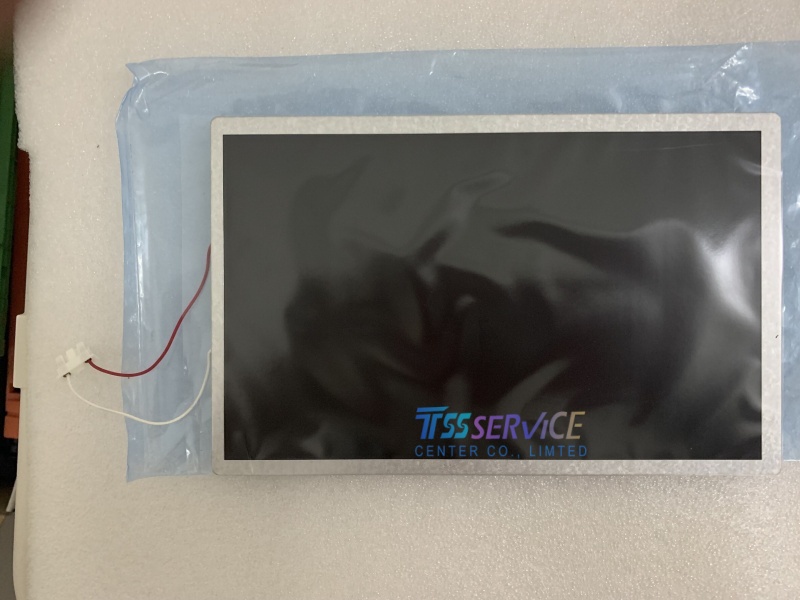
The Optical and Interface Core: How 800x480 Resolution Serves Real-World Visibility
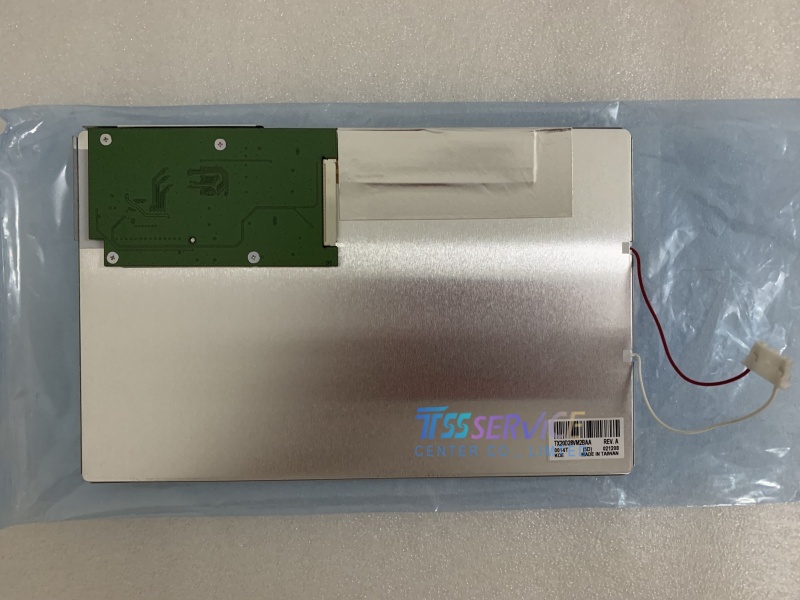
To understand the TX20D28VM2BAA, one must first deconstruct its optical architecture. The 8.0-inch diagonal size with an 800(RGB)×480 resolution results in a pixel density of approximately 116 PPI. At typical viewing distances for industrial equipment (30-60 cm), this density provides a sharp, flicker-free image without the need for expensive high-bandwidth interface drivers. The “RGB” notation indicates a standard stripe pixel arrangement, which delivers more consistent color reproduction than pentile or other sub-pixel matrix designs often seen in lower-cost mobile panels. This is crucial for applications displaying fine text, such as patient monitoring systems or PLC programming terminals.
The module typically employs TN (Twisted Nematic) or IPS (In-Plane Switching) technology, depending on the specific revision. If this unit utilizes a TN panel, it offers fast response times (often 5-10ms) and lower power consumption at the cost of vertical viewing angles. Conversely, an IPS variant provides 160-degree or wider viewing angles, which is non-negotiable for wall-mounted or arm-mounted displays viewed from the side. The interface is where this module truly defines its character. It commonly leverages an LVDS (Low-Voltage Differential Signaling) connector, specifically a 20-pin or 40-pin pinout. LVDS is preferred in industrial environments for its noise immunity over longer cable distances (up to 5-10 meters) and its ability to carry 24-bit color data (16.7 million colors) on a single twisted-pair ribbon. This directly contrasts with the parallel RGB interfaces found on smaller modules, offering a cleaner design for EMI-sensitive equipment.
Architectural Constraints: Power, Backlight, and Thermal Management
The TX20D28VM2BAA is not a standalone component; it is a system with specific electrical and thermal characteristics that directly impact the surrounding hardware design. The backlight unit (BLU) is a key differentiator. Typically, this module uses an array of white LEDs arranged on a side-lit light guide plate. The forward voltage of these LED strings often requires a dedicated boost converter to supply 12V-30V, as the raw 3.3V or 5V logic voltage from an MCU is insufficient. The power budget for the backlight alone can range from 2W to 4W, which generates heat that must be conducted away via a metal frame or chassis. Engineers must account for this thermal load to prevent color shift or LED degradation over the unit's 50,000-hour lifetime. Furthermore, the module's logic power supply requires careful sequencing. The VCC (digital core) and the backlight enable signals must adhere to specific timing constraints to avoid latch-up or damage to the driver ICs. The module typically features a VCOM adjustment circuit, which sets the liquid crystal bias voltage. This VCOM level is temperature-sensitive; without proper calibration, the display may exhibit flicker or DC image retention at extreme operating temperatures (e.g., -20°C to +70°C). The physical interface connector, often a pre-attached FPC (Flexible Printed Circuit) or a board-to-board connector, dictates the mechanical alignment. The mounting hole pattern on the module is standardized but requires precise tolerance analysis against the bezel to avoid stress on the glass edge.
Why the TX20D28VM2BAA Excels in Industrial and Medical HMI Applications
The market position of the TX20D28VM2BAA is defined by its rejection of consumer-grade aesthetics in favor of operational robustness. In a factory floor environment, where resistance to vibration, humidity, and dust ingress is mandatory, this module's construction—often featuring a bezel with a protective coating and a bonded touch panel option—provides a distinct advantage. The 800x480 resolution is a perfect match for 7-inch to 10-inch diagonal sizes because it allows for the rendering of a clear, hierarchical user interface without the pixel density being lost on human visual perception. For example, a 10-character, 12-point font is legible at arm's length, whereas a higher resolution panel of the same size would require font scaling and GUI complexity that drains MCU resources.
Another critical advantage is its legacy compatibility. Many PLCs and embedded controllers from the early 2010s were designed with LVDS interfaces and 800x480 resolutions as the standard output target. Upgrading to a new module like this allows manufacturers to extend the life of their existing mainboards without a complete hardware redesign. The module’s compatibility with resistive or capacitive touch controllers (via I2C or USB) further simplifies system integration. In medical diagnostic devices, where screen reliability is a regulatory requirement, the predictable failure mode of a TN or standard IPS panel (gradual backlight dimming rather than pixel dots) is often preferred over the complex sub-pixel structures of modern high-resolution panels which can fail in more unpredictable patterns. This makes the TX20D28VM2BAA a low-risk, high-reliability choice for life-critical monitoring equipment.
The Interplay of ICC Profiles and Gamma Correction in the TX20D28VM2BAA
For professionals deploying the TX20D28VM2BAA, understanding its gamma curve is essential for accurate color reproduction. Most industrial panels are calibrated to a gamma of 2.2, which is the standard for Windows-based systems and sRGB content. However, the specific VCOM and digital-to-analog converter (DAC) settings on the driver IC (such as the HX8264 or similar) may introduce a slight deviation. The module’s datasheet typically provides a gamma lookup table (LUT) or register settings to allow developers to fine-tune the brightness-voltage relationship for each color channel (R, G, B).
Without proper gamma correction, medical images (e.g., X-rays or ultrasound scans) can display incorrect contrast, potentially leading to misdiagnosis. Similarly, industrial control systems that rely on color-coded warnings (e.g., red for alarm, green for normal) must have consistent brightness across the panel’s entire luminance range. The TX20D28VM2BAA supports 24-bit color depth, but the human eye’s sensitivity to green means that the green sub-pixel driver must be calibrated precisely. A well-implemented gamma curve also reduces power consumption by limiting the maximum drive current to only what is necessary for accurate color representation. Engineers should use a colorimeter to validate the factory default settings and apply software-based correction (via the host processor’s VGA/DMA controller) if the application demands medical-grade or critical safety color fidelity. This level of attention transforms a standard off-the-shelf module into a precision display instrument.
Conclusion: A Reliable Workhorse for Targeted Visual Communication
The TX20D28VM2BAA 8.0-inch 800×480 TFT LCD module is not a flashy, feature-overloaded component; it is a purpose-built tool for environments where reliability, predictable performance, and ease of integration are paramount. Its choice of LVDS interface, standard resolution, and robust mechanical construction make it the ideal driver for industrial automation panels, bedside patient monitors, and ruggedized handheld terminals. By understanding its optical foundations (TN vs. IPS, gamma correction) and its power constraints (backlight thermal management, VCOM stability), designers can unlock its full potential, creating user interfaces that are both visually effective and operationally durable. In a world chasing pixel counts, this module stands as a testament to the value of engineering for the specific use case, ensuring that critical data is always clearly visible where it matters most.


