The recent allocation of $200 million under the US Infrastructure Investment and Jobs Act for LED streetlight replacement marks a pivotal shift in national policy, moving beyond simple bulb swaps to a strategic reimagining of public space.
The recent allocation of $200 million under the US Infrastructure Investment and Jobs Act for LED streetlight replacement marks a pivotal shift in national policy, moving beyond simple bulb swaps to a strategic reimagining of public space. This significant funding is not merely an infrastructure upgrade; it is a foundational investment in community safety, fiscal responsibility, and environmental stewardship. By transitioning from outdated high-pressure sodium and metal halide fixtures to modern LED technology, cities and towns stand at the cusp of a transformation that promises profound, multi-layered benefits.
This article will delve into the multifaceted impact of this initiative. We will explore the direct and substantial returns on investment, examine how intelligent lighting systems are forging smarter, safer communities, and analyze the broader environmental and economic advantages that extend far beyond the street corner.
The Financial Brilliance: Unpacking the Compelling ROI of LED Conversion
At its core, the drive for LED streetlights is fueled by an undeniable financial logic. Traditional streetlights are energy gluttons, with a significant portion of their consumed power wasted as heat rather than light. LED fixtures, in contrast, are remarkably efficient, typically reducing energy consumption by 50-70%. For municipal budgets strained by rising costs, these savings translate directly into hundreds of thousands, or even millions, of dollars annually that can be redirected to other critical services like public safety or parks.
Furthermore, the longevity of LEDs—often lasting 15-20 years compared to the 3-5 year lifespan of conventional bulbs—drastically cuts maintenance expenditures. Fewer bulb replacements mean reduced labor costs, lower inventory needs for spare parts, and less disruption from repair crews. The initial capital outlay, now supported by federal grants, is quickly offset by this powerful combination of slashed energy bills and minimized upkeep, creating a compelling public-sector return on investment that is both rapid and sustainable.
Beyond Illumination: Smart Nodes for Safer, More Responsive Communities
The modern LED streetlight is evolving from a passive fixture into an active platform for smart city infrastructure. This federal funding accelerates the deployment of connected lighting networks, where each luminaire becomes a data node on a municipal Internet of Things (IoT). Equipped with sensors and wireless controls, these systems enable adaptive lighting that brightens in response to pedestrian activity or dims during low-traffic hours, enhancing both safety and efficiency.
This intelligent layer profoundly impacts public safety. Improved color rendering and more uniform light distribution from LEDs increase nighttime visibility, aiding driver and pedestrian awareness. The potential integration with other technologies is transformative:
-
Embedded cameras or acoustic sensors can help monitor traffic flow or detect incidents like gunshots.
-
Connectivity can support future EV charging stations or 5G small-cell attachments.
-
Diagnostic data from each light allows for predictive maintenance, ensuring outages are addressed proactively.
Thus, the streetlight becomes a cornerstone of a responsive urban ecosystem, directly aligning with the Infrastructure Act's goals of building resilient, future-ready communities.
The Ripple Effect: Environmental and Economic Advantages for a Sustainable Future
The benefits of this nationwide lighting overhaul extend far beyond city limits, generating positive ripple effects for the environment and the national economy. The massive reduction in energy demand directly lowers greenhouse gas emissions from power plants, contributing to federal and local climate action goals. It also reduces light pollution; properly designed LED systems direct light downward where it is needed, preserving the night sky for astronomers and ecosystems.
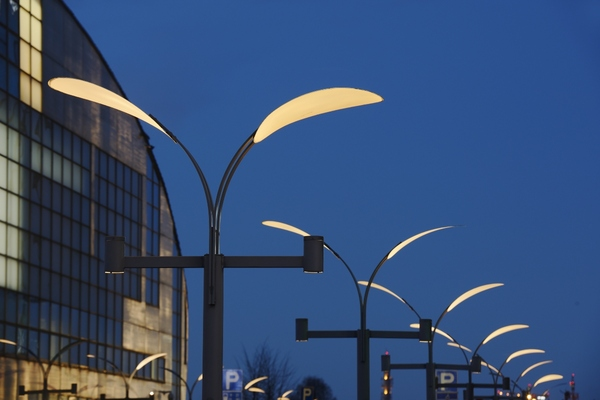
Economically, this $200 million allocation acts as a catalyst. It stimulates demand in the domestic manufacturing and technology sectors for LEDs, sensors, and control systems. The projects create skilled jobs in installation, network engineering, and system maintenance. Additionally, the operational savings retained by municipalities effectively function as a long-term economic stimulus, allowing local governments to invest in their communities rather than in inefficient infrastructure. This creates a virtuous cycle where upfront public investment yields continuous financial and environmental returns for decades.


