From visible screens to invisible boundaries, transparent display technology is entering a new era of architectural and commercial application.
A large-area seamless transparent LED display, described as the world’s first of its kind, has recently been developed and deployed in Shenzhen, marking a significant step forward for next-generation commercial display technology. The product overcomes traditional limitations of transparent LED screens—such as visible module joints, bulky frames, and fragmented images—and delivers immersive naked-eye AR visual effects. It has already been applied on shopping mall storefront exteriors, offering retailers, developers, and urban commercial spaces a new digital media interface.
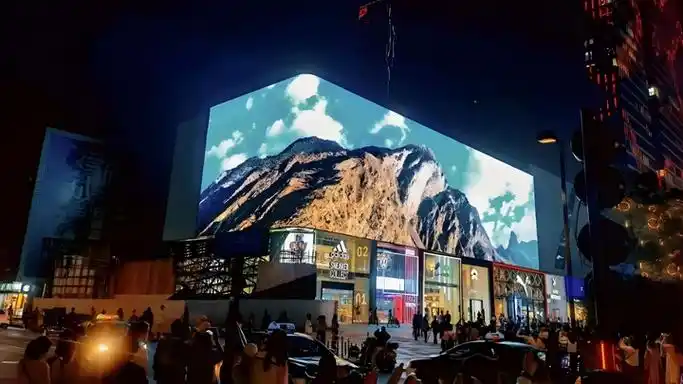
Transparent LED displays have long attracted attention due to their high light transmittance and suitability for glass curtain walls, shop windows, atriums, and retail environments. However, large-scale installations often face challenges including visible seams, structural supports, brightness inconsistency, and limited viewing experiences from certain distances. The newly unveiled Shenzhen solution focuses on a “seamless” design philosophy, integrating advanced display units, precision structural engineering, driving calibration algorithms, and material optimization to create a more continuous and immersive visual experience while preserving the transparency that makes the technology distinctive.
In terms of user experience, the display is capable of showing conventional videos, graphics, dynamic advertisements, and branded content. More notably, it supports naked-eye AR visual effects that allow digital content to blend with real store spaces, product displays, architectural lines, and surrounding environments. Viewers can perceive depth, floating imagery, and interactive visual layers without wearing any special devices. This approach transforms the storefront into a storytelling medium, helping brands increase customer engagement, dwell time, and commercial conversion.
Shopping mall storefronts present demanding requirements for display systems. During daytime, the screen must not block natural lighting or interfere with window merchandise displays. At night, it needs to deliver bright, stable, and visually compelling commercial content. Transparent LED technology is particularly well suited to this dual-use scenario. According to project information, the display has already been installed on a mall storefront exterior, turning the building facade into an updatable, interactive, and operable media surface without compromising the openness and transparency of the retail space.
Industry observers believe that the emergence of large-area seamless transparent LED displays signals a shift from decorative applications to architectural-scale media. For commercial complexes, such technology can enhance visual identity, strengthen digital operations, and create new opportunities for brand retail, pop-up activations, seasonal marketing, cultural tourism, nighttime economies, and urban public art.
At the same time, broader adoption will depend on several factors, including cost control, installation and maintenance standards, content production ecosystems, long-term reliability validation, and compatibility with existing building curtain-wall systems. As the display supply chain continues to mature, naked-eye AR content tools become more accessible, and demand for digital commercial spaces grows, large-area seamless transparent LED displays are expected to play an increasingly important role across retail, exhibition, tourism, and urban environments.
The development also highlights the rapid evolution of China’s optoelectronic display industry in areas such as new displays, smart retail, and urban digitalization. Transparent displays are no longer simply “visible screens”; they are becoming a new type of interface connecting architecture, brands, and consumers.


