In the realm of industrial automation and human-machine interaction, the display panel serves as the critical bridge between complex machinery and human operators. While consumer electronics often chase the latest in bezel-less design and 4K resolution
In the realm of industrial automation and human-machine interaction, the display panel serves as the critical bridge between complex machinery and human operators. While consumer electronics often chase the latest in bezel-less design and 4K resolution, the industrial sector demands reliability, longevity, and precise optical performance under challenging conditions. The Samsung LMS430HF18-003, a 4.3-inch TFT-LCD panel with a native resolution of 480 × 272 pixels, represents a specialized solution engineered for these rigorous environments. This article delves deep into the technical architecture, operational strengths, and strategic value of this specific display module. We will explore why a seemingly modest specification set—by consumer standards—remains a dominant choice for medical devices, factory floor terminals, and embedded control systems. Rather than a mere component list, this analysis will frame the LMS430HF18-003 as a testament to Samsung's philosophy of balancing performance with resilience, offering integrators a platform that prioritizes stability and readability over flashy metrics.
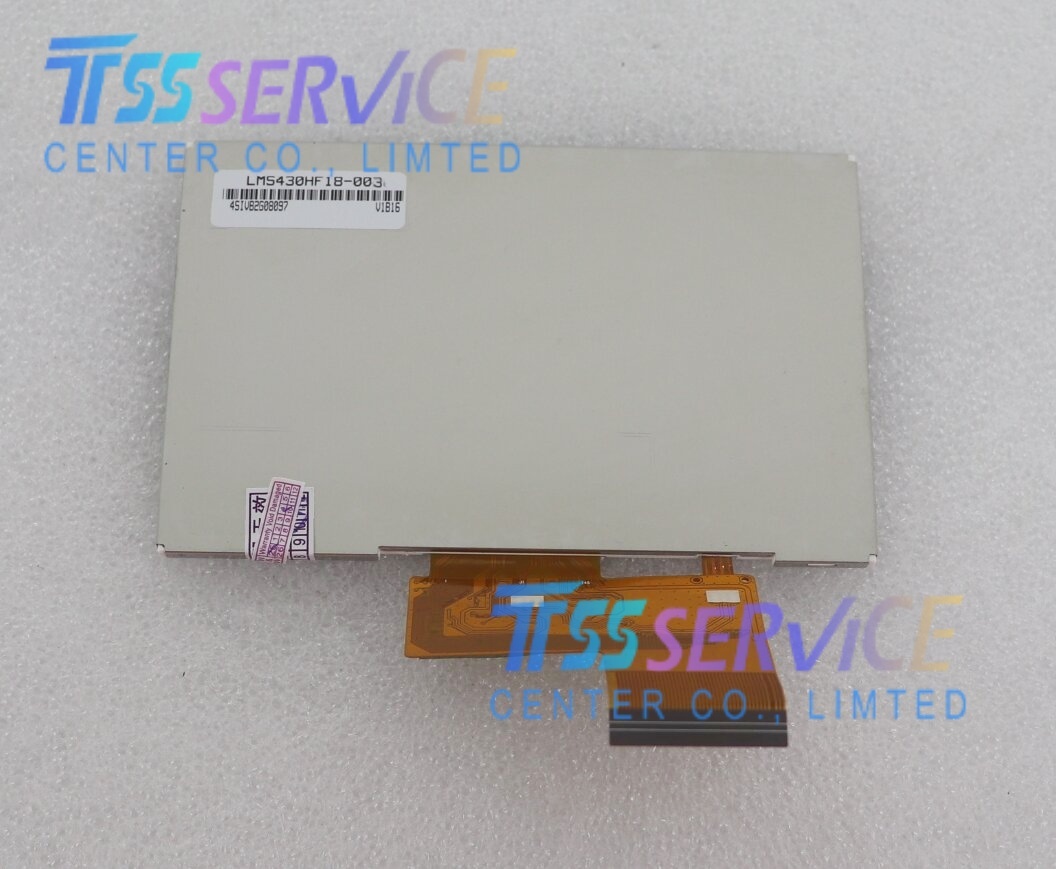
Decoding the Specifications: Engineering the Visual Sweet Spot
The decision to employ a 480 × 272 resolution on a 4.3-inch diagonal is no accident. This configuration achieves a pixel density of approximately 128 PPI, which, while lower than a modern smartphone, is strategically optimized for industrial applications. At typical viewing distances of 40 to 100 centimeters, the human eye struggles to discern individual pixels at this density, creating a perfectly smooth image without unnecessary computational overhead. This is crucial for systems where a microcontroller, not a full-fledged GPU, handles the graphical rendering. The LMS430HF18-003 typically employs an a-Si TFT (amorphous silicon thin-film transistor) active matrix, providing consistent voltage holding across each pixel. This translates to excellent grey-scale stability and reduces flicker, a common cause of operator fatigue in long-shift environments. The panel's specified brightness, often rated around 450 cd/m², is a deliberate engineering choice. It is high enough to remain legible under bright factory lighting or near windows, yet not so high as to cause excessive power draw or generate unwanted heat—a critical factor in sealed enclosures. The contrast ratio, typically 500:1, ensures that even subtle color gradients in warning indicators or data charts remain distinguishable.
The Architecture of Durability: Beyond the Glass Surface

Industrial panels face threats that no consumer tablet will ever endure: continuous vibration from nearby machinery, drastic temperature shifts from 0°C to 70°C, and exposure to dust or condensation. The Samsung LMS430HF18-003 is constructed to absorb these shocks through several architectural choices. First, the use of a LVDS (Low-Voltage Differential Signaling) interface is vital. Unlike parallel RGB interfaces that are prone to EMI (electromagnetic interference) in noisy factory environments, LVDS transmits data over twisted-pair cables with inherent noise immunity. This ensures that a CNC machine or robot arm does not introduce ghost images or data corruption on the screen. The backlight system, often utilizing white LEDs arranged in an edge-lit configuration, is designed for longevity. Integrators can expect a half-life of over 50,000 hours of continuous operation, meaning the panel will maintain acceptable brightness for nearly six years of 24/7 use. Furthermore, the mechanical frame is rigid. With specific mounting holes and a robust metal bezel, it resists torsion and flexing when bolted into a control panel enclosure, preventing pixel damage that can occur from panel warping. This mechanical integrity directly supports the reliability of touch overlays, which are often laminated directly to the glass without an air gap.
Integration Intelligence: Matching Display to Application Environment
The true value of the LMS430HF18-003 emerges when it is integrated into a specific system architecture. For medical devices, such as portable patient monitors or infusion pumps, the panel's wide viewing angle—typically 70/70/60/75 degrees (left/right/up/down)—is critical. A nurse viewing the screen from an angled bedside position needs to read data without color inversion or brightness loss. The panel's TN (Twisted Nematic) or IPS (In-Plane Switching) variant common in this model ensures this readability. In building automation, where the screen might be a thermostat or elevator control panel, the 4:3 aspect ratio is surprisingly efficient. It perfectly accommodates a standard VGA signal without black bars or heavy scaling, and the 480×272 resolution is adequate for rendering crisp fonts in limited character sets. For some high-end embedded systems, engineers can leverage the 24-bit color depth—capable of displaying 16.7 million colors—to render detailed phasing diagrams or live camera feeds from machine vision cameras. The panel's low power consumption, often under 2W, allows it to be passively cooled, eliminating fan noise and failure points in audio-sensitive environments like recording studios or hospital ICUs. When selecting this panel, an integrator must also consider the optimal interface cable length. Using the standard 40-pin FPC (Flexible Printed Circuit) connector, engineers should keep the cable run under 15 cm to maintain signal integrity, ensuring that the data arriving at the panel is free from timing errors.
Lifecycle Strategy: Why This Panel Remains a Sustainable Choice
In the fast-moving world of electronics, component obsolescence is a primary risk for industrial product lifecycle management. The Samsung LMS430HF18-003 enjoys a strategic advantage: its specification profile is not tied to the volatile consumer market trends. The 4.3-inch form factor and 480×272 resolution are defined as standard by many industrial embedded platforms, including certain ARM Cortex and Intel Atom reference designs. This standardization ensures that the panel remains in production for extended periods, often 5 to 7 years, with long lead times for end-of-life notifications. For manufacturers of capital equipment—like surgical robots or packaging machines—this stability is invaluable. It allows them to certify the display with regulatory bodies (e.g., FDA, UL) without worrying about a part change mid-production. Furthermore, the panel's compliance with RoHS (Restriction of Hazardous Substances) and REACH regulations ensures it meets global environmental standards, which is increasingly important for European and North American market access. From a cost perspective, this panel offers an optimal total cost of ownership. The initial unit price is low compared to high-resolution specialty displays, and the reliability reduces field service calls. When a replacement is needed, the standardized connector and mounting ensure a drop-in swap, minimizing downtime on production lines. This strategic long-term availability makes the LMS430HF18-003 a cornerstone for equipment that must operate reliably for a decade or more.
The Samsung LMS430HF18-003 is far more than a screen; it is a carefully engineered interface designed for the harshest and most demanding industrial environments. Its balance of adequate resolution, robust LVDS signal integrity, and high brightness ensures reliable data reading under any lighting condition, while its long lifecycle and standard form factor protect capital investments from premature obsolescence. For engineers and integrators building life-critical or mission-critical equipment, this panel represents a tried-and-true solution that prioritizes stability, readability, and durability over fleeting trends. Choosing the LMS430HF18-003 is an investment in operational consistency—a decision that ensures the human-machine interface remains the strongest, not the weakest, link in the system chain.


