In the demanding world of industrial automation, medical imaging, and digital signage, the choice of a display panel is rarely about aesthetics—it is about endurance, precision, and long-term operational viability.
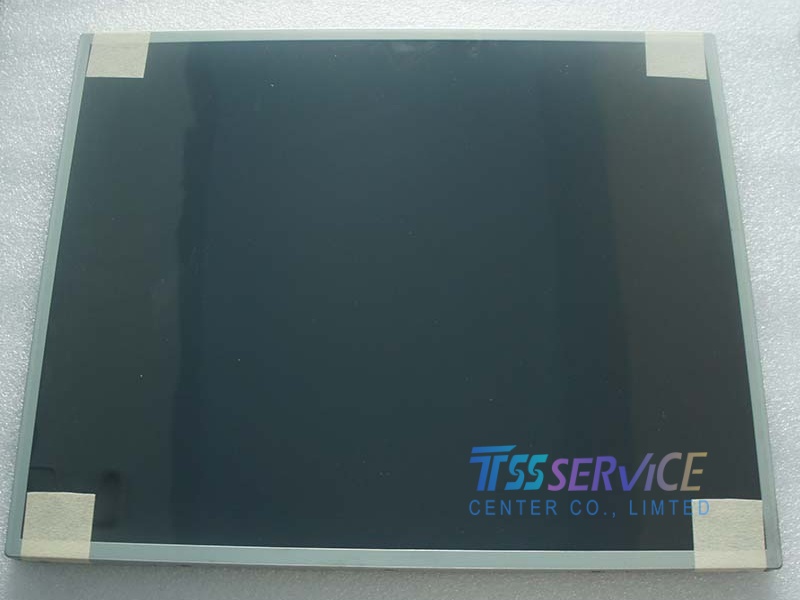
In the demanding world of industrial automation, medical imaging, and digital signage, the choice of a display panel is rarely about aesthetics—it is about endurance, precision, and long-term operational viability. The HannStar HSD190MEN4-A03, a 19-inch LCD panel with a native resolution of 1280×1024, stands as a testament to how mature technology can deliver exceptional stability in harsh environments. While consumer displays chase ultra-high resolutions and curved form factors, the industrial sector often relies on the ruggedness of proven specifications. This article delves into the architectural strengths, performance characteristics, and application-specific advantages of the HSD190MEN4-A03, offering a comprehensive analysis for engineers, procurement specialists, and system integrators seeking a display that prioritizes longevity and readability over fleeting trends.
The Architecture of Durability: TN Technology and Industrial-Grade Components
At the heart of the HannStar HSD190MEN4-A03 lies a Twisted Nematic (TN) panel technology, a choice that may seem dated in a world dominated by IPS and VA panels, but one that is deliberate for industrial contexts. TN panels are renowned for their fast response times and low power consumption, but in this specific model, the emphasis is on structural robustness. The panel utilizes a 5:4 aspect ratio, historically standard for 19-inch monitors, which remains highly compatible with legacy industrial software and SCADA systems that rely on fixed-pixel layouts.
Key technical attributes include:
-
Resolution: 1280 x 1024 (SXGA) offering a pixel density of approximately 86 PPI, balancing sharpness with readability at standard viewing distances.
-
Brightness & Contrast: Typically rated at 250 cd/m² to 300 cd/m² with a contrast ratio of 1000:1, ensuring clear differentiation between elements even under moderate ambient lighting.
-
Viewing Angles: 170° horizontal and 160° vertical, which is sufficient for single-operator workstations but distinctly optimized for direct, frontal interaction—a common scenario in control rooms and assembly lines.
-
Interface: Primarily designed for LVDS (Low-Voltage Differential Signaling), a standard that reduces electromagnetic interference and supports reliable signal transmission over longer distances within industrial enclosures.
Unlike consumer panels that may use flexible adhesive connections prone to degradation, the HSD190MEN4-A03 is engineered with reinforced FPC (Flexible Printed Circuit) bonding and a metal frame stiffener. This construction resists vibration and thermal cycling, common causes of failure in factory environments. For integrators, this translates to higher mean time between failures (MTBF) and reduced field replacement costs.
Reading Environments: Where Resolution Meets Application
The 1280×1024 resolution of the HSD190MEN4-A03 is not arbitrary; it is a calculated match for specific industrial workflows. In medical monitoring, for instance, this pixel count allows for the simultaneous display of 4:3 native medical waveforms or diagnostic imaging windows without distortion. In point-of-sale (POS) kiosks, the 5:4 ratio perfectly frames transaction interfaces and signature capture areas, eliminating the need for software scaling that could introduce latency or artifacts.
The panel's gray-to-gray response time (typically around 5 ms to 8 ms) is critical for applications where data changes rapidly, such as real-time production line status indicators or security camera feeds. Slower technologies, such as VA, can suffer from motion blur or black smearing, which the HSD190MEN4-A03 deliberately avoids. Furthermore, the 6-bit + Hi-FRC (Frame Rate Control) color depth enables it to simulate 16.7 million colors, providing sufficient gradient smoothness for basic medical image review without the cost premium of true 8-bit panels.
Importantly, the HannStar HSD190MEN4-A03 is often specified with an operating temperature range of 0°C to 50°C and a storage range extending to -20°C to 60°C. This thermal resilience makes it suitable for integration into environments that experience occasional heat spikes from nearby machinery or seasonal temperature variations in unventilated kiosk cabinets. Contrast this with consumer monitors that often fail or display color shifts below 5°C or above 40°C.
Longevity Lifecycle: Why a 19-Inch Panel Still Matters
In an era of shrinking device footprints, the 19-inch diagonal remains a strategic choice for industrial designers. It occupies a physical footprint similar to older 17-inch CRTs with a significantly shallower depth, allowing for drop-in upgrades in legacy rack-mount or panel-mount systems. The HannStar HSD190MEN4-A03 specifically supports VESA mount patterns (75x75 or 100x100 mm), ensuring compatibility with existing industrial enclosures without requiring costly mechanical redesigns.
The panel's backlight solution is another critical longevity factor. While early models may use CCFL (Cold Cathode Fluorescent Lamps), later revisions of the HSD190MEN4-A03 are often equipped with Edge-LED backlighting. LED backlights provide:
-
Lower power consumption (typically less than 20W total panel consumption)
-
Higher luminous stability over time (less than 20% luminance degradation over 50,000 hours)
-
Mercury-free construction, simplifying end-of-life disposal and RoHS compliance
For industries requiring continuous operation—such as 24/7 manufacturing lines or security control rooms—the ability to maintain consistent brightness and color accuracy for 5 to 7 years without a backlight replacement is a significant operational advantage. The low heat dissipation of the LED backlight also reduces thermal stress on adjacent electronic components, further enhancing system reliability.
Integration Complexities: Signal Integrity and Mechanical Fit
Successfully deploying the HannStar HSD190MEN4-A03 requires understanding its interface and mechanical constraints. The panel typically utilizes a 30-pin LVDS connector with a pinout that follows industry-standard JAE or JST patterns, but always verify the specific timing controller (T-con) board revision of your specific batch. Some production lots may use a 2-channel LVDS input (two 8-lane data groups) while others are single-channel; mismatching these with a driving board can result in a scrambled image or no display.
Mechanical engineers should note the panel's bezel width, which is usually narrow (approximately 5-7mm on each side) to support tight multi-panel video walls often found in traffic control or broadcast applications. The active display area measures 376.32 mm x 301.06 mm, and the total module thickness (including the B/L unit) typically remains under 10 mm, allowing for slim enclosure designs. For capacitive or resistive touch integration, the panel's surface is designed to accept optical bonding without significant light refraction loss, preserving the rated brightness.
The key challenge for integrators is managing backlight driving. While the LCD logic requires 3.3V, the LED string usually demands a constant current driver module. It is essential to either use a compatible HannStar inverter board or design a custom driver that matches the panel's specific current and voltage requirements (typically around 2.5W to 3.5W per LED string). Failure to match these parameters can cause firefly flicker at low dimming levels or premature LED degradation.
The HannStar HSD190MEN4-A03 is not a plug-and-play consumer product; it is an engineered component that rewards careful pre-integration planning. Its value is realized not in the specifications sheet but in the steady, flicker-free performance over years of uninterrupted service in environments where downtime is not an option.
In a market fixated on pixel counts and contrast ratios, the HannStar HSD190MEN4-A03 reminds us that true industrial display excellence is measured in reliability, compatibility, and thermal endurance. This 19-inch panel offers a pragmatic solution for legacy system upgrades and new builds where 4:3 interface design remains standard. For engineers and procurement managers, selecting this panel means prioritizing predictable performance and simplified supply chain continuity over chasing unproven trends. It is a workhorse display that will outlast the generation of machinery it controls, proving that sometimes the best innovation is dependable consistency.


