In the realm of industrial automation, medical instrumentation, and specialized embedded systems, the display is far more than a peripheral—it is the primary interface between human operators and complex machinery. The demand for reliable, high-contrast, and energy-efficient visual solutions in challenging environments has never been greater.
In the realm of industrial automation, medical instrumentation, and specialized embedded systems, the display is far more than a peripheral—it is the primary interface between human operators and complex machinery. The demand for reliable, high-contrast, and energy-efficient visual solutions in challenging environments has never been greater. Conventional consumer-grade displays often fall short when subjected to extreme temperatures, direct sunlight, or stringent long-term reliability requirements. This article delves into the technical attributes and practical applications of a specific component designed to meet these rigorous demands: the KOE SP14N02L6ALCZ, a 5.1-inch FSTN LCD module with a 240x128 pixel resolution. We will explore how its architectural choices, from the passive matrix technology to the specialized polarizer stack, make it a benchmark for readability and durability, moving beyond mere specifications to provide actionable insights for engineers and procurement specialists.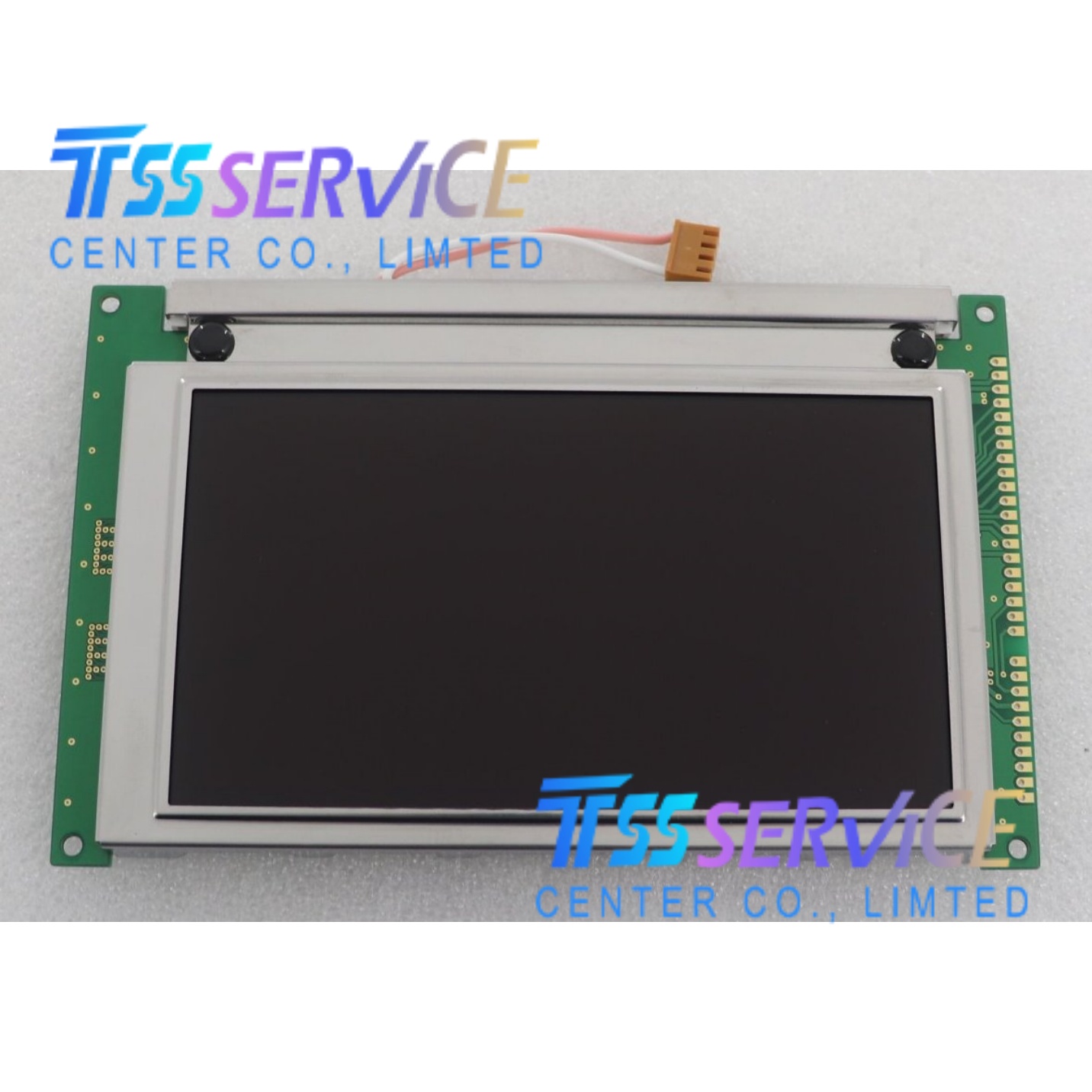
Decoding the FSTN Technology: Beyond Simple Contrast
The core of the KOE SP14N02L6ALCZ lies in its use of Film Compensated Super Twisted Nematic (FSTN) technology. To understand its value, one must look beyond the simple black-and-white contrast of standard STN displays. Standard STN panels, while cost-effective, suffer from a characteristic yellow-green background and limited viewing angles, rendering them problematic for applications requiring subtle grayscale differentiation or operation under varied lighting conditions. The FSTN architecture introduces a retardation film that compensates for the inherent birefringence of the liquid crystal layer.
This compensation achieves two critical outcomes. First, it transforms the background to a neutral, paper-like white or gray, dramatically reducing eye strain for operators who must stare at the screen for extended periods. Second, it significantly broadens the effective viewing cone, particularly in the vertical axis. For a panel like the SP14N02L6ALCZ, tasked with displaying detailed 8x8 or 16x16 character grids on a 5.1-inch diagonal, this clarity is non-negotiable. The resultant high contrast ratio ensures that each individual pixel in the 240x128 matrix is sharply defined, eliminating the ghosting or fuzzy transitions that plague lower-tier passive displays. This technological foundation is what differentiates a usable display from one that frustrates the end-user in a critical control system.
System Integration: The Electrical and Mechanical Engineering Blueprint
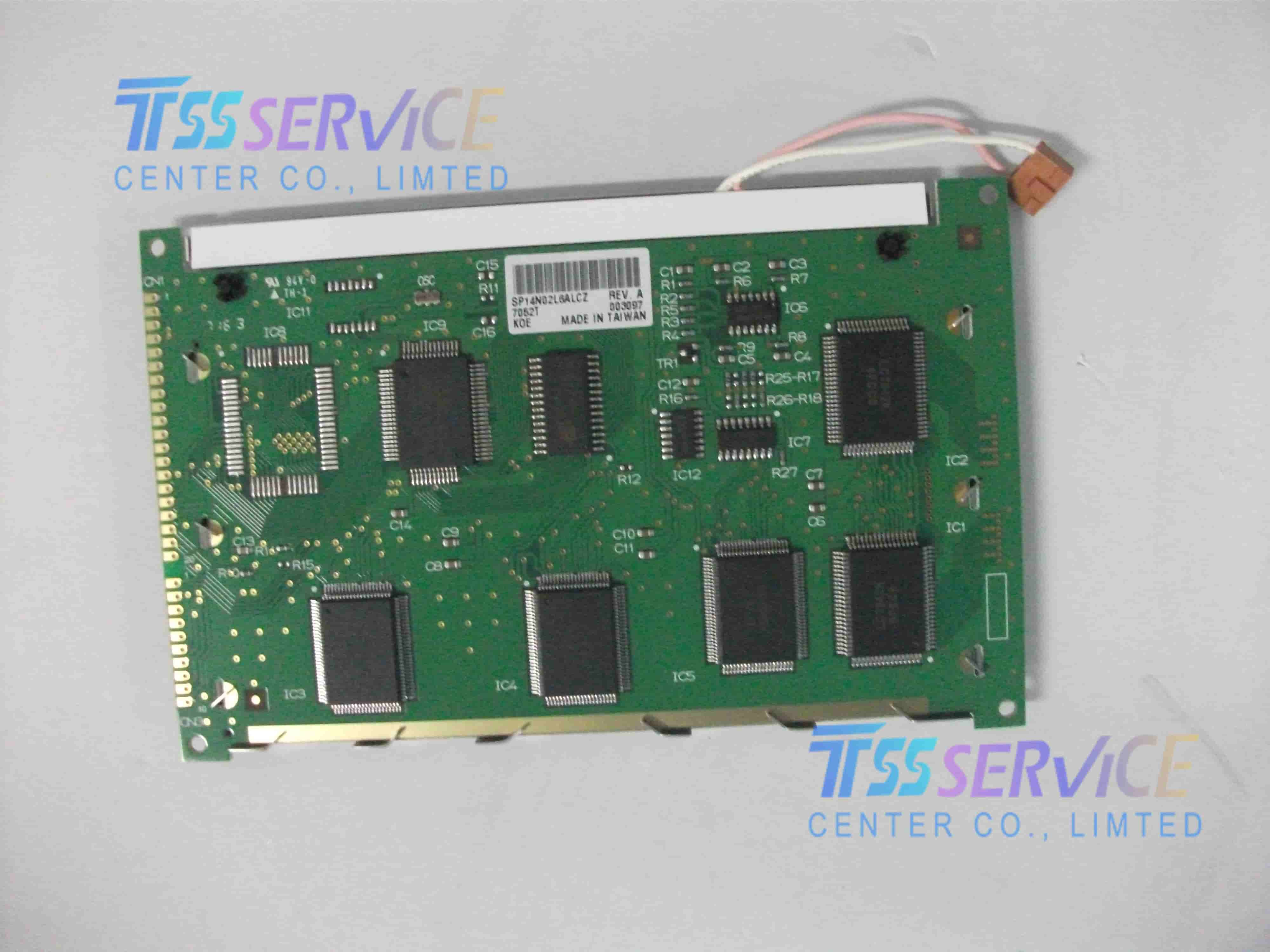
Moving from the physics of the liquid crystal to the realities of circuit design, the KOE SP14N02L6ALCZ presents a well-considered electrical interface. It operates on a standard single 5V power supply, a legacy voltage that remains dominant in many PLC-based and heavy industrial systems, thereby eliminating the need for complex DC-DC conversion circuitry. The display integrates a dedicated negative voltage (VEE) generation circuit for the LCD drive, managed via an external contrast adjustment potentiometer. This allows fine-tuning of the bias voltage to match the specific temperature of the operating environment—a subtle but critical feature for maintaining readability from 0°C to 50°C
.
From a mechanical perspective, the module's form factor is engineered for panel mounting. The 5.1-inch diagonal encapsulates a viewing area of approximately 122.0 x 65.8 mm, with a precise outline to fit standard cutouts. The use of a FPC (Flexible Printed Circuit) for the interface provides crucial flexibility in routing the cable to the host controller, reducing connector strain in vibration-prone settings. The pinout is aligned with industry-standard 20-pin interfaces, allowing for direct drop-in compatibility with many common microcontroller development boards and existing industrial backplanes. This deliberate design minimizes the time-to-market for new equipment and simplifies the replacement cycle for legacy systems.
Enduring Performance: Thermal Resilience and Backlight Optimization
The true test of an industrial display is not its performance on the lab bench at 25°C, but its behavior under thermal duress. The SP14N02L6ALCZ uses a standard STN fluid formulation that maintains stable multiplexing ratios across a wide temperature range. While the stated operating range is 0°C to 50°C and storage from -20°C to 60°C, the FSTN architecture offers a distinct advantage here. The compensation film is less susceptible to thermal warping than the glass substrates of active matrix (TFT) modules, ensuring that the optical alignment remains intact as the chassis heats up or cools down.
A critical design element is the backlight. This module is available with a single-color or dual-color LED backlight, but the standard configuration utilizes a white or yellow-green LED array. The key strength lies in LED longevity—typically rated at 50,000 to 100,000 hours half-brightness. For a system running 24/7, this translates to years of maintenance-free operation. Engineers must consider that the brightness of FSTN displays is inherently lower than TFTs; thus, the efficiency of the light guide plate becomes paramount. KOE optimizes this by using a fine-pitch light guide that ensures uniform illumination across the 122mm width, preventing dark edges that could obscure critical data fields like process alarms or error logs.
Strategic Application: Choosing FSTN Over TFT in a Dominant Market
In an era where TFT color displays are ubiquitous, a choice to deploy a monochrome FSTN module like the KOE SP14N02L6ALCZ is a deliberate engineering strategy. The primary driver is readability under direct sunlight. FSTN displays are transmissive with a reflective layer, but they excel when combined with a transflective polarizer. In bright ambient light, the display switches from backlit to reflective mode, where the ambient light is reflected off the back polarizer, rendering the dark pixels against a bright background. A TFT, by contrast, washes out completely. This makes the SP14N02L6ALCZ the optimal choice for outdoor ticketing kiosks, agricultural equipment terminals, or marine navigation displays.
Furthermore, the power envelope is dramatically lower. A typical 5-inch TFT consumes 1.5 to 3 Watts; this FSTN module, with its LED backlight, consumes roughly 0.2 to 0.5 Watts. For battery-operated portable analyzers or remote IoT gateways, this power difference extends field operation by hours. Additionally, the cost per pixel for large character fonts remains lower for passive matrix displays. When the application does not require video playback or complex graphics, but demands high-contrast alphanumeric data, simple bar graphs, and robust system status indicators, the FSTN is not a compromise—it is the superior technology. It prioritizes functional reliability over visual spectacle.
Conclusion: A Rational Choice for Mission-Critical Clarity
The KOE SP14N02L6ALCZ 5.1" FSTN industrial LCD display embodies a philosophy of functional elegance, where engineering precision serves reliability over flashy performance. Its combination of neutral FSTN optics, a robust 5V electrical interface, and a long-life LED backlight provides a solution that is demonstrably superior to consumer-grade displays for demanding environments. For design engineers facing the challenge of ensuring that a brightly lit factory floor or a direct-sunlight field station does not render their user interface illegible, this module represents a strategic, long-term investment. It is not merely a display; it is a durable, low-power window into your system's operational integrity.


