In the demanding world of industrial technology, the display panel is far more than a simple window for information; it is the critical interface between complex machinery and human operators. The introduction of the KYOCERA TCG057QVLAC-G00-0Y-30-90 represents a significant advancement tailored for these rigorous environments
In the demanding world of industrial technology, the display panel is far more than a simple window for information; it is the critical interface between complex machinery and human operators. The introduction of the KYOCERA TCG057QVLAC-G00-0Y-30-90 represents a significant advancement tailored for these rigorous environments. This 5.7-inch a-Si TFT-LCD module, with its 320x240 QVGA resolution, is engineered not for consumer novelty but for unwavering reliability and performance under stress.
This article provides a deep-dive analysis of this specialized display panel. We will move beyond basic specifications to explore its core architectural strengths, the rationale behind its key technical features, its ideal application scenarios, and the critical integration considerations for design engineers. Our goal is to illuminate why this specific module stands as a robust solution for the next generation of industrial equipment.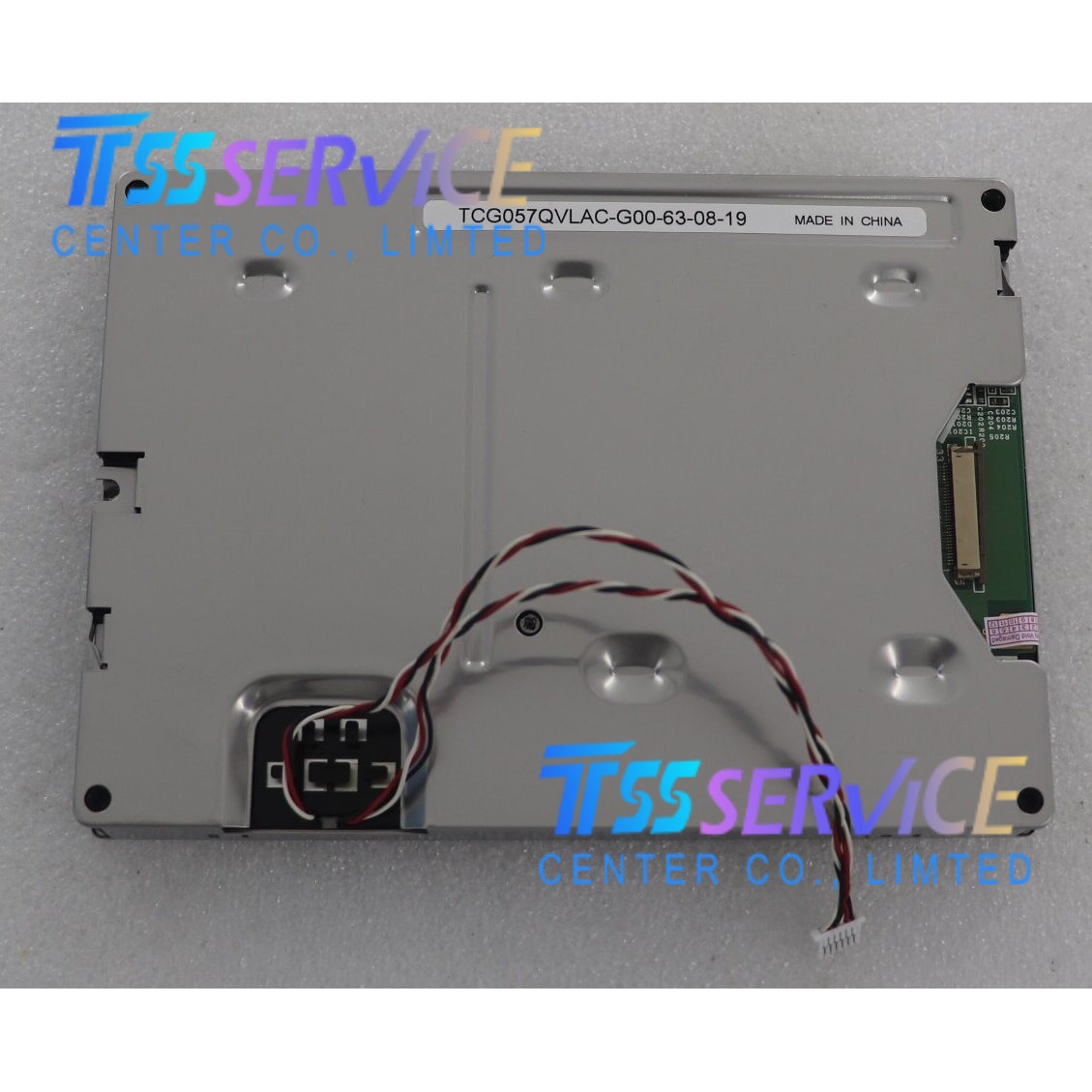
Architectural Foundation: Built for Endurance, Not Just Display

At the heart of the TCG057QVLAC's value proposition is its fundamental construction for industrial longevity. Unlike displays designed for a short consumer lifecycle, this panel utilizes amorphous Silicon (a-Si) TFT technology, a mature and exceptionally reliable process known for its stability and cost-effectiveness in extended operational timelines. The 5.7-inch diagonal size and QVGA resolution represent a deliberate choice, offering optimal information density for control systems without imposing excessive processing or power burdens.
The robustness is further underscored by its wide operating temperature range of -30°C to +90°C. This specification is not merely a number but a testament to the panel's resilience against thermal shock, cold starts in unheated environments, and prolonged exposure to high ambient heat from surrounding machinery. This intrinsic durability ensures consistent performance in settings from frozen logistics warehouses to the hot confines of factory floor automation cells, forming the non-negotiable bedrock of its industrial design philosophy.
Decoding the Specification: A Lens on Performance and Clarity
The module's part number, TCG057QVLAC-G00-0Y-30-90, is a coded manifesto of its capabilities. The "30-90" suffix explicitly confirms the extreme temperature tolerance. However, other characteristics are equally pivotal. The panel features a high-brightness LED backlight, essential for combating glare and maintaining readability under bright factory lighting or direct sunlight in outdoor applications. Its contrast ratio and viewing angles are optimized for clarity from various operational perspectives, whether an operator is viewing it head-on or from an offset position.
Furthermore, the interface—typically a parallel RGB or LVDS—is selected for real-time, low-latency data transmission, crucial for monitoring fast-moving processes. The inclusion of a robust metal frame or bezel provides structural integrity, protects against vibration and mechanical shock, and facilitates secure mounting. Each specification, from the optical bonding options that reduce internal reflection to the long-life LED backlight, is a calculated decision to minimize downtime and ensure a clear, reliable human-machine interface (HMI) for years.
Strategic Applications: Where Reliability is Paramount
The true measure of an industrial component lies in its application. The KYOCERA TCG057QVLAC excels in environments where failure is not an option. Key sectors include:
-
Industrial Automation & Control: Serving as the primary interface for PLCs, CNC machine controls, and robotic operating terminals, where real-time feedback and operator input are continuous.
-
Test & Measurement Equipment: Providing durable readouts for oscilloscopes, spectrum analyzers, and calibration devices used in R&D and quality assurance labs.
-
Transportation & Heavy Machinery: Integrated into dashboard displays for agricultural vehicles, construction equipment, and fleet management systems, enduring constant vibration and temperature swings.
-
Medical & Diagnostic Devices: Where consistent visual accuracy is critical, such as in portable diagnostic monitors or specialized laboratory instruments requiring dependable performance.
In these contexts, the display is a mission-critical component. Its failure can lead to production halts, inaccurate measurements, or operational hazards, making its endurance specifications directly tied to operational profitability and safety.
Integration and Design Considerations for Engineers
Selecting this panel is the first step; successfully integrating it into a product is the next. Engineers must account for several factors. Power supply design must be clean and stable to prevent display artifacts, especially across the wide voltage and temperature ranges. The physical mounting scheme must account for thermal expansion and provide adequate shock absorption. Electromagnetic compatibility (EMC) is crucial, as industrial environments are electrically noisy; proper shielding and grounding of the display module are essential to prevent interference.
Additionally, leveraging the panel's long-term availability—a key benefit of industrial-grade components from a manufacturer like Kyocera—allows for extended product lifecycles and avoids costly redesigns. Designers should also consider the total cost of ownership, which factors in not just the unit price but the reduced maintenance, higher reliability, and lower risk of field failures that such a robust module provides over its operational lifetime.
The KYOCERA TCG057QVLAC-G00-0Y-30-90 is a purpose-built solution that embodies the core tenets of industrial design: extreme reliability, environmental resilience, and long-term performance. Its value extends far beyond displaying pixels, offering system integrators a foundation of stability for critical HMI applications. By understanding its architectural strengths, decoding its performance specifications, aligning it with the right applications, and meticulously planning for integration, engineers can leverage this display to build industrial equipment that stands the test of time and operation, ultimately ensuring clarity and control where it matters most.


