In the demanding world of industrial technology, the choice of a display panel is far more than a simple component selection—it is a critical decision impacting system reliability, longevity, and performance under stress.
In the demanding world of industrial technology, the choice of a display panel is far more than a simple component selection—it is a critical decision impacting system reliability, longevity, and performance under stress. This article provides an in-depth exploration of the KYOCERA 5.7" a-Si TFT-LCD Display Panel, model TCG057QVLAC-G00-0Y-30-90. Designed explicitly for industrial applications, this 320x240 resolution panel represents a confluence of rugged engineering and precise visual technology.
We will dissect its core specifications, analyze the significance of its extended temperature range and robust construction, and evaluate its integration features. Beyond mere technical data, we will contextualize its value proposition for engineers and system designers, explaining why this specific display is engineered to thrive where commercial-grade components would fail.
Engineering for Extreme Environments: Core Specifications Decoded
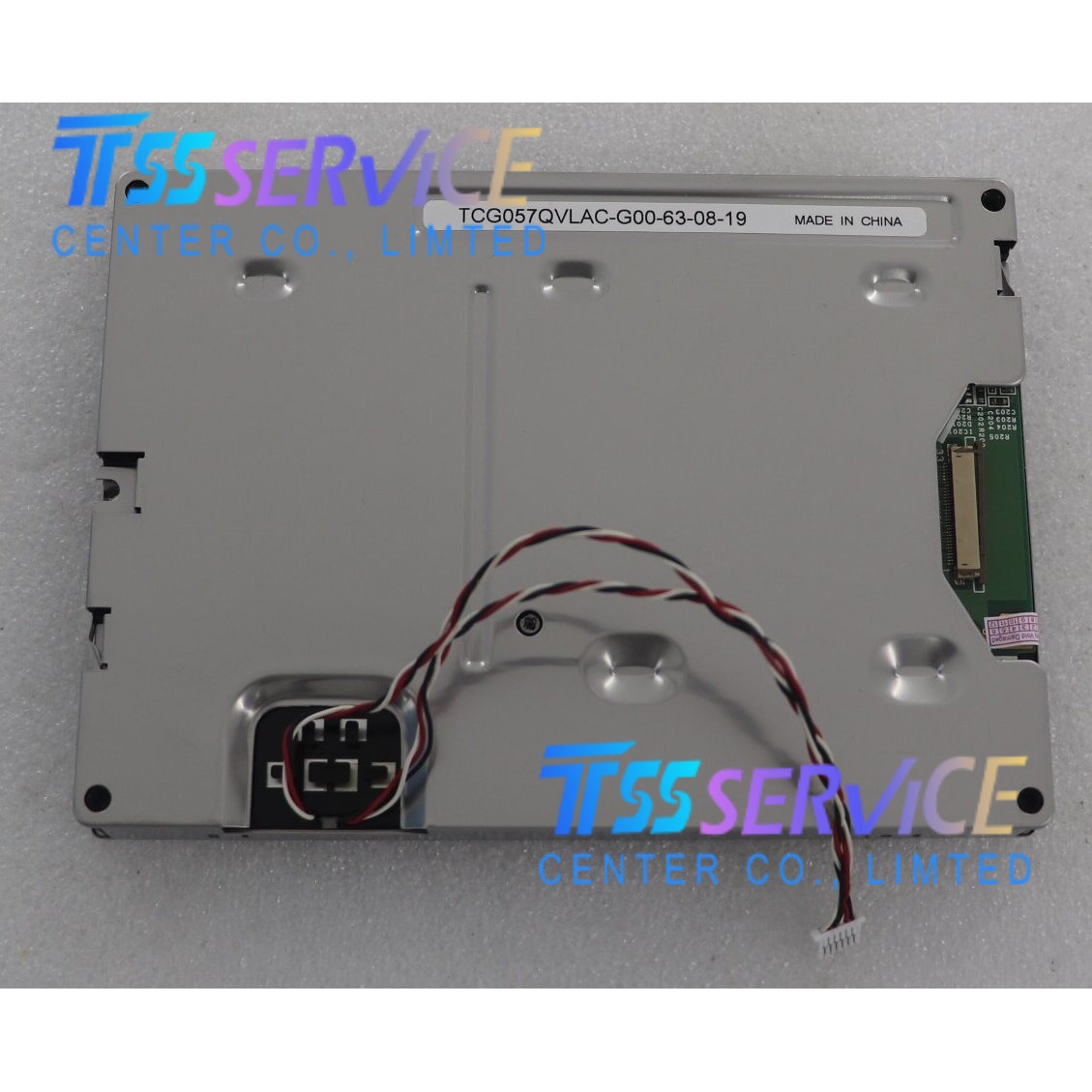
The TCG057QVLAC-G00-0Y-30-90 is built upon amorphous Silicon (a-Si) TFT technology, a mature and exceptionally reliable process ideal for industrial use. Its 5.7-inch diagonal with a Quarter VGA (320 x RGB x 240) resolution offers a balanced solution: sufficient pixel density for clear data and GUI presentation without imposing excessive processing overhead on embedded systems. The 30/90 designations in its model number are crucial, indicating an operating temperature range of -30°C to +90°C for the panel surface.
This extreme tolerance is a cornerstone of its design. High temperatures can degrade liquid crystals and backlight output, while extreme cold slows response times. KYOCERA's engineering ensures stable contrast ratio and response time across this spectrum. Furthermore, the panel features a high-brightness LED backlight system, typically rated for a long lifespan with minimal luminance decay, which is vital for readability in brightly lit factory or outdoor settings. The initial specs tell a story of a component designed not for peak specs, but for consistent, predictable performance at the edges of operational possibility.
The Industrial Durability Advantage: Beyond the Data Sheet
While specifications define capability, construction defines survivability. Industrial panels like this KYOCERA model are subjected to rigorous validation that commercial screens never face. This involves prolonged thermal cycling, high humidity testing, and verification against shock and vibration standards common in manufacturing, transportation, and heavy machinery environments. The mechanical and electrical interface is designed for secure connection, resisting the connector creep and signal degradation that can occur under constant vibration.
The materials used in the optical stack—polarizers, filters, and the glass itself—are selected for resistance to chemicals, abrasion, and fogging. Perhaps most importantly, industrial panels are characterized for extended product lifecycles. In an industry where a machine platform may be in production for a decade or more, the assurance of a stable, long-term supply of a display with identical performance characteristics is invaluable, preventing costly mid-design requalifications.
Integration and Interface: Simplifying the Designer's Challenge
A superior panel is only as good as its integrability. The TCG057QVLAC-G00-0Y-30-90 typically features a standard LVDS (Low-Voltage Differential Signaling) interface. LVDS is preferred in industrial settings for its robustness against electromagnetic interference (EMI), a common plague in electrically noisy environments filled with motors and power electronics. This noise immunity ensures a clean, stable image signal over the cable run from the controller board.
For system designers, the availability of a comprehensive evaluation kit and detailed technical documentation is critical. These resources allow for rapid prototyping and validation of the display within the larger system, testing its interaction with the chosen controller, power supply, and firmware. The panel’s mechanical drawings, with precise cutout dimensions and mounting hole patterns, enable seamless mechanical integration into sealed enclosures or operator terminals, reducing design time and risk.
Application Landscapes: Where This Display Excels
The true test of an industrial component is its fit within real-world applications. The KYOCERA 5.7" panel finds its ideal home in environments where reliability is non-negotiable. This includes Human-Machine Interfaces (HMIs) for industrial automation, process control systems, and test & measurement equipment, where it provides operators with critical feedback. In transportation, it serves in fleet management terminals, railway control systems, and agricultural vehicle displays, enduring temperature extremes and constant jostling.
Its resilience also makes it suitable for outdoor payment systems, ruggedized handheld devices for logistics and field service, and medical diagnostic equipment (where specific certifications would apply). In each case, the panel is not merely a "screen" but a mission-critical viewing portal. Its failure could mean halted production, diagnostic delays, or operational errors, justifying the investment in a component engineered for zero-fault tolerance over years of continuous service.
In conclusion, the KYOCERA TCG057QVLAC-G00-0Y-30-90 5.7" TFT-LCD is a paradigm of purpose-built industrial design. It transcends basic display functionality by offering guaranteed performance across extreme temperatures, ruggedized construction, and reliable integration pathways. For engineers, its value lies in de-risking product development and ensuring end-system durability. In a landscape where operational continuity is paramount, selecting a display engineered to these rigorous standards is not an expense, but a strategic investment in product integrity and long-term customer trust.


