In an era dominated by high-resolution, full-color displays on consumer devices, the industrial sector continues to rely on specialized components that prioritize durability, reliability, and functional specificity over pixel density. The Kyocera 5.7 inch KG057QVLFF-G00 is a prime example of this niche.
In an era dominated by high-resolution, full-color displays on consumer devices, the industrial sector continues to rely on specialized components that prioritize durability, reliability, and functional specificity over pixel density. The Kyocera 5.7 inch KG057QVLFF-G00 is a prime example of this niche. With its 320×240 resolution (QVGA), this LCD panel is not designed for the smartphone market but for environments where consistent performance under stress is non-negotiable. This article explores the specific technical architecture of this display, its unique value proposition in the industrial landscape, and the practical reasons why a lower-resolution panel remains the superior choice for applications ranging from medical devices to heavy machinery. We will dissect its optical characteristics, interface logic, and operational ruggedness to provide a comprehensive understanding for engineers and procurement specialists.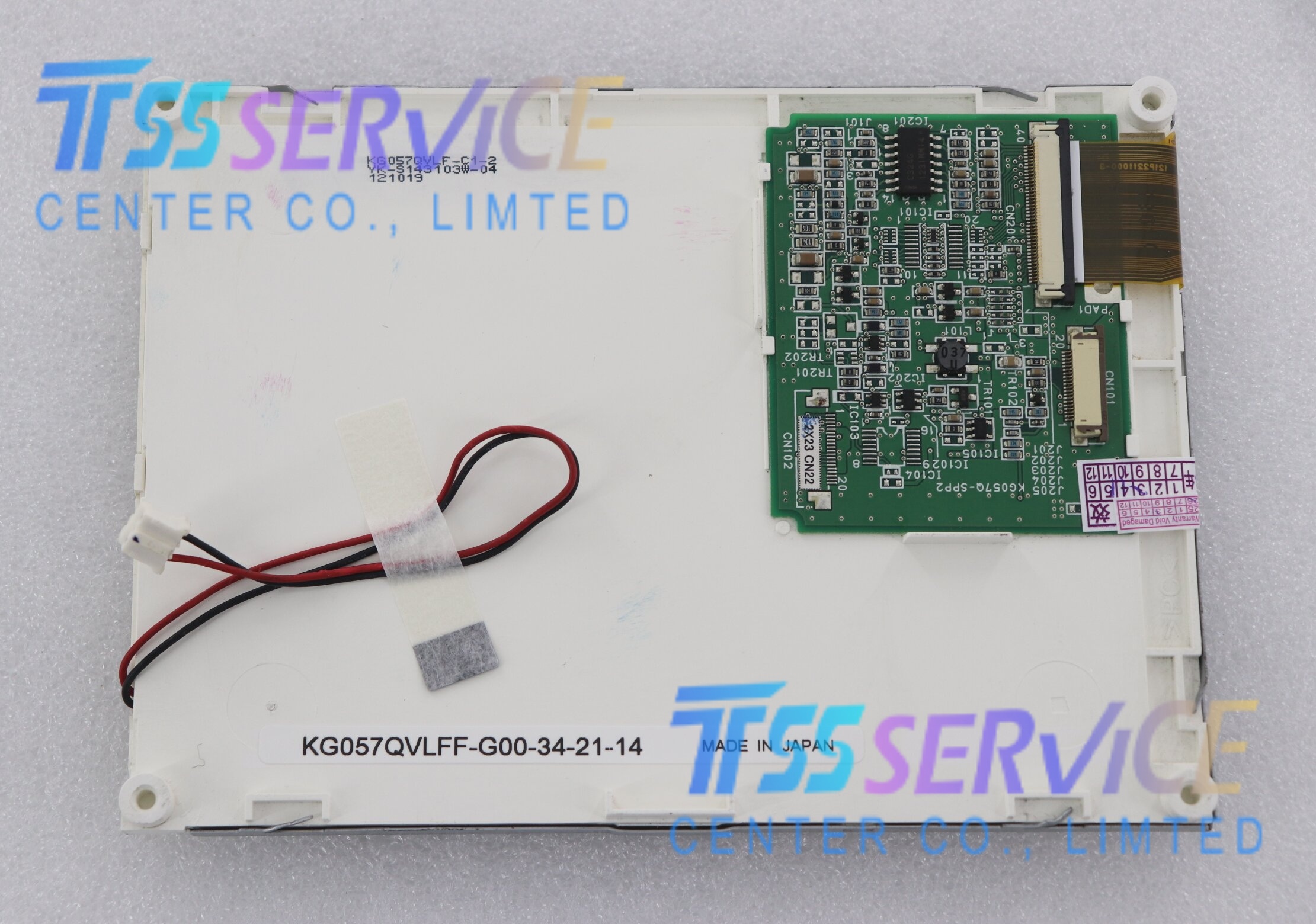
Optical Engineering: Beyond Resolution Metrics
While a 320×240 resolution may appear modest by modern standards, the KG057QVLFF-G00 excels in areas that consumer displays often neglect: viewing angle stability and contrast control. This panel utilizes a STN (Super Twisted Nematic) LCD technology, which offers a distinct advantage in high-ambient-light environments. Unlike the color washout experienced by many TFT-LCDs under direct sunlight, the STN architecture of this Kyocera unit maintains a high contrast ratio, ensuring that critical data remains legible.
The display is typically configured as a monochrome or limited-color panel, which eliminates the color reproduction complexities that can cause data misinterpretation in industrial control systems. Its 5.7-inch diagonal size provides a generous viewing area for dashboard meters or CNC machine interfaces, where a single point of failure in color accuracy could lead to operational errors. Furthermore, the response time, while slower than modern TFTs, is intentionally optimized to reduce flicker and ghosting in static or slowly changing data displays. Engineers choose this panel not for its ability to render video, but for its predictable, stable optical output over thousands of operating hours.
The Logic of Interface and Driver Integration
Beyond the visible glass, the KG057QVLFF-G00 is defined by its standardized interface logic, which is critical for seamless integration into legacy and newly designed systems. This panel typically employs an LVDS (Low-Voltage Differential Signaling) or a parallel RGB interface, depending on the specific variant. The use of LVDS is particularly strategic for industrial applications, as it provides high noise immunity over longer cable runs—a common requirement when the display is mounted on a machine arm while the controller is housed in a distant cabinet.
The driver IC integration on this panel is designed for ease of implementation. It includes pre-programmed timing controllers that reduce the burden on the main processor, allowing system designers to focus on application logic rather than low-level display management. This backward-compatible design philosophy means that replacing an older, failing display unit with the KG057QVLFF-G00 requires minimal firmware rework. The power consumption is also carefully managed, typically requiring a single 3.3V or 5V supply, which simplifies power distribution in embedded systems and reduces thermal dissipation in sealed enclosures.
Mechanical Resilience and Environmental Tolerance
Industrial displays must survive conditions that would destroy consumer electronics. The Kyocera KG057QVLFF-G00 is built with a wide operating temperature range, often specified from -20°C to +70°C, with storage capabilities extending even further. This thermal tolerance is achieved through the use of specialized liquid crystal fluid and reinforced bezel construction that resists expansion and contraction. For applications in freezers or outdoor equipment, this panel will continue to function when standard commercial displays would appear black or sluggish.
The mechanical design emphasizes vibration and shock resistance. The glass is typically laminated with a polarizer that is bonded to prevent delamination under continuous vibration—a common failure point in forklift terminals or marine navigation displays. Additionally, the panel's Anti-Glare (AG) treatment is a standard feature, reducing surface reflections from overhead warehouse lighting. This combination of a wide thermal envelope and physical robustness means the panel can be installed without active cooling or heated enclosures, reducing the total cost of ownership for system integrators.
Longevity and Lifecycle Management in Critical Systems
The most critical factor for any OEM or systems integrator is the product lifecycle. The Kyocera KG057QVLFF-G00 is designed with a long-term availability guarantee that aligns with industrial production cycles, which can last 10 to 15 years. This is a stark contrast to the consumer display market, where panels are discontinued every 18 months. Selecting this panel future-proofs a product line against sudden obsolescence, avoiding costly redesigns and recertification processes.
Furthermore, the backlight lifespan is a key specification. Whether utilizing CCFL or LED backlighting technology, this panel is engineered for tens of thousands of hours of continuous operation before brightness degrades to 50% of its initial value. For medical ventilators or factory floor terminals that run 24/7, this reliability translates directly to reduced maintenance downtime. The panel also offers optical bonding options, which eliminate the air gap between the touch sensor and the LCD, preventing dust ingress and improving readability. For applications requiring strict hygiene or clean room compatibility, this feature is indispensable.
Conclusion The Kyocera KG057QVLFF-G00 stands as a testament to the principle that industrial displays require a fundamentally different design philosophy than consumer panels. Its 320×240 resolution is not a limitation but a deliberate choice for clarity, noise immunity, and operational stability in harsh environments. By prioritizing optical endurance, robust interface logic, and a decade-plus lifecycle, this panel solves the specific pain points of medical, automation, and transportation sectors. For engineers seeking a display that will perform reliably in the extremes of temperature and vibration, while offering seamless integration into existing systems, the KG057QVLFF-G00 remains a benchmark for industrial-grade engineering excellence.


