In the demanding world of industrial automation, where precision, durability, and reliability are non-negotiable, the display panel is far more than a simple output device—it is the critical interface between human operators and complex machinery.
In the demanding world of industrial automation, where precision, durability, and reliability are non-negotiable, the display panel is far more than a simple output device—it is the critical interface between human operators and complex machinery. Among the myriad of components that power factory floors and medical equipment, the OPTREX 15 INCH 1024×768 LCD Panel T-55534D150J-LW-A-ABN stands out as a specialized solution designed for longevity and performance in harsh environments. This article delves into the technical architecture, operational resilience, and market relevance of this specific panel. Rather than treating it as a generic part, we will explore why the combination of a 4:3 aspect ratio, an XGA resolution, and robust industrial-grade construction makes this model a preferred choice for applications where standard consumer displays would fail. Understanding its specifications is crucial for procurement managers, system integrators, and engineers who require a stable, long-term supply of components that guarantee visibility and tactile feedback in mission-critical settings.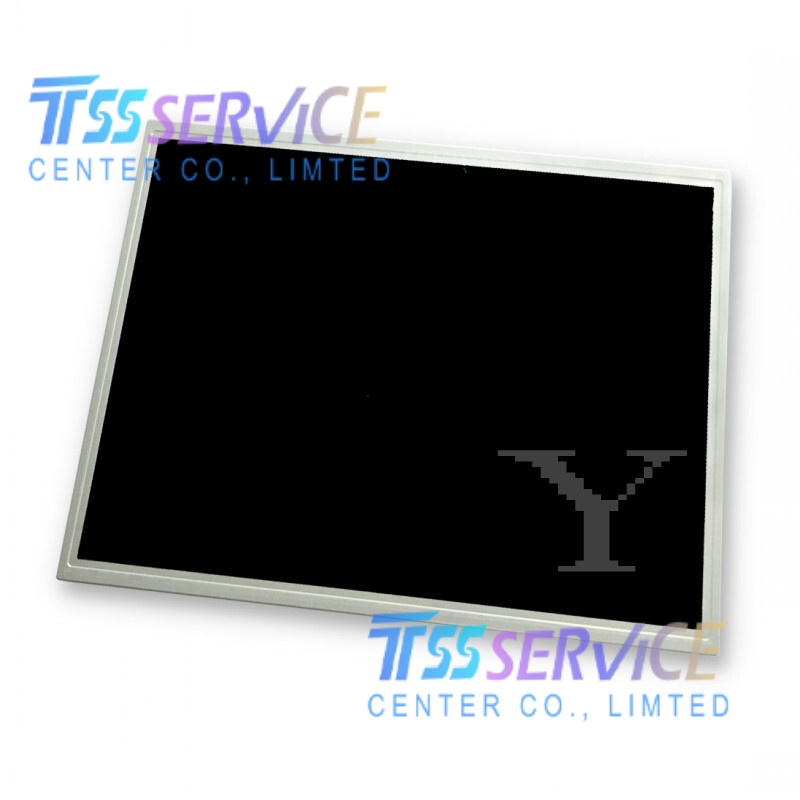
Decoding the Specifications: Why 1024×768 XGA Remains Relevant
In an era dominated by high-definition and 4K panels, the choice of a 1024×768 (XGA) resolution on a 15-inch diagonal screen might appear dated to the uninitiated. However, for industrial applications, this specific set of parameters offers distinct advantages that are deeply tied to operational requirements. The 4:3 aspect ratio, increasingly rare in consumer electronics, is a deliberate design choice. It provides a more natural framing for control panels, data logging interfaces, and SCADA (Supervisory Control and Data Acquisition) system layouts, which often require a vertical component for lists or alarm logs.
Furthermore, the pixel density of approximately 85 PPI on a 15-inch screen strikes a balance between readability and power management. At typical viewing distances of 60-80 cm, large characters, icons, and touch targets remain crisp without causing eye strain. For software engineers, the 1024×768 resolution simplifies GUI development, as it aligns with legacy display standards that have decades of proven reliability in embedded systems. The OPTREX T-55534D150J-LW-A-ABN leverages this resolution to ensure compatibility with older but stable industrial controllers, while offering sufficient detail for displaying diagnostic charts and live production metrics. This is not a limitation, but a strategic alignment with the specific needs of precision manufacturing, where stability and interoperability outweigh the allure of unnecessary pixel density.
Built for Endurance: Mechanical and Environmental Design Philosophy
Unlike consumer monitors designed for air-conditioned living rooms, the OPTREX 15 INCH LCD Panel is engineered from the ground up to withstand the rigors of a factory floor. The model number T-55534D150J-LW-A-ABN hints at a specific configuration that prioritizes thermal management, vibration resistance, and ingress protection. Industrial LCDs face challenges that include wide temperature fluctuations (often from 0°C to 50°C or more), high humidity, and exposure to dust or splashing fluids. This panel typically incorporates a robust backlight system—often CCFL or an early generation of industrial LED—designed to maintain consistent brightness over tens of thousands of hours, even when the ambient temperature rises.
Additionally, the mechanical housing is constructed to minimize flex and torque, reducing the risk of pixel damage from constant vibrations or minor impacts. The “LW” in the part number likely indicates a specific surface treatment, such as a low-reflection or anti-glare coating, which is critical in environments with bright overhead lighting or direct sunlight from factory windows. This prevents operator errors caused by glare. The optical bonding process, often applied to such panels, eliminates the air gap between the LCD glass and the protective cover, preventing condensation and reducing internal reflections. This attention to mechanical resilience means that downstream failures—like cracked screens, backlight flicker, or ghosting—are significantly mitigated, ensuring that the panel is a reliable component in a high-uptime system.
System Integration and Signal Fidelity: The LVDS Interface Advantage
A product like the OPTREX T-55534D150J-LW-A-ABN cannot be evaluated solely on its visual quality; its integration protocol is equally vital. This panel utilizes a 6-bit/8-bit LVDS (Low-Voltage Differential Signaling) interface, which is the gold standard for industrial displays of this era. The advantage of LVDS over older interfaces like TTL or parallel RGB is significant: it allows for high-speed data transmission over longer cable runs with minimal electromagnetic interference (EMI). In a noisy factory environment filled with motors, inverters, and high-voltage cabling, EMI rejection is critical to prevent image artifacts, flicker, or data corruption.
For system integrators, the standardized 30-pin or 20-pin LVDS connector ensures compatibility with a wide range of industrial single-board computers and video controllers. The 6-bit capability (supporting 262,144 colors) or 8-bit (16.7 million colors) is sufficient for visualizing alarms, status indicators, and simple graphical overlays without the processing overhead required by higher-color-depth panels. This reduces CPU load on embedded controllers, freeing resources for real-time control tasks. Furthermore, the panel’s timing controller (TCON) is optimized for stable refresh rates, typically 60Hz, which eliminates the tearing or stuttering seen in lower-end displays. When designing a system for 24/7 operation, the ability to rely on a predictable, low-latency display interface reduces debugging time and ensures that the human-machine interface remains responsive, even during rapid data updates from the factory floor.
Conclusion


