In the demanding world of industrial automation, medical imaging, and commercial kiosks, the display is not merely a peripheral—it is the critical interface between human operators and complex machinery. The SHARP 15 inch 1024(RGB)×768 LCD Panel Screen LQ150X1LX88 stands as a testament to engineered reliability in an era of fleeting consumer trends.
In the demanding world of industrial automation, medical imaging, and commercial kiosks, the display is not merely a peripheral—it is the critical interface between human operators and complex machinery. The SHARP 15 inch 1024(RGB)×768 LCD Panel Screen LQ150X1LX88 stands as a testament to engineered reliability in an era of fleeting consumer trends. This article delves deep into the architectural nuances of this specific panel, moving beyond basic specifications to explore its role within the ecosystem of industrial hardware. We will examine why a resolution that may seem dated in a consumer context is, in fact, a deliberate choice for robustness and clarity, and how features like its LVDS interface and wide operating temperature range make it indispensable for mission-critical environments. This is not a review of a generic screen; it is an analysis of a precision instrument designed to withstand the rigors of 24/7 operation.
The Strategic Choice of 1024×768 Resolution in Industrial Settings
While the consumer electronics market aggressively pushes toward 4K and beyond, the industrial sector often requires a sober assessment of functionality over pixel density. The SHARP LQ150X1LX88’s native resolution of 1024(RGB)×768—commonly known as XGA—is a deliberate engineering decision rooted in legibility and system compatibility. At a 15-inch diagonal, this resolution results in a pixel density that is remarkably easy on the eye for prolonged use, particularly in control room environments where operators monitor data for hours.
This standard also ensures seamless integration with legacy industrial hardware. Many programmable logic controllers (PLCs) and embedded systems are optimized for XGA output, avoiding the processing overhead required for scaling higher resolutions. Furthermore, the RGB stripe sub-pixel structure on this panel ensures sharp text rendering, which is critical for reading alphanumeric codes, schematic diagrams, and real-time data streams. The choice of 1024×768 is not a limitation; it is an optimization for functional clarity, reducing pixel interpolation artifacts that can plague non-native resolutions in industrial Human-Machine Interface (HMI) applications.
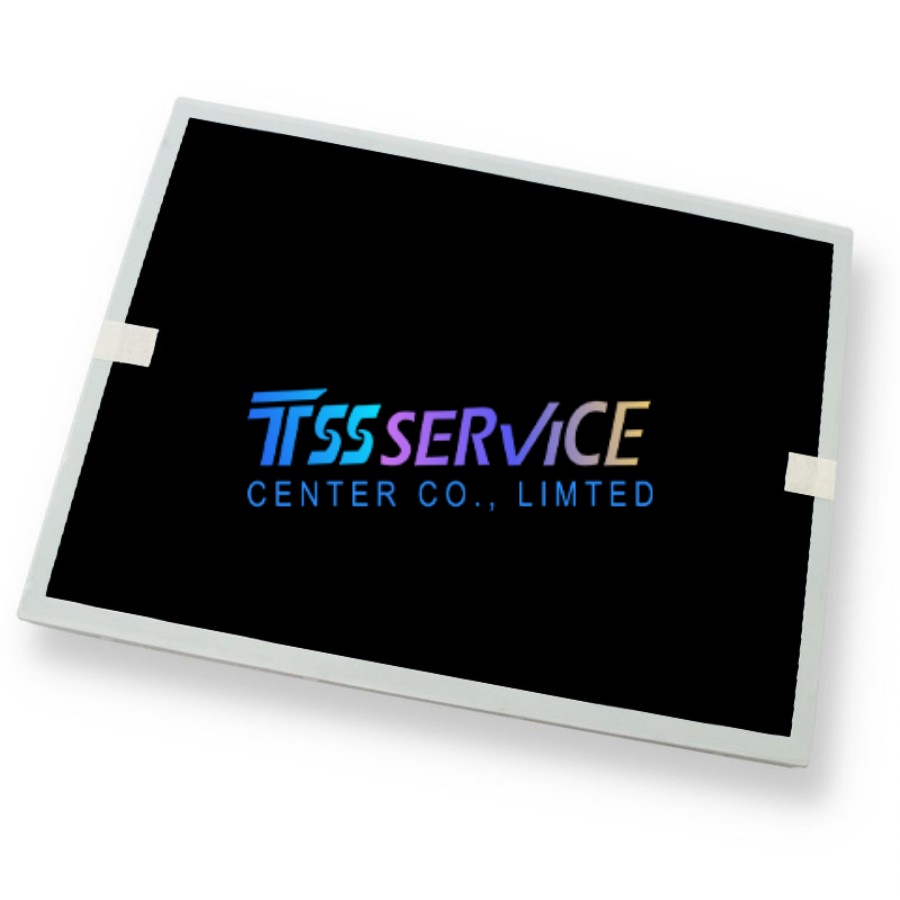
Decoding the LQ150X1LX88: Thermal Endurance and Signal Integrity
To understand why this panel is favored for industrial LCD applications, one must look at the environmental specifications encoded in its model number. The LQ150X1LX88 is engineered for an extended operating temperature range, typically from 0°C to 65°C, and in many variants, it possesses thermal management capabilities that prevent image ghosting in heated enclosures. This thermal resilience is non-negotiable for applications like CNC machine interfaces or outdoor ticketing kiosks where internal ambient temperatures can fluctuate wildly.
Equally critical is its use of the LVDS (Low-Voltage Differential Signaling) interface. In an industrial environment, electrical noise from motors, inverters, and high-voltage lines can corrupt video signals traveling over long cable runs. LVDS is inherently resistant to common-mode noise, ensuring that the image displayed on the LQ150X1LX88 remains stable and flicker-free. The panel also typically supports a wide viewing angle (often 80/80/80/80 degrees), achieved through advanced TN or S-IPS technology, which ensures that even when operators view the screen from a non-perpendicular angle, contrast inversion does not obscure critical alarm indications.
Integration and Longevity: A Panel Built for the Lifecycle of Machinery
One of the most overlooked aspects of industrial display selection is product lifecycle management. Consumer monitors may become obsolete within two years, but industrial machinery is often designed for a ten to fifteen year operational lifespan. The SHARP LQ150X1LX88 belongs to a class of long-life components that guarantee supply availability and spare-part compatibility for years. For system integrators and maintenance engineers, this predictability is a strategic asset; redesigning a control console to accommodate a new display connector or bezel size incurs significant engineering and certification costs.
The panel’s mechanical design also facilitates straightforward integration. With a typical mounting hole pattern and a robust metal frame (often a bezel-less or slim-bezel variant), it fits into standard 15-inch industrial monitor chassis. The 1024×768 resolution aligns perfectly with legacy SCADA software interfaces that were designed around this aspect ratio. By choosing this panel, manufacturers avoid the need to redesign GUI layouts, saving both time and capital. This focus on backward compatibility and mechanical standardization is what elevates the LQ150X1LX88 from a component to a platform for industrial stability.
Practical Applications and Performance Under Stress
The true value of the SHARP 15 inch LQ150X1LX88 is realized when it is deployed in specific, high-stakes environments. In medical diagnostics, for example, the panel’s consistent color reproduction and grayscale performance are vital for viewing X-rays or ultrasound images, where even a slight shift in gamma can lead to misdiagnosis. The panel’s ability to maintain brightness levels (typically 250–350 cd/m²) over thousands of hours ensures that these medical displays require less frequent calibration.
In factory floor HMI terminals, the panel must endure vibration, dust, and temperature shock. The LQ150X1LX88’s design often includes mounting points for vibration dampeners and its electrical connector is locked to prevent disconnection during machine operation. Furthermore, its performance under continuous use is characterized by low luminance decay. Unlike consumer panels that may drop to 50% brightness after 20,000 hours, industrial-grade panels like this one are rated for sustained performance, often retaining 70% brightness or more after 50,000 hours of operation. This makes it a cost-effective choice for transportation hubs, security monitoring stations, and industrial process control.
The SHARP LQ150X1LX88 represents a convergence of pragmatic engineering and operational necessity. It is not a display that seeks to impress with flashy specifications, but rather one that earns its reputation through durability, signal integrity, and thermal stability. For engineers tasked with building systems that must run flawlessly for years in harsh environments, choosing this panel means prioritizing reliability over novelty. Whether embedded in a surgical console or a factory assembly line interface, its 1024×768 resolution and robust LVDS architecture provide a reliable bridge between data and decision. In an industry where downtime is measured in thousands of dollars per minute, the quiet competence of this SHARP panel is an asset worth its weight in gold.


