In the world of electronic displays, where vibrant color and high resolution often dominate the conversation, there exists a class of components dedicated to reliability, clarity, and efficiency in the most demanding environments. The SP14N003 5.1-Inch Monochrome STN-LCD Panel stands as a prime example of this enduring technology. This article delves beyond basic specifications to explore the intrinsic value and strategic application of this specific display module
In the world of electronic displays, where vibrant color and high resolution often dominate the conversation, there exists a class of components dedicated to reliability, clarity, and efficiency in the most demanding environments. The SP14N003 5.1-Inch Monochrome STN-LCD Panel stands as a prime example of this enduring technology. This article delves beyond basic specifications to explore the intrinsic value and strategic application of this specific display module. We will investigate its core technological foundation, the distinct advantages it offers over more common display types, the diverse industrial and commercial landscapes where it excels, and the critical design considerations for seamless integration. For engineers, product designers, and procurement specialists, understanding the nuanced role of such a panel is key to building robust and cost-effective human-machine interfaces.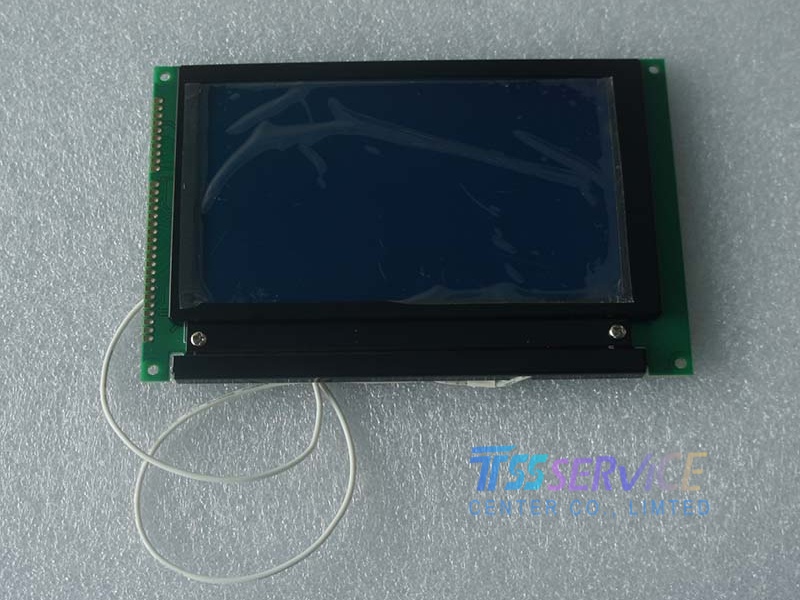
The Foundation: Understanding Monochrome STN Technology
To appreciate the SP14N003, one must first grasp the principles of Super Twisted Nematic (STN) technology. A successor to the simpler Twisted Nematic (TN) design, STN LCDs employ a greater twist angle (180-270 degrees) in the liquid crystal alignment. This "super twist" creates a more pronounced optical rotation, resulting in significantly higher contrast and better readability for monochrome displays, especially as screen size increases. The 5.1-inch diagonal of the SP14N003 leverages this perfectly.
Unlike active-matrix displays that require a transistor for each pixel, STN panels are typically passive-matrix devices. This architecture simplifies design and reduces cost. The monochrome, often blue-on-silver or black-on-gray, presentation is not a limitation but a deliberate choice. It eliminates the complexity and power draw of color filters and backlight color management, focusing purely on delivering sharp, stable alphanumeric characters, icons, and graphics. This technological simplicity is the bedrock upon which its reliability is built, making it ideal for applications where information clarity is paramount and environmental conditions are challenging.
Strategic Advantages in a Color-Saturated Market
In an era dominated by full-color OLEDs and TFTs, the monochrome STN panel carves out a competitive niche through a compelling set of strategic advantages. Its value proposition is built on four key pillars:
-
Exceptional Readability and Low Power Consumption: The high-contrast STN effect ensures clear viewing in various lighting conditions. Coupled with the efficiency of a monochrome backlight (typically LED), it operates on minimal power, a critical factor for battery-powered or energy-conscious devices.
-
Wide Operating Temperature Range: These panels are renowned for their stability across extreme temperatures, often functioning flawlessly from -20°C to +70°C. This inherent ruggedness surpasses many color LCDs, which can suffer from slow response times or complete failure in harsh conditions.
-
Cost-Effectiveness and Reliability: The simpler manufacturing process translates to a lower unit cost. Furthermore, with fewer layers and components than color active-matrix displays, the mean time between failures (MTBF) is generally higher, ensuring long-term operational durability.
-
Sunlight Readability: When paired with a properly designed transflective or high-brightness backlight, monochrome STN displays offer superior performance in direct sunlight, a scenario where many glossy color screens become unreadable.
Ideal Application Landscapes
The specific advantages of the SP14N003 5.1-inch panel dictate its ideal deployment scenarios. It is not a general-purpose consumer display but a specialized component for professional and industrial environments. You will find it serving as the primary interface in:
-
Industrial Automation & Control Systems: PLC operator panels, HMI terminals on factory floors, and control units for manufacturing equipment, where dust, temperature fluctuations, and continuous 24/7 operation are the norms.
-
Test & Measurement Equipment: Multimeters, oscilloscopes, network analyzers, and other diagnostic tools where precise data presentation is more critical than graphical flair.
-
Medical Devices: Patient monitors, diagnostic equipment, and infusion pumps, where reliability, clarity, and consistent performance are non-negotiable for patient safety.
-
Point-of-Sale (POS) & Transaction Terminals: Retail systems, kiosks, and payment devices that require a durable, always-on display for transaction data and basic menus.
-
Transportation & Fleet Management: In-vehicle telematics units, dashboard displays for specialized vehicles, and logistics tracking devices that must endure vibration and temperature extremes.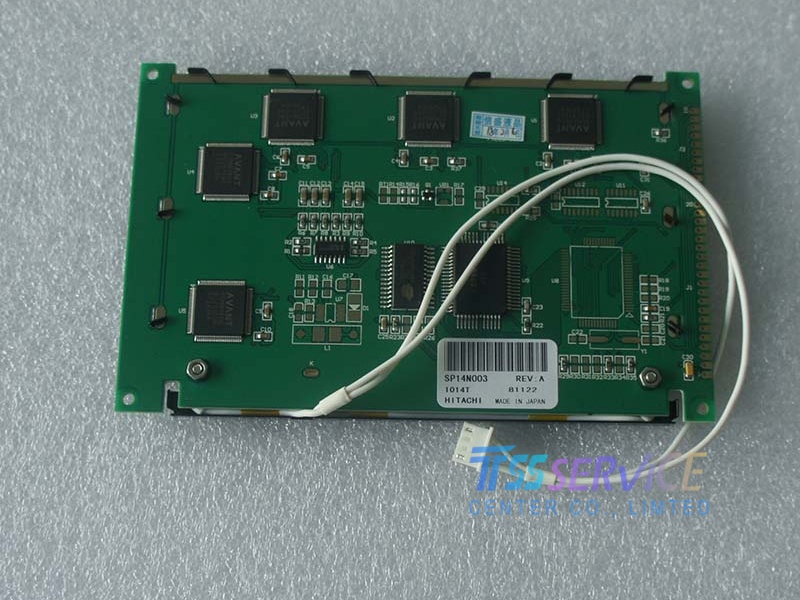
Critical Integration and Design Considerations
Successfully implementing the SP14N003 panel requires careful attention to several integration factors. First is the drive scheme and controller selection. As a passive-matrix display, it requires a compatible LCD controller (often embedded within a microcontroller) that can correctly handle the multiplexing drive waveform to optimize contrast and prevent ghosting. Second, backlighting design is paramount. Engineers must choose between side-lit, bottom-lit, or transflective configurations and select LED current to achieve the desired brightness while managing power and heat. Third, the mechanical and electrical interface must be planned. This includes the mounting method (often using a metal frame or bezel), the connection type (typically a zebra elastomeric connector or FPC cable), and ensuring the operating voltage (often 3.3V or 5V) matches the system supply. Finally, considering the viewing angle and potential need for a temperature-compensated voltage supply can further refine performance in specific applications, ensuring the display delivers consistent quality throughout its lifecycle.
The SP14N003 5.1-Inch Monochrome STN-LCD Panel exemplifies how specialized display technology continues to provide indispensable solutions. Its strength lies not in competing with high-resolution color screens, but in mastering the fundamentals of reliability, clarity, and efficiency under duress. For engineers designing systems destined for harsh environments, long-duty cycles, or cost-sensitive markets, this panel offers a proven, robust, and intelligent display choice. By understanding its technological roots, strategic benefits, ideal applications, and integration nuances, one can leverage this component to build interfaces that are not merely seen, but reliably trusted for years to come.


