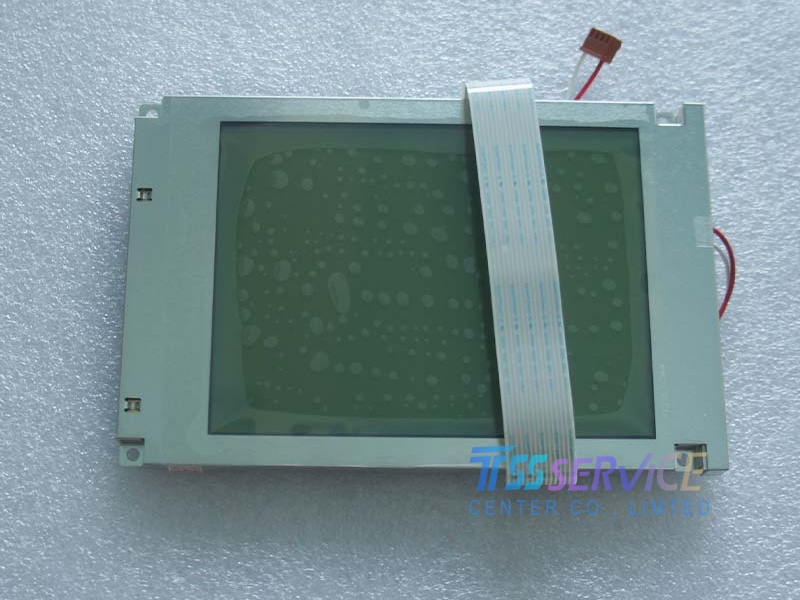
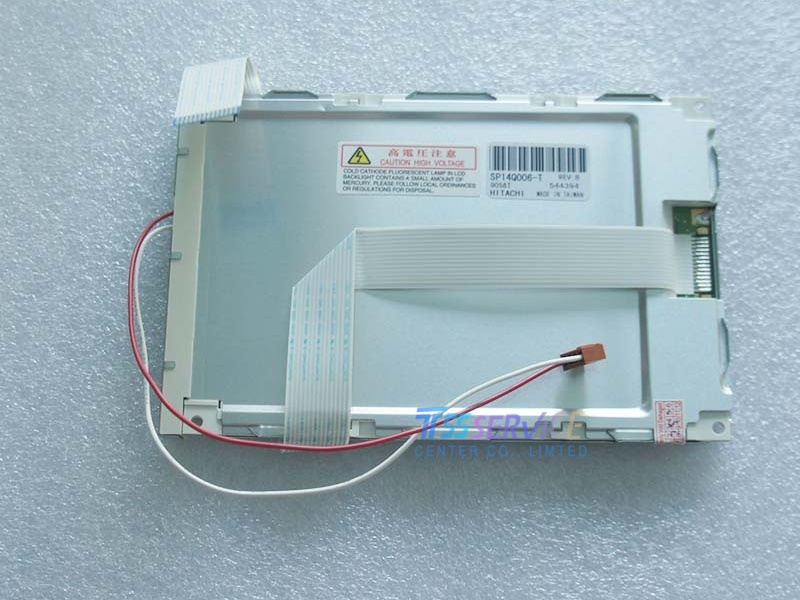
In the vast ecosystem of electronic components, display modules serve as the critical bridge between machine and user. Among the myriad of options, monochrome LCDs continue to hold a vital position in applications where reliability, readability, and cost-effectiveness are paramount. This article delves into a specific and compelling component: the 5.7-inch LCD with a 320x240 resolution using FSTN technology, model SP14Q006-T.
In the vast ecosystem of electronic components, display modules serve as the critical bridge between machine and user. Among the myriad of options, monochrome LCDs continue to hold a vital position in applications where reliability, readability, and cost-effectiveness are paramount. This article delves into a specific and compelling component: the 5.7-inch LCD with a 320x240 resolution using FSTN technology, model SP14Q006-T. We will move beyond basic specifications to explore the intrinsic value this display brings to product design. By examining its core technology, inherent advantages, ideal application landscapes, and key integration considerations, we aim to provide a comprehensive understanding of why this particular module is not just a screen, but a strategic component for robust and user-friendly interfaces in demanding environments.
Deconstructing FSTN: The Technology Behind Superior Readability
At the heart of the SP14Q006-T's performance lies its FSTN (Film Compensated Super-Twisted Nematic) technology. To appreciate its value, one must understand the evolution from the basic TN (Twisted Nematic) displays. Standard TN panels suffer from poor contrast and severe viewing angle dependence, often appearing washed out or with inverted contrast when viewed from the side. FSTN addresses these shortcomings through the addition of a precise retardation film layer. This film compensates for the phase difference of light passing through the liquid crystal, effectively "correcting" the contrast.
The result is a dramatic improvement in two key areas: contrast ratio and viewing angle. Characters and graphics appear as a deep, sharp black against a much brighter, cleaner background, significantly reducing eye strain. Furthermore, the usable viewing angle expands considerably, making the information legible from various positions—a critical feature in industrial or medical settings where an operator may not be directly in front of the device. This technological foundation makes the 5.7-inch, 320x240 FSTN LCD a module built for clarity first and foremost.
Strategic Advantages in a Compact 5.7-Inch Form Factor
The choice of a 5.7-inch diagonal with a QVGA (320x240 pixel) resolution is a deliberate and strategic balance. This format provides substantial real estate for information display without becoming bulky or power-hungry. It is ideally suited for presenting multi-parameter data, simplified graphical elements, and localized language text in a digestible format. The advantages extend beyond mere size:
-
Optimized Power Efficiency: As a purely passive, monochrome display without a power-intensive backlight (often relying on low-power LED sidelights), it consumes minimal current, extending battery life in portable equipment.
-
High Reliability & Wide Temperature Range: With a simpler construction than color TFTs and no organic materials, FSTN LCDs like the SP14Q006-T offer exceptional stability and a broad operating temperature range, performing consistently in environments from freezing cold to industrial heat.
-
Cost-Effectiveness: It provides excellent readability and robustness at a fraction of the cost of a comparable color TFT module, freeing budget for other critical system components.
Ideal Application Landscapes: Where This Display Excels
The technical profile of the SP14Q006-T naturally directs it towards specific market segments where its strengths are not just beneficial but essential. Industrial Automation and Human-Machine Interfaces (HMIs) are primary candidates, where the display is used in PLCs, sensor readouts, and control panels. Its clarity under various lighting conditions and wide viewing angles are crucial for factory floor monitoring.
Similarly, in the medical device field, this display finds use in diagnostic equipment, patient monitors, and portable medical devices, where reliability and unambiguous data presentation are non-negotiable. Other key verticals include telecommunications infrastructure (equipment status panels), test and measurement instruments (multimeters, oscilloscopes), and transportation systems (on-board information terminals). In each case, the module serves as a dependable, always-legible window into the system's status, prioritizing function and longevity over flashy graphics.
Critical Integration Considerations for Design Engineers
Successfully implementing the SP14Q006-T requires attention to several integration factors. First is the interface and controller. As a passive LCD, it requires an external controller (often part of the main MCU or a separate driver chip) to generate the precise waveforms needed to address the pixels. Engineers must ensure compatibility and allocate sufficient controller resources for the 320x240 pixel matrix.
Second is illumination. While highly reflective and readable in ambient light, most applications require a backlight or sidelight for low-light conditions. LED-based edge-lighting is the standard solution, and design must account for uniform light diffusion and current-limiting resistors. Finally, mechanical and environmental integration is key. Designers must consider the mounting method, the potential need for a protective front bezel or overlay, and ensuring the operating environment (temperature, humidity) stays within the module's specified limits to guarantee long-term performance and avoid issues like condensation.
In conclusion, the 5.7-inch 320x240 FSTN LCD SP14Q006-T represents a pinnacle of focused engineering for monochrome display applications. Its FSTN technology delivers unmatched readability and viewing angles, while its form factor and passive design offer a powerful blend of sufficient information space, exceptional reliability, and low power consumption. This module is not a generic display but a specialized component engineered to excel in the demanding arenas of industrial, medical, and instrumentation interfaces. For product designers prioritizing clarity, durability, and value, it stands as a proven and strategic solution for creating effective human-machine communication.


