In the rapidly evolving landscape of industrial and embedded display solutions, the selection of a reliable, high-performance LCD module is a critical decision that directly impacts system functionality and user experience.
In the rapidly evolving landscape of industrial and embedded display solutions, the selection of a reliable, high-performance LCD module is a critical decision that directly impacts system functionality and user experience. Among the vast array of options, the TX20D28VM2BAB stands out as a specific, high-demand model that balances proven technology with immediate availability. This 8.0-inch TFT-LCD display, with its native 800×480 resolution, occupies a sweet spot for applications ranging from medical instrumentation to human-machine interfaces (HMIs) and rugged industrial controls. The core challenge for engineers and procurement managers today is not merely finding a display that works, but securing a component that offers stable supply, consistent quality, and technical compatibility. This article delves deep into the technical architecture, application viability, and market positioning of the TX20D28VM2BAB. We will examine why this particular module has become a go-to choice for developers who require a balance of clarity, durability, and availability, moving beyond surface-level specifications to provide a comprehensive analysis of its real-world performance and long-term value in embedded systems.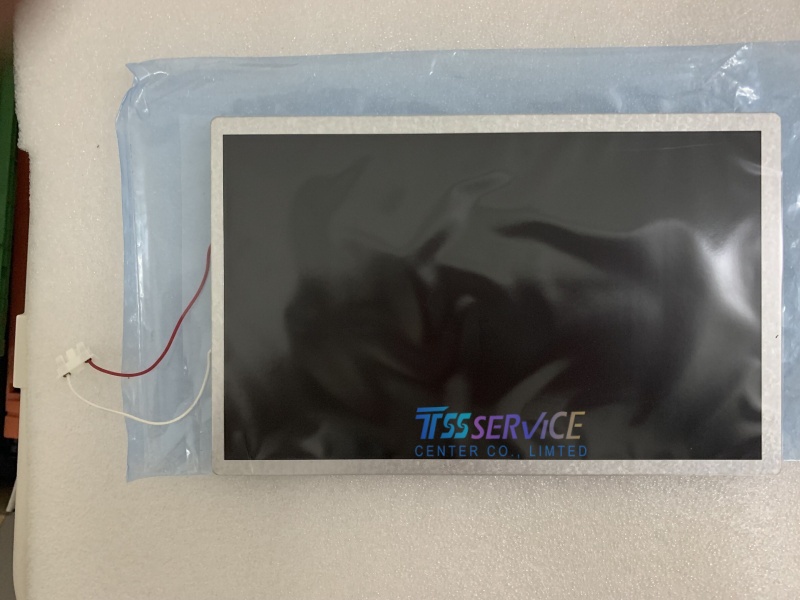
Architectural Precision: Deconstructing the 8.0-Inch, 800×480 TFT-LCD Core
To truly appreciate the TX20D28VM2BAB, one must first understand the engineering decisions embedded within its standard 8.0-inch diagonal and 800×480 resolution. Often referred to as WVGA, this resolution is not arbitrary; it represents a carefully calibrated compromise between pixel density and processing overhead. At 8.0 inches, the pixel pitch allows for comfortable readability from typical viewing distances of 30 to 60 centimeters, making it ideal for panel-mounted equipment where operators need to quickly parse data without eye strain. The TFT (Thin-Film Transistor) architecture of this module is crucial. Unlike passive matrix displays, each pixel in a TFT-LCD has its own dedicated transistor, allowing for precise control of voltage and, consequently, superior contrast and response times.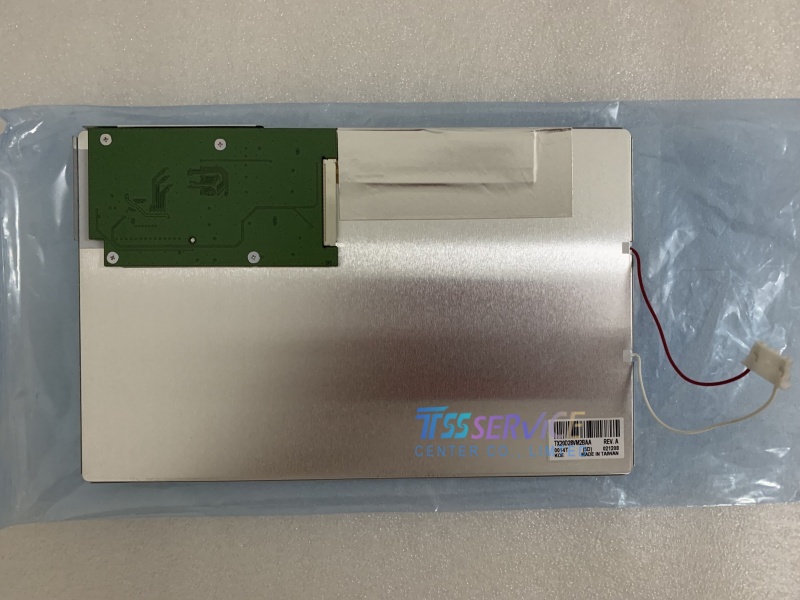
Furthermore, the display utilizes TN (Twisted Nematic) technology, a mature and highly reliable liquid crystal mode. While IPS panels offer wider viewing angles, TN panels like the one in the TX20D28VM2BAB provide faster response times and significantly higher luminance efficiency. This makes the module particularly suited for environments where rapid screen updates are necessary—such as numeric counters or waveform displays—and where the primary operator is positioned directly in front of the screen. The backlight system, typically LED-based, is engineered for longevity, often rated for 50,000 hours or more of continuous operation. By stabilizing the voltage and current supplied to the LEDs, the module maintains consistent brightness over its lifecycle, a critical factor in medical and safety-critical applications where a dimming display could lead to operational errors.
Beyond the Datasheet: Signal Interface and System Integration Logic
The true utility of any embedded display lies not in its standalone specifications, but in how seamlessly it integrates with a host controller. The TX20D28VM2BAB employs a standard parallel RGB interface, a robust and well-understood protocol that offers a direct connection to a wide range of microcontrollers and application processors. The pinout is designed to minimize signal interference, a common issue in industrial environments with high electromagnetic noise. Understanding the interface timing is paramount; this module requires precise vertical and horizontal sync signals, along with a pixel clock, to map the 800×480 resolution correctly. Failing to align these timings can result in image tearing or improper color mapping.
From an integration perspective, the module’s static electrical characteristics are equally important. It typically operates at a single 3.3V power supply, simplifying rail design for the host system. This low-voltage operation reduces overall heat generation, a significant advantage in enclosed or ventilated enclosures. The absence of complex, proprietary communication protocols means that system developers can focus on higher-level application logic rather than low-level display driver debugging. Moreover, the module’s physical footprint, including the mounting holes and connector location, follows standard form factors. This design consistency eliminates the need for custom bracket fabrication for many standard industrial chassis, directly accelerating prototyping cycles. For the engineer, this translates to a lower total cost of ownership—less time spent on integration means faster time to market and reduced project risk.
Market Dynamics and Supply Chain Resilience: Why "In Stock" Matters
In the current global electronics market, the phrase "in stock" carries extraordinary weight. Component shortages, extended lead times, and obsolescence risks have plagued the display industry for several years, forcing many projects into costly redesigns or production delays. The TX20D28VM2BAB’s availability is not merely a logistical convenience; it is a strategic asset. This module is manufactured on a mature wafer process, and its supply chain is supported by multiple sources for its key components, including the TFT glass and driver ICs. This redundancy buffers against single-point-of-failure risks that plague newer or more exotic display modules.
Furthermore, the 8.0-inch form factor is widely believed to be on a long production lifecycle, meaning that manufacturers plan to support it for years to come. For businesses, purchasing this display "in stock" eliminates the financial uncertainty of holding large core inventory while simultaneously removing the risk of production stoppages due to component unavailability. The economic impact is substantial: it provides procurement teams with the flexibility to adopt a just-in-time ordering strategy without sacrificing supply security. This reliability also extends to the aftermarket. Because the specifications are stable and widely documented, sourcing replacement units or running extended qualification tests is straightforward. In an industry where a single week of downtime can cost tens of thousands of dollars, the guaranteed physical availability of the TX20D28VM2BAB transforms it from a simple component into a critical risk mitigation tool.
Application-Specific Performance: Durability and Optical Longevity in Real-World Scenarios
Moving beyond theoretical specifications, the TX20D28VM2BAB’s true value is revealed in its performance within specific operational niches. In an industrial HMI environment, for instance, the display is often subjected to constant vibrations, wide temperature fluctuations, and prolonged static image display. The robust construction of this module mitigates image retention, a common flaw in lesser displays where static elements like menus or logo bars become permanently burned into the screen. The optical stack, including the polarizers and color filters, is designed to withstand high ambient light levels without significant contrast washout, thanks to the high luminance output of the LED backlight.
In medical monitoring devices, the TN technology’s fast response time ensures that real-time data, such as patient vitals or waveform traces, are rendered with minimal motion blur. The consistent color reproduction, even during intensive use across many shifts, allows healthcare professionals to rely on the displayed information for accurate diagnosis. Furthermore, the display's construction typically supports a wide operating temperature range (often -20°C to +70°C). This makes it viable in outdoor kiosks or semi-conditioned warehouses where temperature control is less stringent. The physical robustness is also reflected in the glass’s resistance to thermal shock. The module undergoes rigorous quality control to ensure that the delicate liquid crystal layer does not degrade or form bubbles under stress. For system integrators, this translates into a lower field failure rate, directly improving the reputation of the end product and reducing warranty claims.
The TX20D28VM2BAB is not the cheapest display on the market, nor is it the highest resolution. However, its combination of industrial-grade durability, mature technology, and immediate global stock availability creates a differentiated value proposition for professionals who cannot afford failure or delay. It represents a pragmatic, engineering-driven choice that prioritizes long-term system reliability and supply chain stability. For any project where the display is a critical human interface, this module offers a proven path to a successful, stable deployment.


